
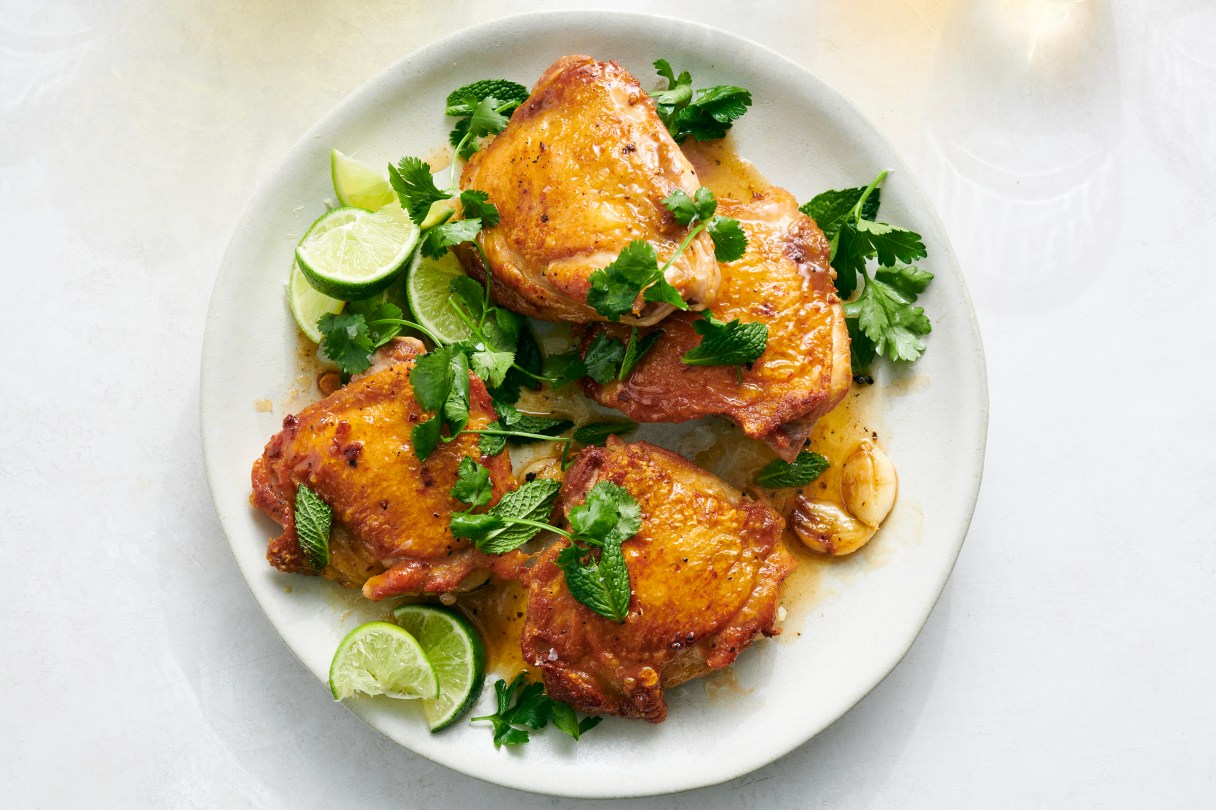
The best-tasting chicken results when you don’t take it too far from itself, when you let the chicken taste like chicken. For that, you might start with the bird, and look to “the chicken whisperer” — more specifically Mike Charles, founder and CEO of LaBelle Patrimoine.
Charles grew up around chickens in Lancaster County, Pennsylvania, and has always been passionate about caring for them. (His family has been in the chicken business since they immigrated from Italy at the start of the 20th century.) In grade school, when other students brought their stuffed animals for show-and-tell, Charles brought in live chickens and taught his classmates how to catch them.
He’s now a sixth-generation chicken farmer, and his love for the birds underscores his operation, which lets them roam fields, jump onto hay bales and grow slowly, living 10 weeks instead of the usual six or so.
It also yields a finer end product: His birds are yellow (from all the vitamin D they get outside) and fatty in just the right places, with normal-size breasts and big thighs (from all the roaming and jumping), the kind of heritage meat he’s eaten his whole life. “This is how chickens used to taste,” Charles remembers his Italian grandmother saying, as they ate a simply salted and peppered bird. And therein lies perhaps the most important part for the chickeniest chicken: a straightforward preparation.
Taking bone-in, skin-on portions and roasting them with little to no fat in an uncovered pan is an Italian home cook’s method, which chef Paul Bertolli describes in his seminal book, “Cooking by Hand.” Cooking the portions almost entirely on the skin side like this, using the direct heat at the pan’s bottom, results in shatteringly crisp skin, beautiful rendered fat and evenly cooked meat — like roast chicken without the oven.