
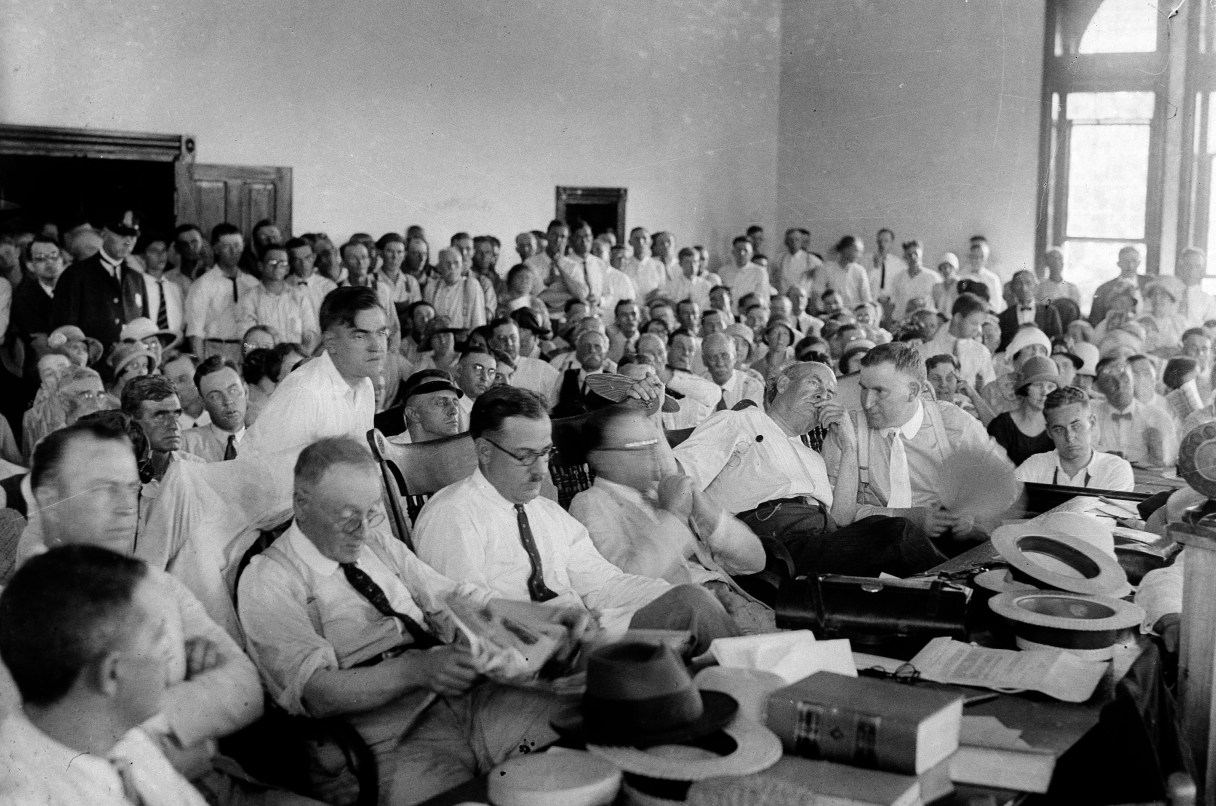
The Scopes trial drew national attention to the concept of separation of church and state, and while 100 years has passed, Americans continue to debate: What role should religion play, if any, in public education, policy and politics?
“As we mark the 100th anniversary of the Scopes trial, it’s clear the fight to preserve the separation of church and state is far from over,” Tennessee American Civil Liberties interim Executive Director Phyllida Burlingame said in an email. “In fact, it’s becoming increasingly urgent.”
The separation of church and state is never explicitly named in the U.S. Constitution, but its basis come from the First Amendment, according to the establishment and free exercise clauses, which protect an individual’s right to practice religion without government interference and prohibit government from establishing a religion.
In March 1925, Tennessee banned the teaching of Charles Darwin’s theory of evolution in public schools, as it conflicted with the Bible’s account of human creation, according to Chattanooga Times Free Press archives.
A Dayton high school teacher, John Scopes, was accused two months later of illegally teaching the concept, and he was arrested, charged, tried by jury and found guilty, the archives said. The $100 fine against him was later overturned by the state Supreme Court.