
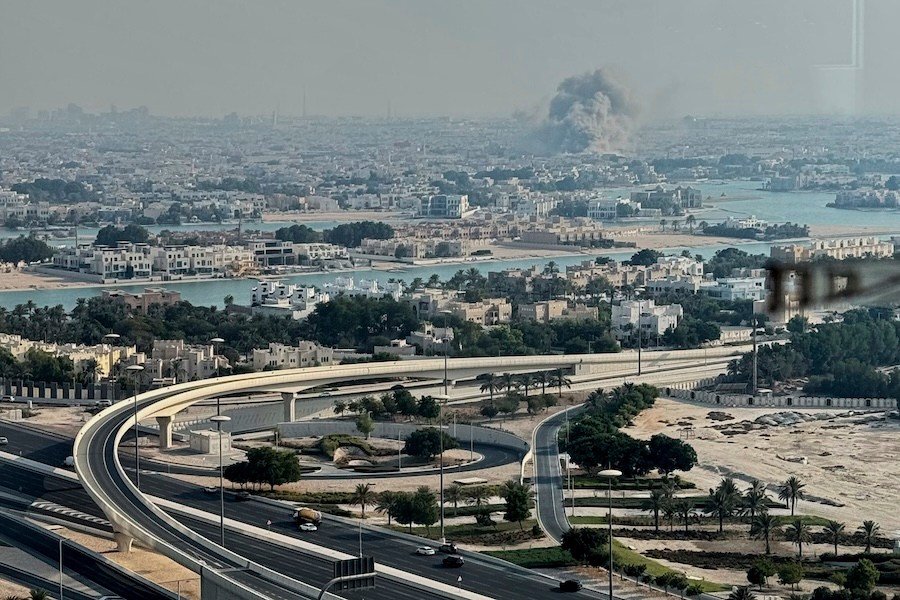
DOHA, Qatar (AP) — Just a few months ago, the rulers of Saudi Arabia, the United Arab Emirates and Qatar welcomed U.S. President Donald Trump to their palaces with camel parades and pomp. Now, those same leaders are united in anger after Israel’s strike targeting Hamas leaders in Qatar’s capital, Doha.
Saudi Crown Prince Mohammed bin Salman called for “an Arab, Islamic and international response to confront the aggression” and deter Israel’s “criminal practices.”
The UAE’s Sheikh Mohammed bin Zayed Al Nahyan flew to Qatar and embraced its ruling emir, a scene that would have been unimaginable just a few years ago, when the UAE and Saudi Arabia led a boycott of the country after accusing it of supporting terrorist groups, something strongly denied by Doha.
Israel’s attack in Qatar violated “all international laws and norms,” Sheikh Mohammed said.
The strike has triggered the worst fears of leaders in the oil-rich Gulf: that the U.S. might abandon its decades-old commitment to protect them from regional aggressors in the mold of former Iraqi dictator Saddam Hussein or — it now seems — Israeli Prime Minister Benjamin Netanyahu.