
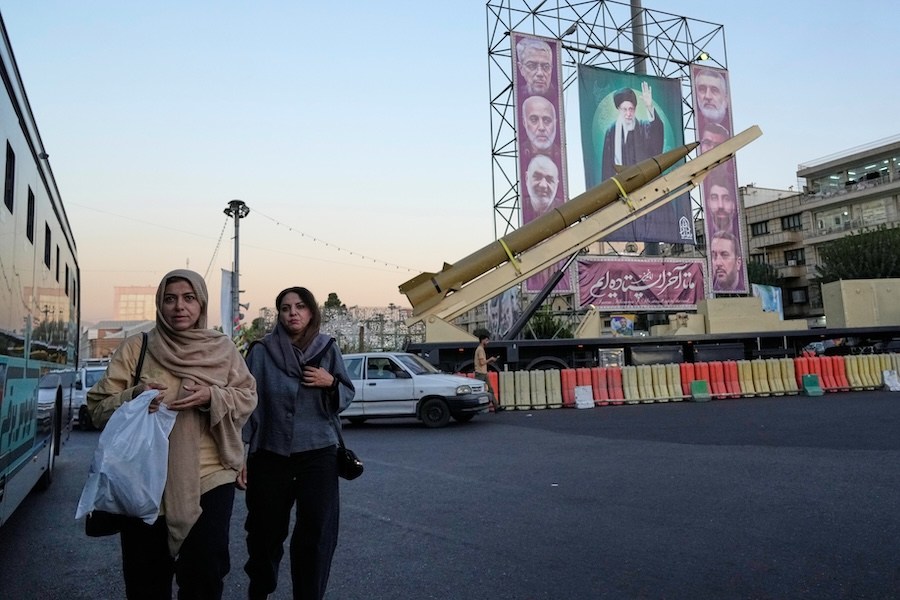
DUBAI, United Arab Emirates (AP) — The United Nations reimposed sanctions on Iran early Sunday over its nuclear program, further squeezing the Islamic Republic as its people increasingly find themselves priced out of the food they need to survive and worried about their futures.
After last-minute diplomacy failed at the U.N., the sanctions took effect Sunday at 0000 GMT (8 p.m. Eastern).
The sanctions will again freeze Iranian assets abroad, halt arms deals with Tehran, and penalize any development of Iran’s ballistic missile program, among other measures. It came via a mechanism known as “snapback,” included in Iran’s 2015 nuclear deal with world powers, and comes as Iran’s economy already is reeling.
Iran’s rial currency sits at a record low, increasing pressure on food prices and making daily life that much more challenging. That includes meat, rice and other staples of the Iranian dinner table.
Meanwhile, people worry about a new round of fighting between Iran and Israel — as well as potentially the United States — as missile sites struck during the 12-day war in June now appear to be being rebuilt.