
This story was originally published by the Nashville Banner. Sign up for their newsletter at nashvillebanner.com/newsletters.
“I think in these times people are kind of paralyzed in a lot of ways and like ‘what can we do?'” Kelly Chieng said, thinking out loud as she steered a pickup truck up and down the streets of a North Nashville neighborhood. “Everything feels so overwhelming, things are really bad, a lot is out of our control.”
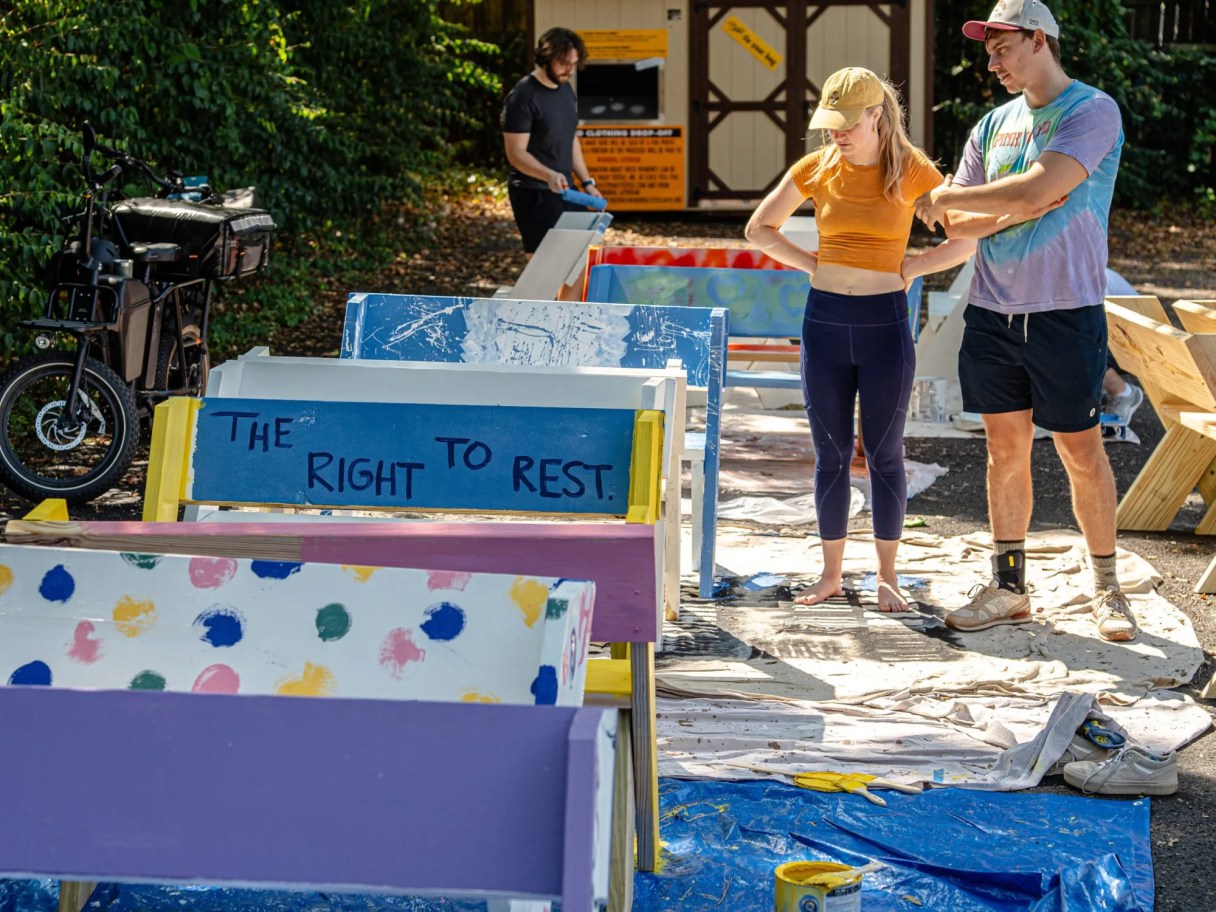
In the face of that, a small but growing movement has sprung up in Nashville that is radical in its simplicity. People are building wooden benches and placing them at bus stops where there is no other place to sit.
On a weekday afternoon earlier this month, Chieng and India Pungarcher — advocates for the unhoused and activists on a number of other fronts, too — loaded three benches into the truck’s bed and headed out to find places to put them. It wasn’t hard. They dropped two at neighborhood bus stops where there was nothing more than a sign on the side of the street and the third at a stop on Buchanan Street. They adjusted the bench to ensure it wouldn’t block the sidewalk, took a picture to record its location and picked up some nearby trash before moving on.
This guerilla bench operation began in South Nashville in early August but attracted more attention — and more support — after Metro Nashville officials removed eight metal benches from Korean Veterans Boulevard in August. The benches had often been occupied by unhoused people, resting alongside their belongings and were replaced by large concrete spheres. Metro officials have said they are “part of a public art and beautification project.” But to local advocates from various corners of the city’s political scene, they look like another example of hostile architecture designed specifically to discourage the types of people or behavior tourists prefer to avoid.