
“Don’t hang all those nice clean clothes out in the polluted air to dry,” an advertisement for a Whirlpool dryer said in an April 1969 edition of the Chattanooga News-Free Press. Polluted air, the advertisement said, “filled with dust and smoke and grime you may not even be able to see settles into every part” of your clothes. Just one month prior to this advertisement, the front page of the Chattanooga Times featured a story with a troubling headline: “Chattanooga Worst City in the Nation In Particulate Air Pollution in 1961-65.”
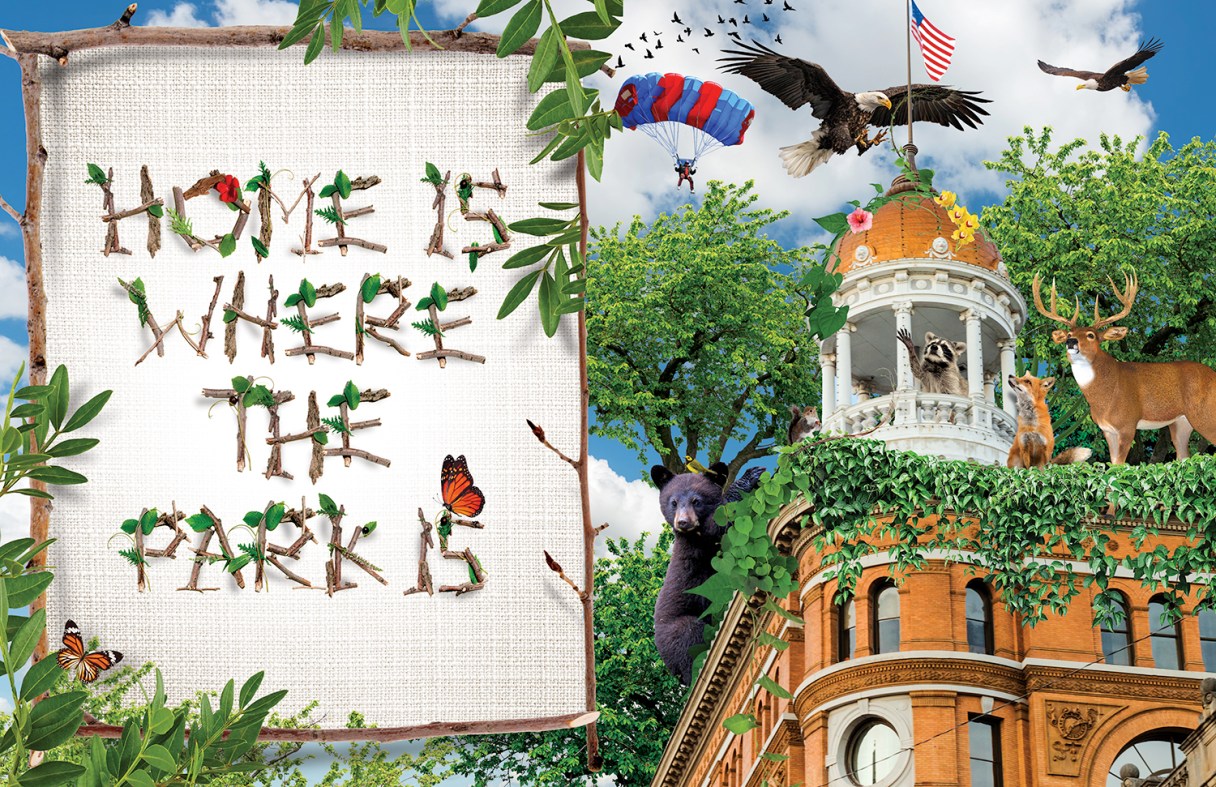
No city wants to have the sword of being the “worst” for anything dangling over its head, and so the last several decades saw Chattanooga turn itself around. In April 2025, 56 years after Whirlpool capitalized on the news of the time, the front page of the Chattanooga Times Free Press announced Chattanooga’s newest title: National Park City.
To be clear, a National Park City has nothing to do with the U.S. National Park Service. Chattanooga hasn’t become Yellowstone or Yosemite. Chattanooga isn’t Acadia, nor is it Denali. It isn’t even Great Smoky Mountains National Park. While the title might be a bit confusing, the idea behind it is more straightforward.
Daniel Raven-Ellison, a British geographer and National Geographic explorer, founded the National Park City movement with the intent of applying the national park spirit to our urban landscapes.
“People know that you go to a national park to have a healthier environment, healthier relationship with nature and to improve your own health,” Raven-Ellison said in an April 2025 interview with the Times Free Press. “So the general epiphany around the idea of a National Park City is, well, why can’t we just do that in cities as well?”