
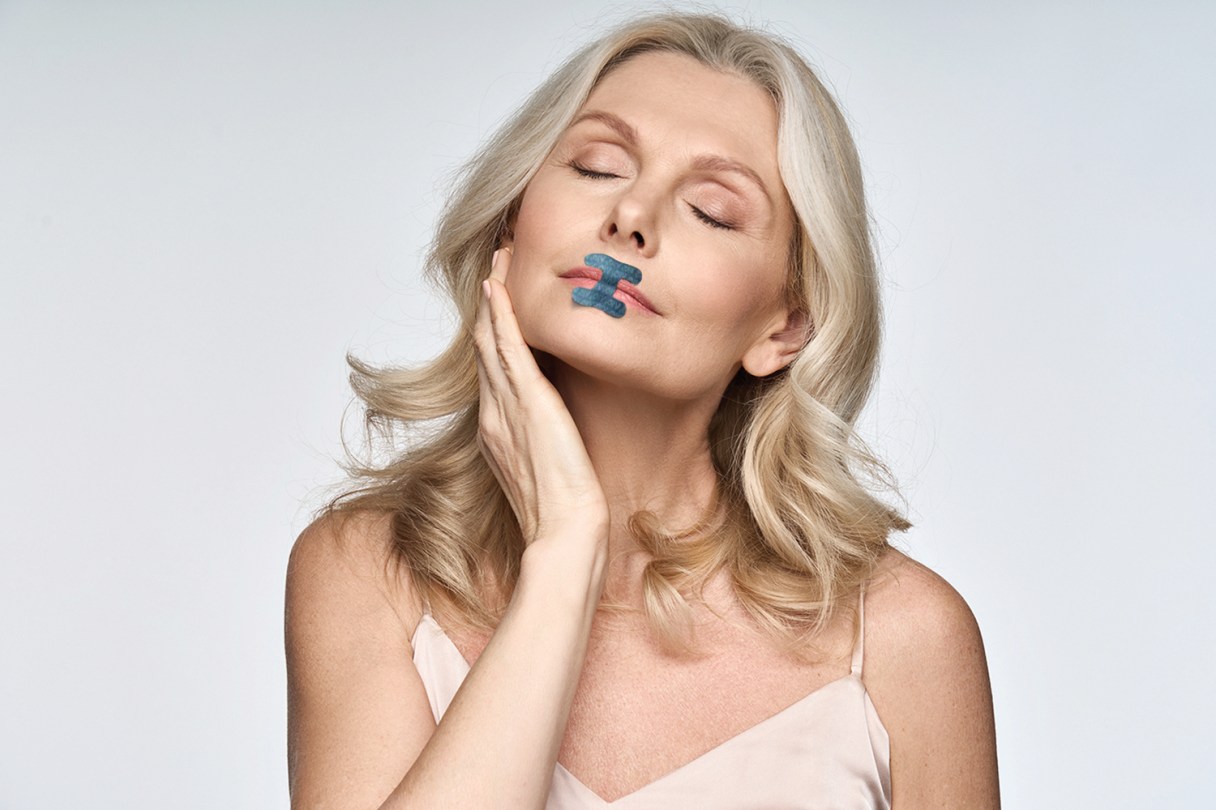
A chiseled jawline, a deep sleep and an end to your not-so-charming, nightly snoring. These are just a few of the supposed perks of — yes — taping your mouth shut before bed. Once reserved for hostage scenes and horror movies, mouth taping has found a new life on social media and bedside tables around the world. Advocates are adamant about better sleep, but professionals urge caution. Tish Pyron, a retired registered nurse and avid health enthusiast, has incorporated mouth taping into her nightly routine for around a year and speaks highly of the practice.
“I knew that I snored, and I knew people would say that I would stop breathing [when I sleep],” Pyron says, “So I thought, I’m gonna try this, just to see if it will help.”
Judah Brass, a recent graduate from Southern Adventist University in Collegedale, Tenn., claims that he has seen a significant difference in his sleep, morning dry mouth, congestion and the drowsiness he experiences upon waking up. His reason for taping was similar to Pyron’s: “Inspiration came from my spring break in Iceland,” he says. “I went with a couple friends, and they said I snored loudly, so I decided to try some mouth tape.”
Despite Brass genuinely wanting to tape every night, he only tapes on gym days, big trips or nights before big events due to the tape itself being expensive (approximately $10-$25 for 30-60 strips).
Noelle Copeland, an educational writer and licensed dental hygienist with a career spanning 30 years, is passionate about how public health education and emerging wellness trends intersect with oral systematic health. Copeland initially heard about mouth taping through her patients’ inquiries. Her curiosity was piqued more when it became a noticeable trend throughout social media. Determined to conduct her own research, she sequentially wrote an article for a dental education organization exploring the science behind the trend.