
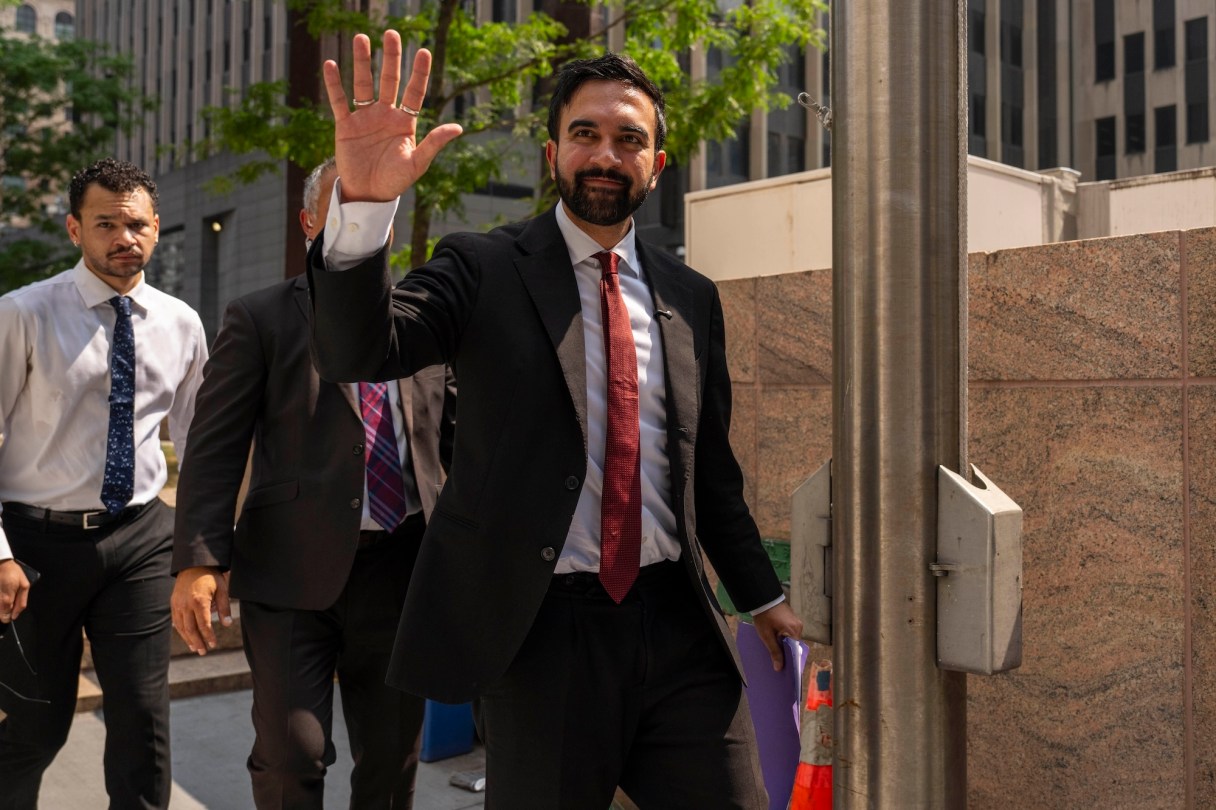
In the days after it became clear Zohran Mamdani had won New York City’s June mayoral primary, much of the Democratic establishment began to panic.
Former President Barack Obama, the last Democrat to captivate the party’s base, got on the phone. In a lengthy call in June, Obama congratulated Mamdani, offered him advice about governing and discussed the importance of giving people hope in a dark time, according to people with knowledge of the conversation.
Others in Obama’s orbit have also shown a keen interest in Mamdani and his campaign. Jon Favreau, who served as Obama’s speechwriter, and Dan Pfeiffer, a former senior adviser, have been in communication with Democratic strategist Morris Katz, among Mamdani’s closest aides.
David Axelrod, who served as Obama’s chief campaign strategist and senior adviser, was also curious. Last month, he stopped by Mamdani’s campaign headquarters, then in the Flatiron neighborhood of Manhattan, to meet the candidate and his staff, and see things for himself.
“What I found when I went over to that office was a familiar spirit that I hadn’t seen in a while of just determined, upbeat idealism,” Axelrod told me. “You may not agree with every answer he’s giving, or every idea he has, but he’s certainly asking the right questions, which is how do we make the country work for working people?” He said Mamdani’s ability to inspire young Americans, who feel economic uncertainty acutely, was critical and something the party at large needed to reckon with.
Axelrod was introduced to Mamdani by Patrick Gaspard, another Obama insider. Gaspard — Obama’s 2008 national political director, and later the U.S. ambassador to South Africa — has been serving as an informal adviser to Mamdani.
The interest from the closely guarded world of Obama and those around him is the clearest sign yet that Mamdani is likely to be embraced by the Democratic mainstream, whether the party’s leaders and donors like it or not.
Some key figures within the Democratic establishment have reacted — at least publicly — to Mamdani with a sense of suspicion or even alarm. Hakeem Jeffries, the House minority leader, has yet to endorse the Democratic nominee, even though Brooklyn, which he represents, voted for Mamdani over former Gov. Andrew Cuomo by a nearly 20-point margin. Sen. Kirsten Gillibrand, also of New York, said falsely in a radio interview with WNYC in June that Mamdani had made “references to global jihad.” Gillibrand later apologized for those remarks.
It seems very possible that Obamaworld views Mamdani not as a threat or a liability, but as a promising figure in a Democratic Party with a pressing need for fresh blood.
Reached for comment about the call, Mamdani’s communications director, Jeffrey Lerner, who worked in the Obama White House, drew a comparison between the two men. “Much like my former boss, Zohran embodies thoughtful leadership, moral courage and a unique ability to inspire hope in those who’ve been left behind by politics as usual.”
Though it has been nearly two decades since Obama’s 2008 victory, the parallels between the two charismatic Democrats are unmistakable. Both are political outsiders with unconventional biographies. Obama was the country’s first Black president. Mamdani, if elected in November, would be the first Muslim to govern New York City. Both built campaigns around grassroots organizing and formed diverse multiracial coalitions that galvanized younger Americans and attracted voters far beyond the party’s traditional base.
Axelrod said he found the reaction of much of New York’s political establishment dispiriting and outdated. “‘Scare the hell out of people and maybe we can get them to vote for our deficient politics,'” he said, describing the approach with brutal efficiency. “That’s not a politics I want to be associated with. That’s not a politics I think prevails.”
The New York Times