
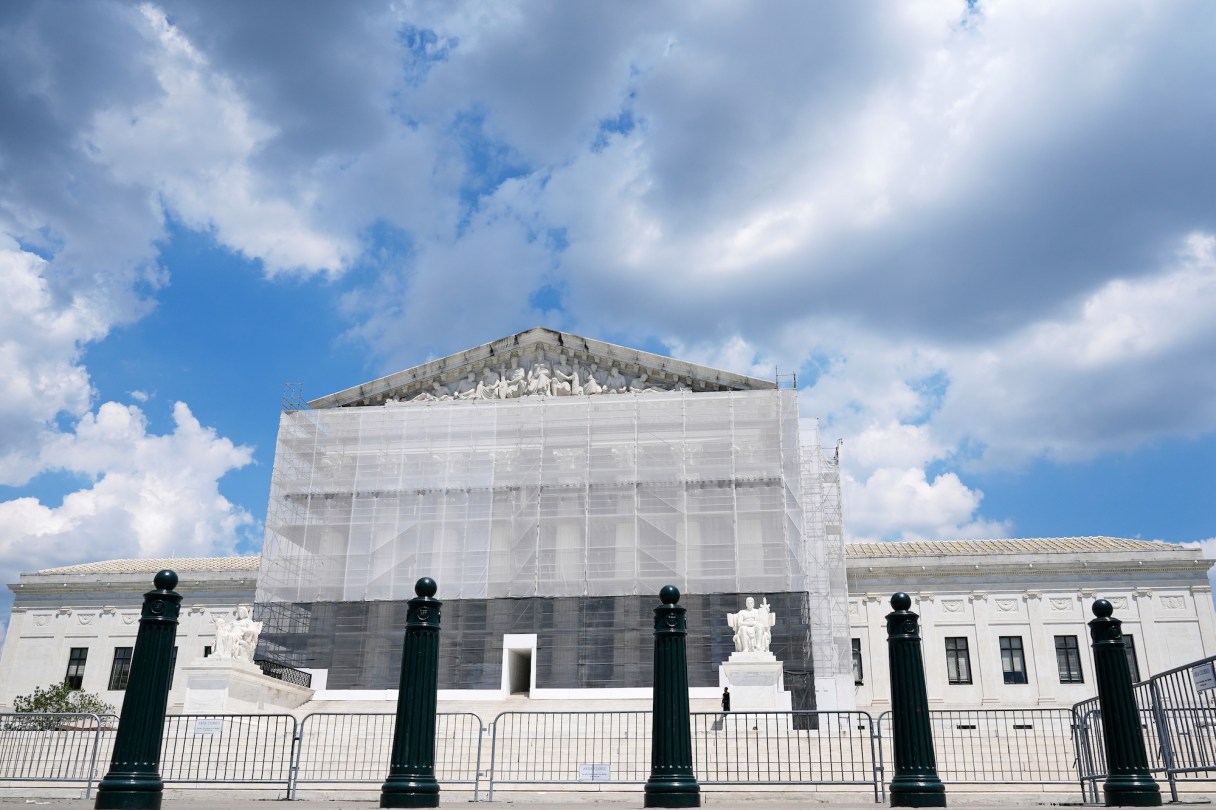
“Because I said so” never is persuasive or satisfying. And it certainly should not be regarded as acceptable when it is the Supreme Court resolving important issues — up to and including matters of life and death — without the slightest explanation. Yet, that has been the pattern in recent weeks, as in a series of significant cases the court has handed down rulings without opinions or explanation.
For example, on June 23, in Department of Homeland Security v. D.V.D., the court majority lifted a district court order that prevented individuals from Venezuela and Cuba who were in the U.S. from being deported to South Sudan. The district court had issued a preliminary injunction against so-called third country deportation, finding that the individuals were not given due process: They were not provided sufficient notice or a meaningful opportunity to challenge their deportation based on their fears for their safety. The judge was understandably concerned the individuals could be subjected to torture or death upon arrival. Federal law is specific on where people can be deported to, and there is a strong argument that the Trump administration would violate the law in sending these individuals to a country where they had no prior contacts.
But without a word of explanation, the Supreme Court allowed the deportations to go forward while the case winds its way through the justice system, which could take years. All the while, these swift deportations to third countries can continue.
Justice Sonia Sotomayor, joined by Justices Elena Kagan and Ketanji Brown Jackson, wrote a blistering dissent: “Apparently, the Court finds the idea that thousands will suffer violence in farflung locales more palatable than the remote possibility that a District Court exceeded its remedial powers when it ordered the Government to provide notice and process to which the plaintiffs are constitutionally and statutorily entitled. That use of discretion is as incomprehensible as it is inexcusable.”
In McMahon v. New York, on July 14, the court again lifted a district court order preventing the president from firing approximately 1,400 employees of the Department of Education as part of dismantling that agency. The Education Department was created by federal statute, and it should take an act of Congress to eliminate it.