
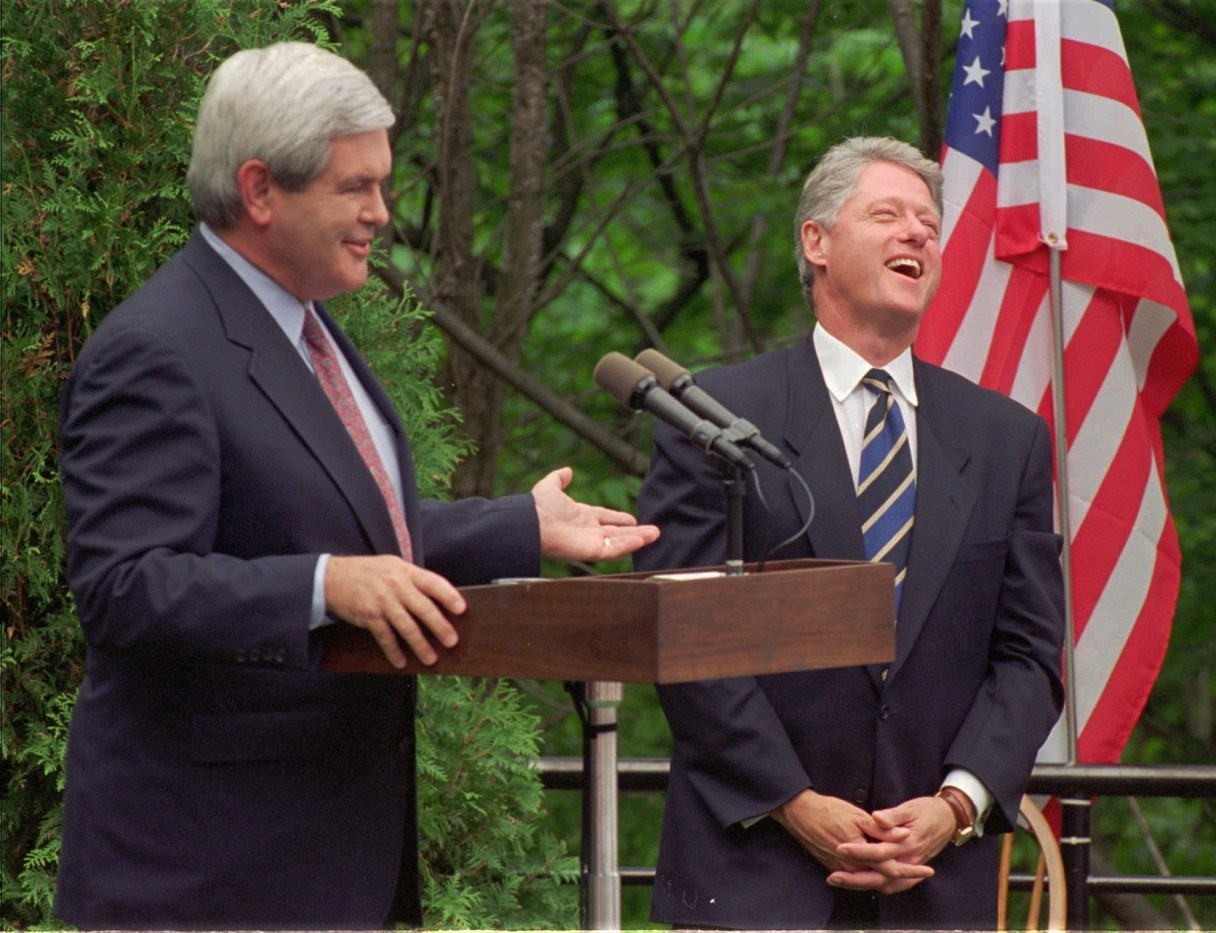
On Aug. 5, 1997, President Bill Clinton and the Republican-controlled Congress, led by Speaker Newt Gingrich, enacted the Balanced Budget Act. This bipartisan agreement aimed to balance the federal budget by 2002. Most of the credit goes to Gingrich because Clinton had vetoed previous Republican proposals for reducing the debt. The deal resulted in four consecutive years of budget surpluses, a rarity. But the big spending addicts returned and so has the debt, now more than $37 trillion.
Democrats are hoping the current government “shutdown” will be blamed on Republicans, as in the past. Perhaps it’s time to bring back Clinton and Gingrich to work their previous magic. As with President Trump’s DOGE, Gingrich exposed large amounts of wasteful and unnecessary spending.
In an email, Gingrich tells me he visited Capitol Hill last month and gave budget committee staff of the House and Senate a “workbook” detailing how to balance the budget and pay down the national debt.
As for necessary public support, which he says is crucial, Gingrich believes voters must be convinced debt reduction is a necessity. He references a 2014 Gallup poll which found respondents believed the government wastes 51 cents of every dollar it spends. A 2025 YouGov-Cato poll found that number had increased to 59 cents per dollar. America’s New Majority Project reported last month that 69% of voters support a constitutional amendment requiring Congress to balance the budget.
“A major part of any serious balanced budget-debt repayment program,” writes Gingrich, “must include hearings and reports highlighting waste, fraud, inefficiency, and ineffectiveness. The theme must be that a modernized, effective government would deliver better results for the American people at a much lower cost. This theme is especially important in health and health care, which must be improved dramatically if the budget is ever to be balanced. Health care is 18% of the GDP and the largest expense of the federal government. It costs $1.7 trillion versus $910 billion for defense. More than 27% of all federal spending is focused on health care.”