
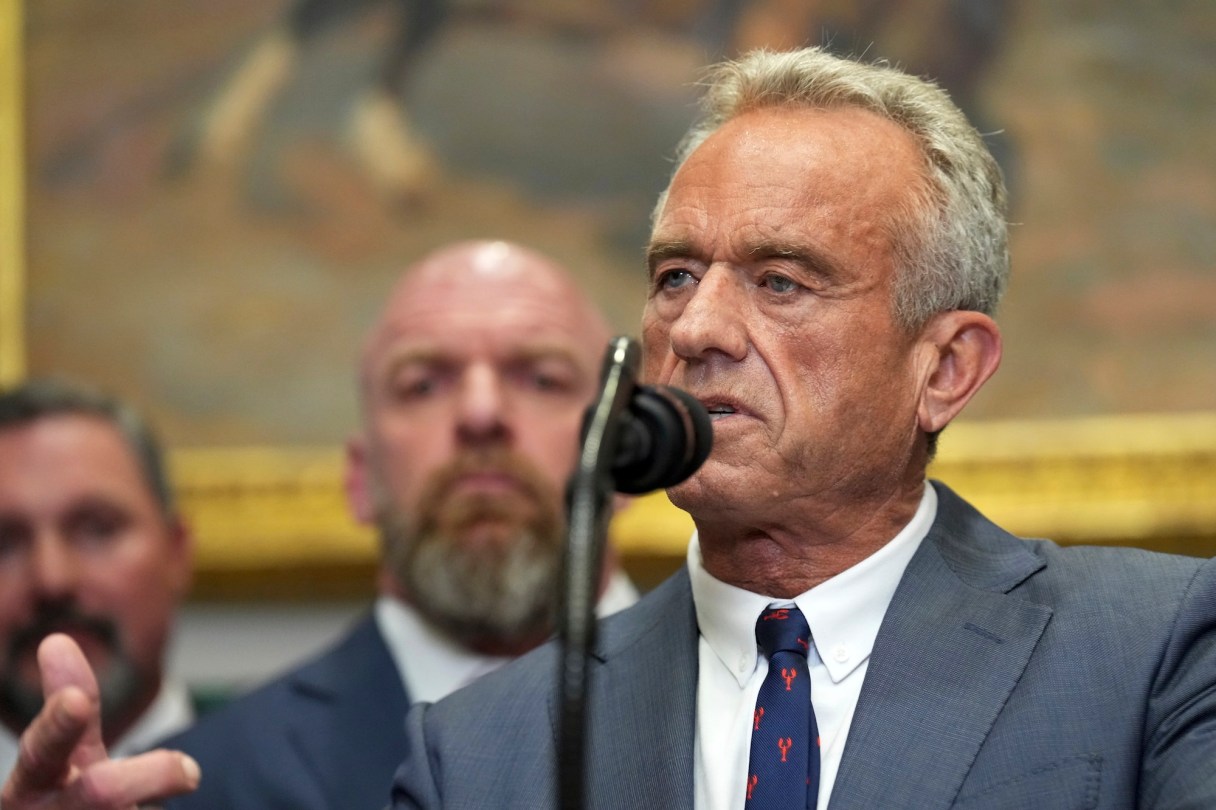
The movement that helped make Robert F. Kennedy Jr. the secretary of health and human services converged politically with right-wing populism only in the last few years, but in spirit the holistic, outsider critique of modern medicine had a lot in common with MAGA populism long before the “MAHA” neologism came along.
Like populism, the MAHA movement spoke to widely shared frustrations with a medical establishment that didn’t seem to have answers to persistent problems and left people who felt failed by the system feeling unheard and disdained.
But like populism’s critique of insider politics, the outsider critique of the medical establishment has always struggled to offer an alternative vision that’s rigorous rather than credulous. And like MAGA populism, MAHA now finds itself in a complicated marriage with a Republican Party that still retains its pre-Trump orientation toward business interests, drug companies and Big Food.
RFK Jr. entered office promising to address two great challenges in American public health, the spread of obesity and the resilience of chronic illness, and in an ideal world an outsider’s critique would have a lot to offer on both fronts.
But the MAHA approach so far is both self-undermining and politically constrained. It self-undermines by matching the medical dogmas it disdains with dogmas of its own, particularly a zeal for the “natural” that underplays pharmaceutical solutions and imagines that public health is just a matter of stripping away late-modern toxins and restoring ruddy pre-1960s vigor.