
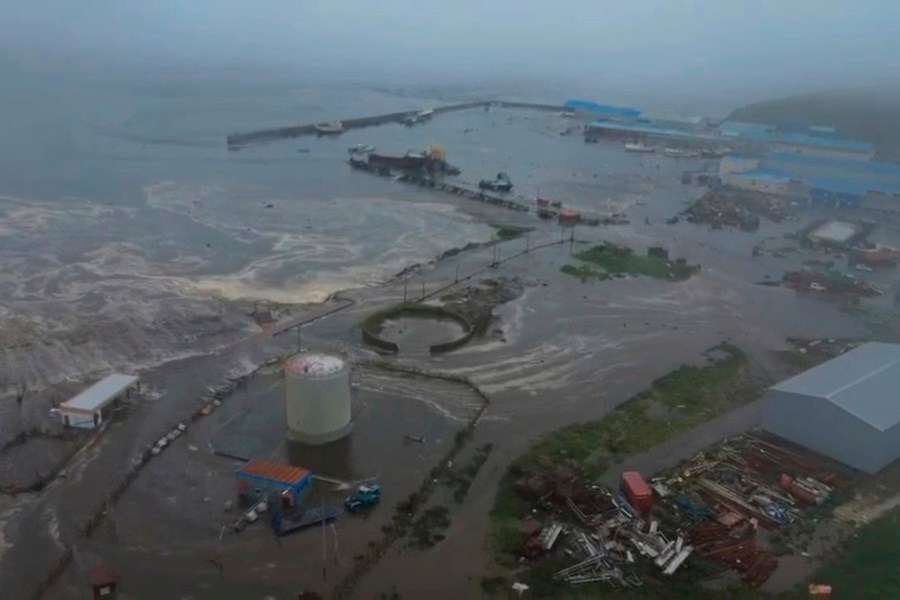
TOKYO (AP) — One of the strongest earthquakes ever recorded struck Russia’s Far East early Wednesday, sending tsunami waves into Japan and Hawaii and across the Pacific. No substantial damage has been reported so far, but authorities warned people away from shorelines and said the risk could last more than a day.
Ports on the Kamchatka Peninsula in Russia near the 8.8 magnitude quake’s epicenter flooded as residents fled inland, and frothy, white waves washed up to the shore in northern Japan. Cars jammed streets and highways in Hawaii’s capital, with standstill traffic even in areas away from the shoreline.
People went to evacuation centers in affected areas of Japan, with memories fresh of the 2011 earthquake and tsunami that caused reactor meltdowns at a nuclear power plant. No abnormalities in operations at Japan’s nuclear plants were reported Wednesday.
Russian authorities said several people were injured, without giving a figure. In Japan, at least one person was injured.
A tsunami height of 3-4 meters (10 to 13 feet) was recorded in Kamchatka, 60 centimeters (2 feet) on Japan’s northern island of Hokkaido, and up to 1.4 feet (under 30 centimeters) above tide levels were observed in Alaska’s Aleutian Islands.