
Monday, November 16, 2026Nov 16

Rose petals and tears: Bosnians honor Srebrenica victims

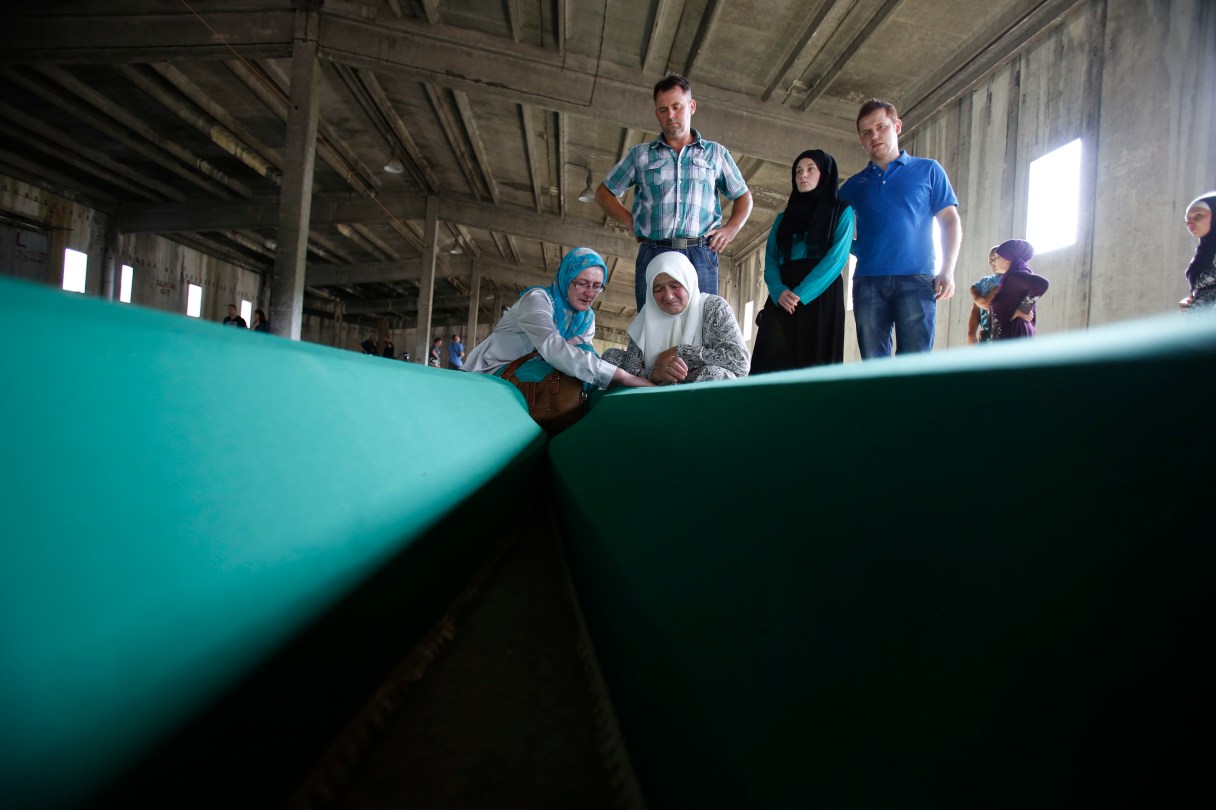
Bosnian Muslim women touch the coffin of a relative among 127 coffins displayed at THE memorial centre of Potocari near Srebrenica, 150 kms north east of Sarajevo, Bosnia, Saturday, July 9, 2016, prior to their burial scheduled for Monday. Thousands of Bosnians raised their hands in prayer Saturday as a truck bearing 127 coffins passed through the capital on its way to Srebrenica, where the newly identified victims of Europe's worst massacre since World War II will be buried on the 21th anniversary of the crime. (AP Photo/Amel Emric)

SARAJEVO, Bosnia-Herzegovina (AP) – Thousands of Bosnians raised their hands in prayer Saturday as a truck bearing 127 coffins passed through the capital on its way to Srebrenica, where the newly identified victims of Europe’s worst massacre since World War II will be buried on the 21th anniversary of the crime.

The truck stopped briefly in front of Bosnia’s Presidency in Sarajevo, where residents, officials and foreign ambassadors paid tribute. Many in the crowd wept and tucked flowers into the truck’s canvas tarp before it slowly drove down the street, covered in white rose petals.

The remains will be buried Monday next to over 6,000 other Srebrenica victims found previously in mass graves. The youngest victim to be buried this year was 14, the oldest 77.

International courts have defined the Serb massacre of over 8,000 Muslim Bosnians at the end of Bosnia’s 1992-95 war as genocide.

Every year forensic experts find new bodies in the nearly 100 mass graves so far found. The remains are identified through DNA analysis before they are buried again at a memorial center near Srebrenica, where the victims were last seen alive.