
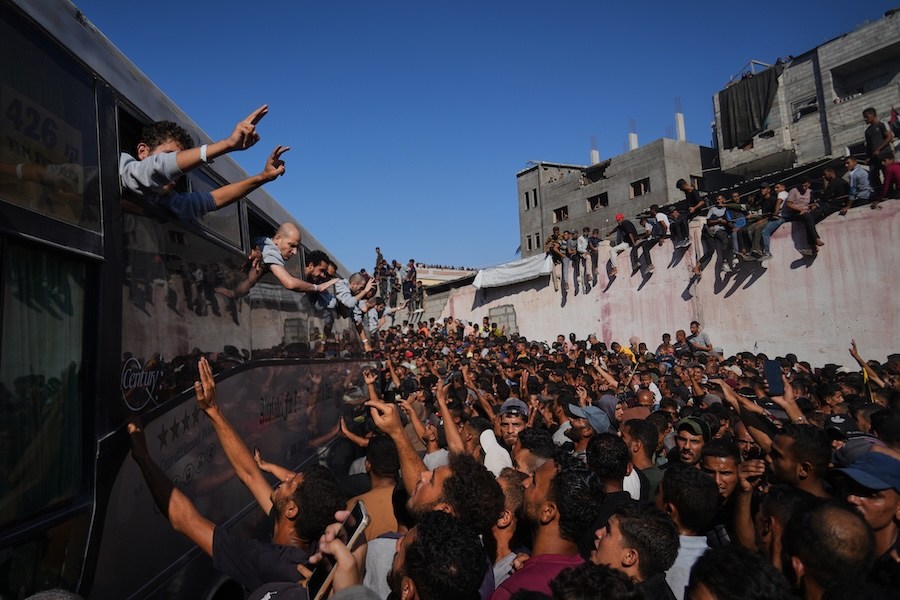
WASHINGTON (AP) — On Monday, the fragile ceasefire in Gaza led to freedom for Israeli hostages and the release of Palestinian prisoners held by Israel. It was the culmination of a long and tortuous process — but it may, in the end, have been the easier part.
The coming weeks, months and years will require more than just rebuilding from the devastation that has left much of Gaza in ruins. Key details of the peace plan may remain unsettled. Granular details will need to be negotiated to keep the plan moving forward and prevent the resumption of fighting. The path to long-term peace, stability and eventual rebuilding will be a long and very precipitous route.
“The first steps to peace are always the hardest,” President Donald Trump said as he stood with foreign leaders in Egypt on Monday for a summit on Gaza’s future. He hailed the ceasefire deal he brokered between Israel and Hamas as the end of the war in Gaza — and start of rebuilding the devastated territory.
And while Trump expressed optimism that the most challenging part was over — “Rebuilding is maybe going to be the easiest part. I think we’ve done a lot of the hardest part because the rest comes together” — others were more tentative about the intricacies that lie ahead.
“Peace has to start somewhere,” said Mona Yacoubian, director of the Middle East Program at the Center for Strategic and International Studies. She called it an important and “euphoric moment.”