


Before Mark Hutchinson became the founder and CEO of a traffic photo enforcement company with hundreds of contracts across 11 states, he was a 19-year-old deputy at the Johnson County Sheriff’s Office in East Tennessee, haunted by a crash he couldn’t prevent.
A car driving the wrong way had slammed into a dump truck, Hutchinson said. In the driver’s seat was a father intoxicated above the legal limit. In the backseat, the driver’s 10-year-old son was unbuckled.
Hutchinson remembers sprinting from the wreck back to his car, as this was either 1989 or 1990 — before portable radios. After calling for help, the deputy ran back to the scene.
“As I tried to keep him alive long enough for the paramedics to get there, he didn’t make it,” Hutchinson said. “And at 19 years old, I wasn’t prepared mentally to have a 10-year-old literally die in my arms.”
Chattanooga traffic camera enforcement company says its focus is safety, not cash
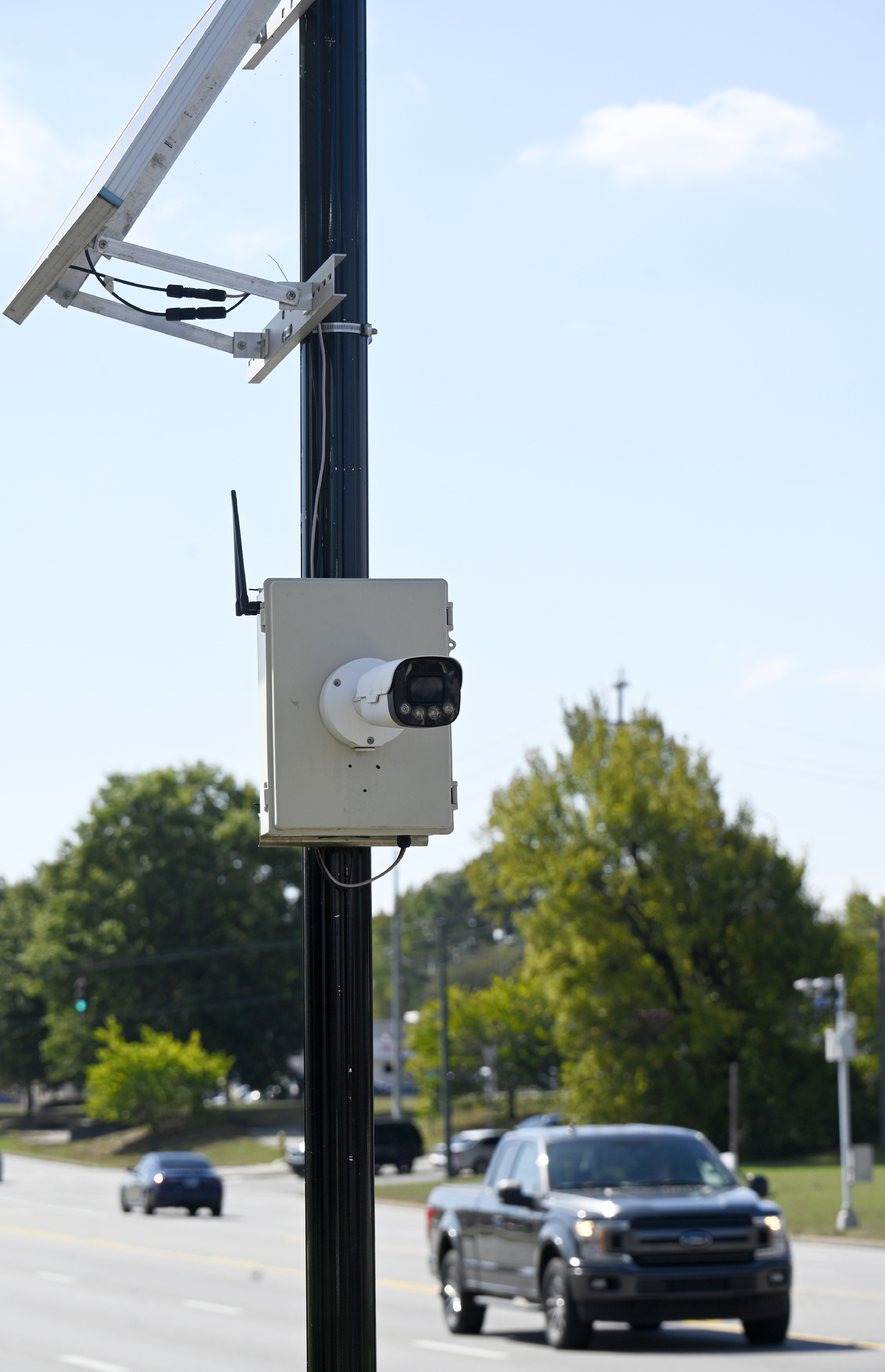
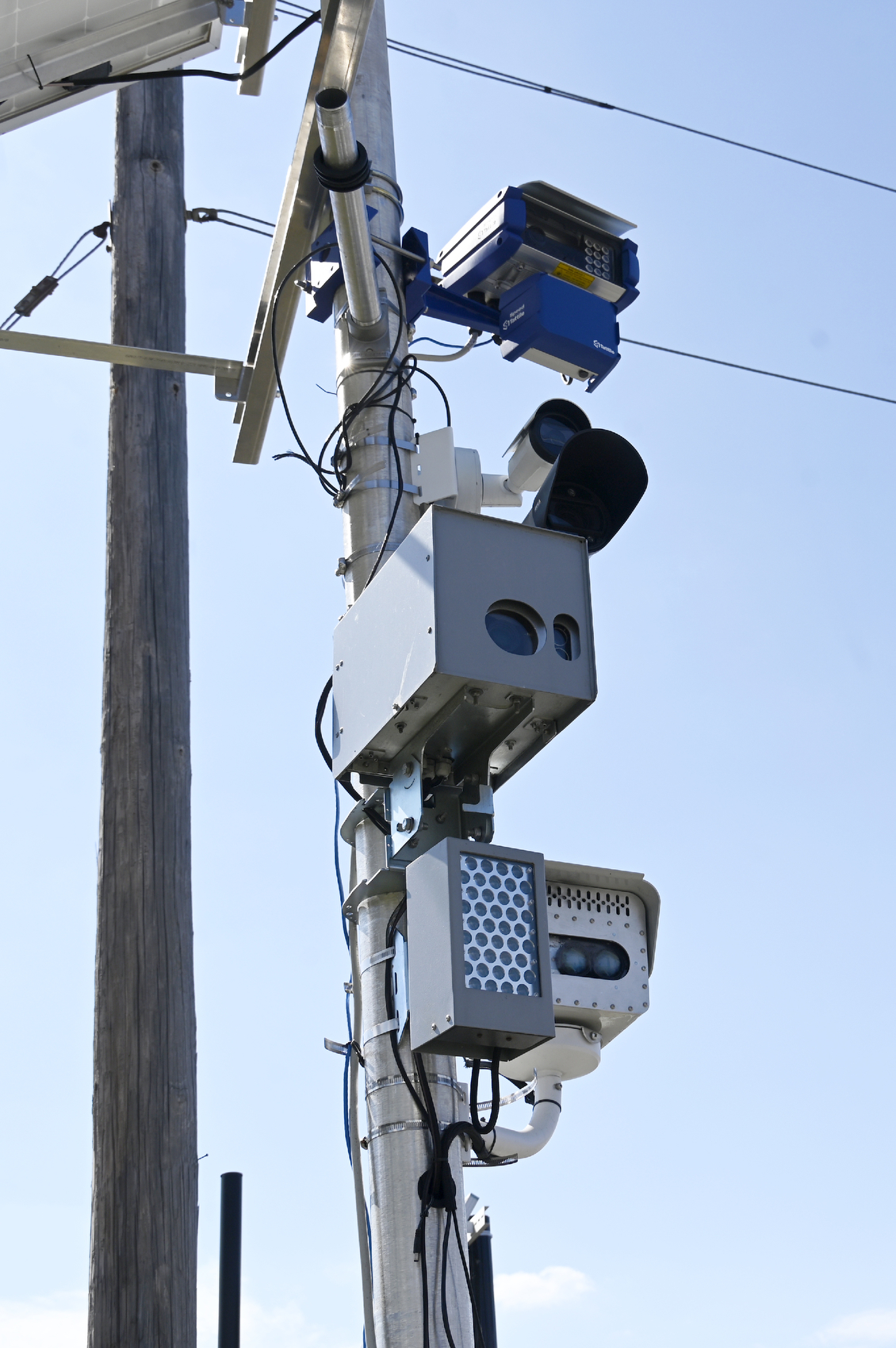


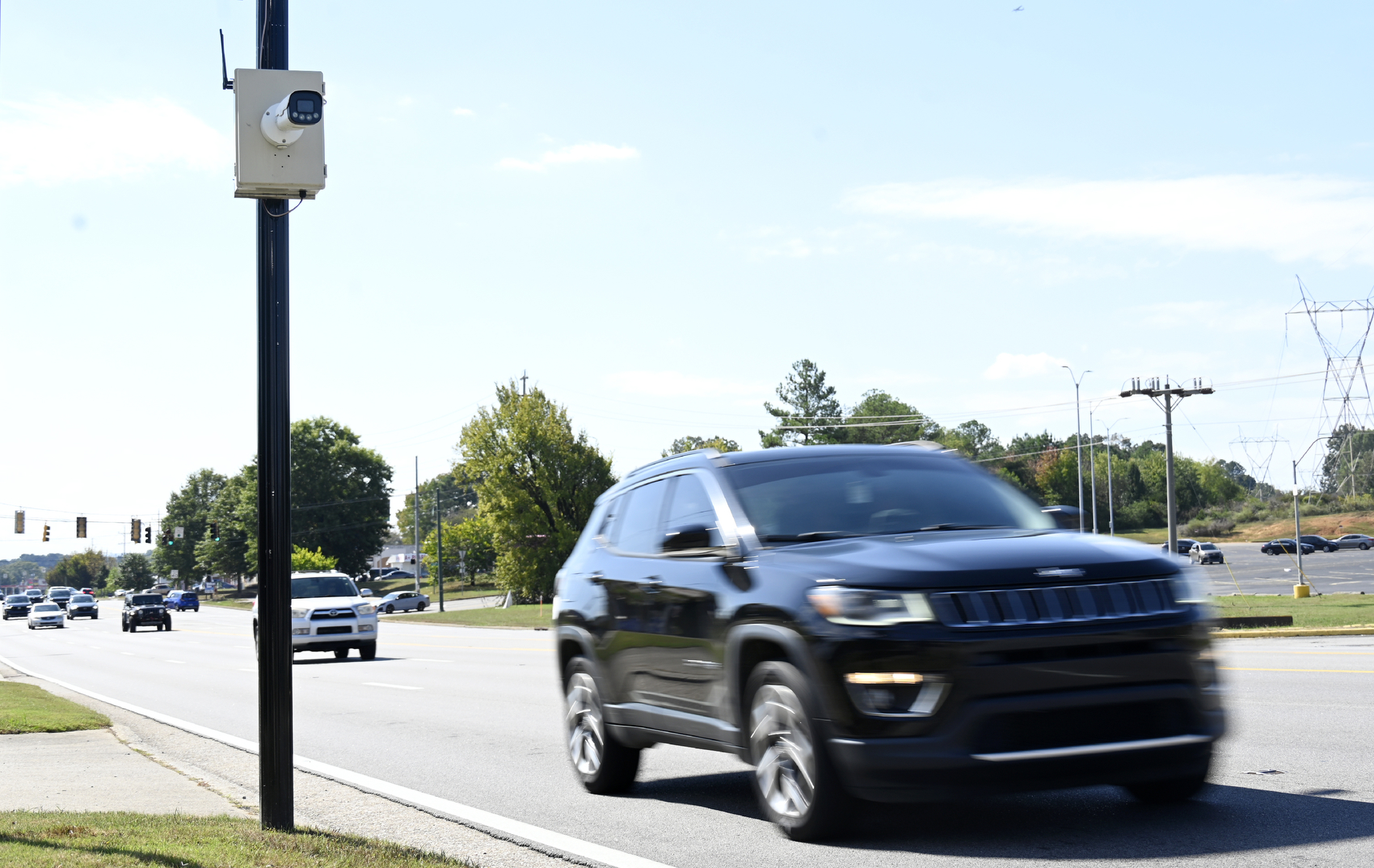
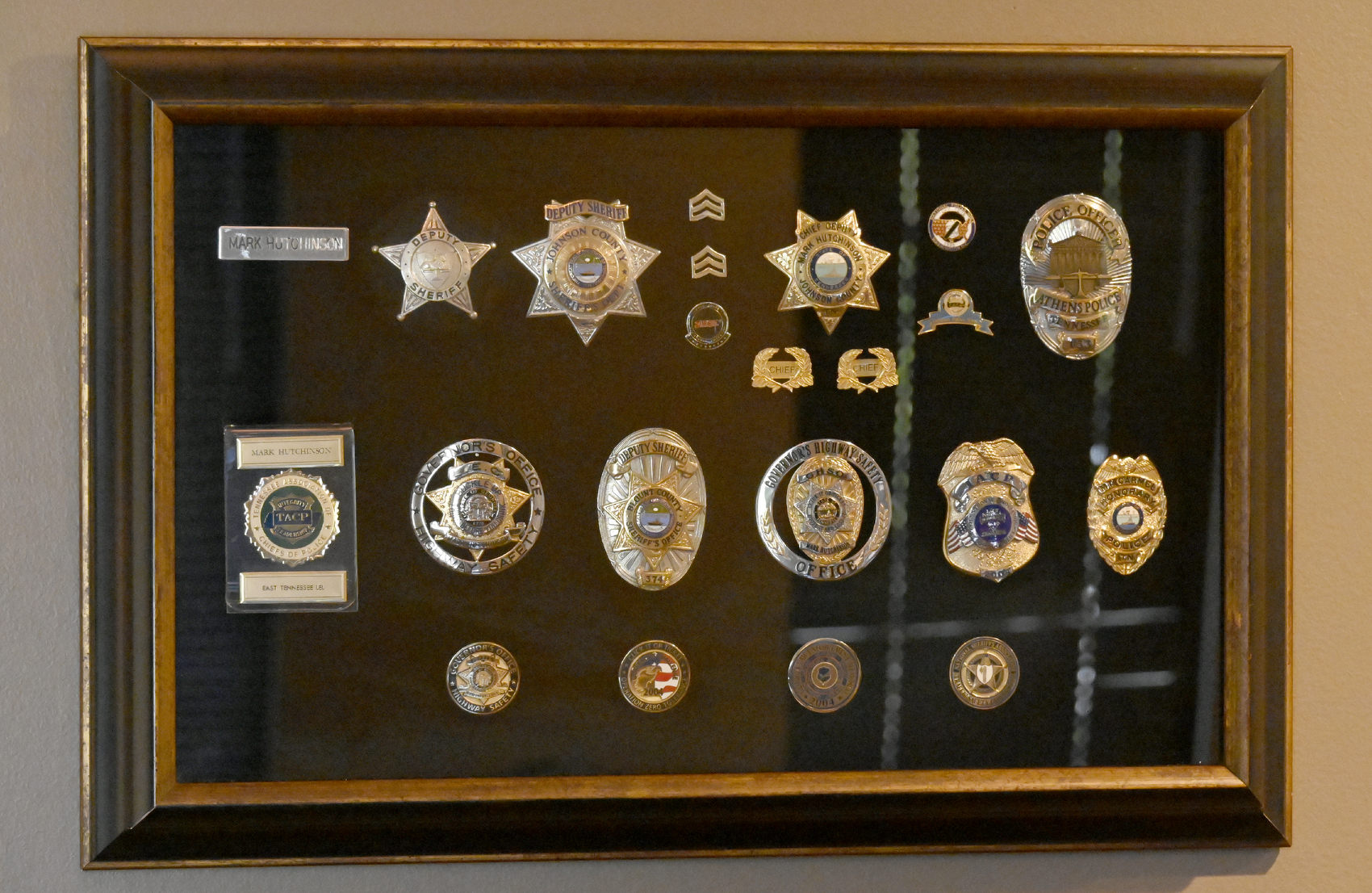
Depression, vivid dreams and self-inflicted guilt crept into Hutchinson’s life, he said. Law enforcement is largely reactive, responding to crimes and calls, but he began to focus on traffic enforcement as a way to save lives.
Now, Hutchinson runs a growing Chattanooga-based photo enforcement company, Blue Line Solutions, launched in 2010 with two employees. The company is built on the idea that technology can save lives before accidents happen, he said.
Chattanooga, which contracts with Florida-based NovoaGlobal, will soon activate speed cameras in two additional school zones. Hutchinson said his company didn’t bid on that contract because it predated his stationary photo enforcement program, but he hopes to compete when it expires.
“So if we have the opportunity to work with the city, we would love to do that,” Hutchinson said. “There’s nothing that I would find more pride in than taking care of our own community.”
THE COMPANY
When the company moved to Chattanooga from its original location in Athens, Tennessee, in 2017, it had three employees, Hutchinson said. There are over 100 employees now, and around a quarter of Blue Line Solutions’ employees are retired law enforcement.
“We have some paramedics and firefighters, but the reason that I hire public safety officials is because I don’t have to instill the mission in their heart,” he said, “because they picked up dead bodies for a living, just like I did.”
Companies held by private equity and the stock market don’t share the same values as he does, Hutchinson said.
“So those companies have zero incentive to make your community safer,” he said, “because it’s all about money. That’s where we’re different.”
There’s no company signage outside the roughly 24,000-square-foot building. Instead, test cameras dotting Highway 58 lead the way to the offices. A shared lobby divides processing and operations, with added security on the processing side to meet rules around pulling vehicle registrations.
Blue Line has kept a low profile. But as the company expands in Tennessee and Hutchinson wants to participate more in the Chattanooga community, he’s more open to interviews. He’s feared for his staff’s safety in the past, he said, because angry citation recipients sometimes show up at the offices trying to argue, leading to police calls.
Kayla Cash, Blue Line Solutions’ director of processing operations, said nobody’s ever happy to receive a citation, so employees have to believe in the mission of making communities safer. She started at the company five years ago, getting hired and moving up the ranks with no college degree and after working at a gas station.
With income derived from driving behavior around vulnerable populations, like school zones, the citations slow down in the summer months, but Hutchinson said the company manages well through any recessions or economic scares, apart from the pandemic, when children learned from home.
Cash said during the pandemic, Blue Line Solutions did not lay off a single employee, and she said employees found out after the fact that the company’s executives went without paychecks for months to keep the company floating.
“What companies do you know where the CEO’s job is to literally cut profits by 94%,” Cash said, “because, you know, that’s not good for business if you’re cutting profit, but that’s not what Blue Line’s about.”
THE PROGRAM
Hutchinson said his company’s program is modeled after the Click it or Ticket program, one he worked on when his career took him to the Tennessee Highway Safety Office. The recipe that worked for seat belts works for slowing drivers down, he said.
“Click it or Ticket is the first program that incorporated public information education and enforcement,” he said. “So it proved that public information alone doesn’t work, because if there’s no bite to the bark, people don’t listen.”
Most of the decreases in speeding, Hutchinson said, come well before law enforcement begins. Cities announce the program, and as in local municipalities like client cities Soddy-Daisy, Ringgold and Dalton, speeding plummets, as counted by the company’s five-day surveys. After public information pushes in Soddy-Daisy, for example, speeding vehicles were reduced in school zones by 85%, he said.
“Does every other company want to do it that way?” Hutchinson said. “No, because we just lost a ton of money, right?”
Across more than 100 contracts and around 800 cameras, the company’s average reduction in speeding is 94%, he said. The lowest speeding reduction is in a community in Georgia, at 72%, while the highest is 99%.
The company lives off the remaining speeders, Hutchinson said.
Blue Line Solutions does not issue the citations, he said. Whether to ticket a driver falls to the jurisdiction Blue Line partnered with. If an issue is brought to the company’s attention, like a vandalized or missing warning sign, the jurisdiction decides whether tickets become voided and refunded.
“So we never put ourselves in a position of creating policy like that,” he said. “We don’t have the authority to issue that citation. It is the police, the law enforcement agency that does.”
The company focuses on confirming registrations, making sure names and plates match, maintaining equipment and taking payment on behalf of police, Hutchinson said. If the mayor or any other citizen was caught by the cameras, he said, it would be up to the police whether to issue a ticket.
If there are errors in a camera, it doesn’t run, Hutchinson said. Otherwise, the cameras, which use laser technology, must be calibrated within a 2% margin of error at least once every year.
According to Hutchinson, his company’s revenue splits are designed to avoid the perception of cash grabs. All of the contracts are 50-50 revenue splits except for the company’s new contract with Knoxville, he said, as the city gets slightly more than half.
Initially, Blue Line Solutions aimed for contracts out of state, as Tennessee’s $50 cap on fines wasn’t economical and having angry ticket holders as neighbors isn’t ideal, Hutchinson said.
Now, the company is pushing more into Tennessee. Florida is the newest state for growth, he said, and after the passage of new photo enforcement legislation in North Carolina, the company is prepping to expand there, too.
LEGALITY
Whether the tickets are enforceable or not depends on the jurisdiction, Hutchinson said. In Tennessee, some cities choose to send citations to collections, while others don’t. In Georgia, the Department of Revenue can hold issuing vehicle registration for pending tickets.
Whether a municipality will take someone to court over a few hundred dollars in tickets doesn’t stop the company from trying to curb speeding, Hutchinson said.
“We have one lady in Georgia with 40 tickets,” he said. “Well, we finally called the police department and said, ‘Hey, we’ve noticed that this car comes through around this time in the afternoon and this time in the morning, right?’ And they went and stopped her, you know, when she was speeding and she got a real ticket from a real cop.”
Unlike a stop by a patrol officer, automated speed enforcement typically treats a violation like a civil fine tied to the vehicle’s registered owner. If someone borrows a car, the owner requests a transfer of liability in some jurisdictions.
Two years ago, Roy Blankenship got his speed camera ticket, which was photographed by a Blue Line Solutions camera, dismissed over signage.
The signage was just a few feet off where it needed to be in Blankenship’s case, Blue Line Solution’s Chief Strategy Officer Kelly Abercrombie said, and the company has a team of people dedicated to ensuring regulatory compliance, which now includes a traffic engineer.
Hutchinson said the company always errs on the side of violators, but again, the jurisdiction decides whether to void or refund tickets.
“We, if we feel one way ethically, we will do everything that we can do to push them into the position that we think they should be in,” Abercrombie said.
For the people who argue that being pulled over by an officer is better than photo enforcement, Hutchinson said traffic stops can be dangerous and, while the fines depend on the jurisdiction, a $50 fine is much better than a $150 fine.
“I can tell you that there’s very, very few agencies that have enough officers to put an officer in every school zone,” Hutchinson said. “Most every agency I visit these days is understaffed, because of where we are as a society, you know, young people don’t want to become cops like they did when I was, back in the ’80s or ’90s.”
(READ MORE: Most people aren’t paying their Chattanooga photo enforcement citations)
SAFETY FIRST
Abercrombie said he’s fought states widening laws past school zones, construction zones and S-curves, because the need to slow down drivers isn’t equal everywhere. If the company puts cameras on a six-lane highway, people slow down for the section and speed back up, with no real safety impact and a lot of angry people.
“But in a school zone, that’s exactly what you want,” Hutchinson said. “Some people slow down for a moment, and then move on, right?
Hutchinson said that if there’s not a true safety problem, then his company’s technology isn’t needed. When the technology does help, he said, it can have a ripple effect. He said that Hollywood, Florida, reported a 35% reduction in crashes after partnering with Blue Line Solutions.
“It’s a really interesting piece of, you know, data point that we have learned over the years,” Abercrombie said, “that if we’re in a school zone and that’s the only place in the city, you know, that has cameras, speeding across the entire city actually drops.”
Crash reductions have cost-savings ripple effects, Abercrombie said, as fewer wrecks mean fewer medical bills and property damage. Meanwhile, tax-funded first responders can focus on other calls.
For Hutchinson, the numbers are personal. The company’s mission, in helping prevent crashes, ties back to the one he witnessed as a young deputy and the small-town roots he came from.
Having grown up in Shady Valley, Tennessee, population 600, on a dirt road with no neighbors and no college degrees in the family, Hutchinson is proud of what he built.
“For a high school graduate coming from Nowheresville, USA,” he said, “I’m living proof that you can succeed, no matter your education, experience, your socioeconomics or anything.”
Contact breaking news reporter Mason Edwards at medwards@timesfreepress.com or 423-757-6409.