
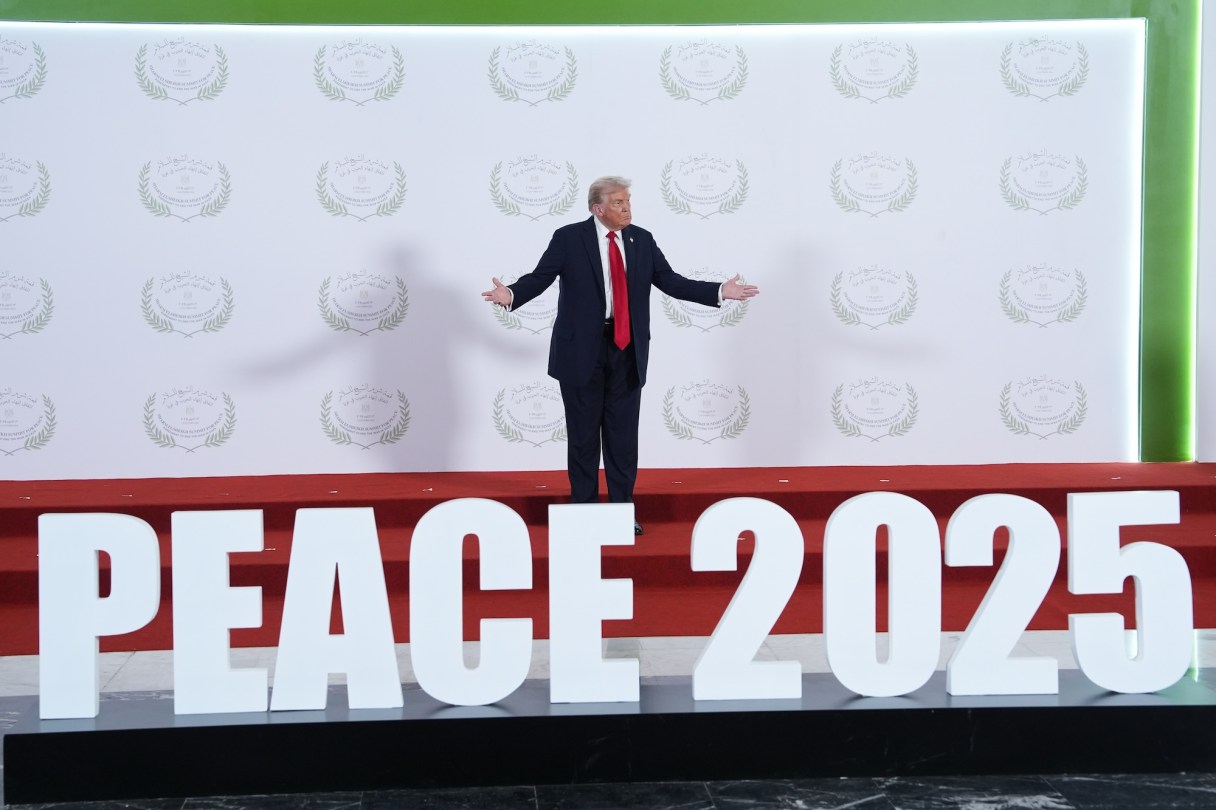
More than two years after they were seized by Hamas militants in the brutal Oct. 7 attacks, the 20 remaining living Israeli hostages have finally been released. U.S. pressure made the breakthrough possible. It will be just as vital to reaching a longer-lasting peace.
After several days of talks last week, negotiators in Egypt cemented an agreement to exchange all hostages held by Hamas, living and dead, for nearly 2,000 Palestinian prisoners held by Israel. No doubt the decimation of the terrorist group’s ranks by Israeli strikes concentrated minds among its leaders. Still, they only agreed to surrender the hostages — and thus much of their leverage — in the context of a broader White House proposal to end the war in Gaza, begin reconstruction and, after a period of international oversight, return the territory to Palestinian control.
Fleshing out those next stages will be much harder than agreeing to the hostages-for-prisoners swap. According to the U.S. plan, Hamas fighters must either disarm or go into exile. The group must surrender authority to an administration led by Palestinian technocrats and overseen by an international “Board of Peace.” Other countries must contribute troops to handle security before Israeli forces withdraw in stages to a buffer zone along Gaza’s borders. Funds must be raised for reconstruction and resettlement. The Palestinian Authority must undertake sweeping reforms before it can replace the transitional administration.
Each of these stages will be fiercely contested. Both sides will haggle for advantage — Hamas to maintain some of its arms and its political relevance; Israel to cede as little control as possible until Gaza is demilitarized and “deradicalized” to its satisfaction. Spoilers are sure to appear every time a breakthrough seems near. Regional governments may rethink their involvement if peacekeepers come under fire, while the PA’s pledges to reform may prove as empty as past ones.
Only continued U.S. engagement and arm-twisting has any hope of overcoming each party’s incentive to stall and accuse the other of reneging on its commitments. That doesn’t mean the U.S. should try to micromanage events. But no other player has its leverage over both Israel and the Arab states that will be responsible for ensuring Palestinian compliance with the deal. If the White House grows distracted, or frustrated by slow progress, fighting could easily resume.