
Ahead of the momentous 2020 presidential election, Georgia’s state leaders faced a choice.
The state’s voting system prior to that year consisted of 27,000 electronic voting machines that had been in use since 2002, which were reaching the end of their life and needed to be replaced.
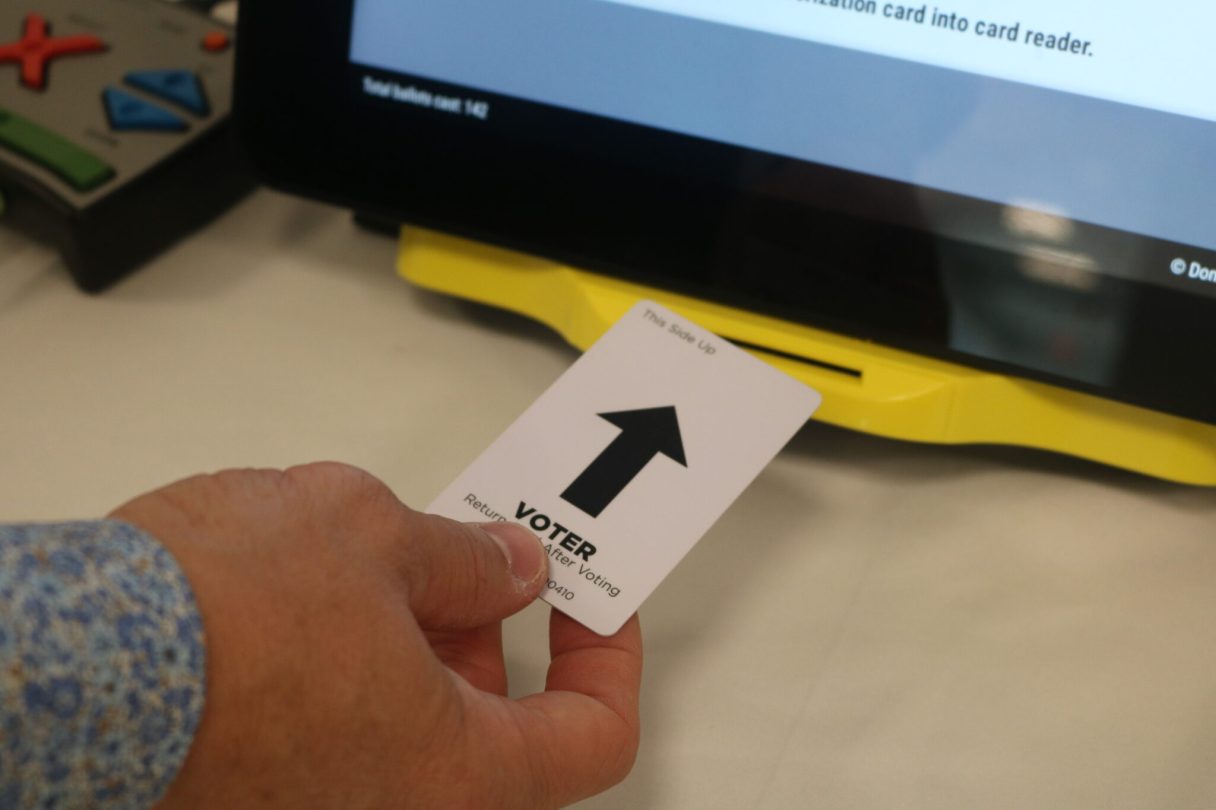
The voting machines, officially called direct-recording electronic voting machines, worked by capturing an electronic record of voters’ selections. At their polling place, voters received an activated voter card, which they inserted into a machine and used to make their selections. Once the voter had finished casting their ballot, the card was returned to a poll worker and its memory was wiped clean to be used for the next voter. Voters’ selections were saved electronically to a memory card on the machine, which was later collected by a poll worker and sent to election headquarters to be counted.
Cybersecurity experts had long voiced concerns about the electronic voting machines, which were once used by more than 40% of American voters, but in Georgia, lacked any sort of paper trail that could be used to verify election results after the fact. Additionally, the memory cards were vulnerable to viruses and other computer malfunctions.