
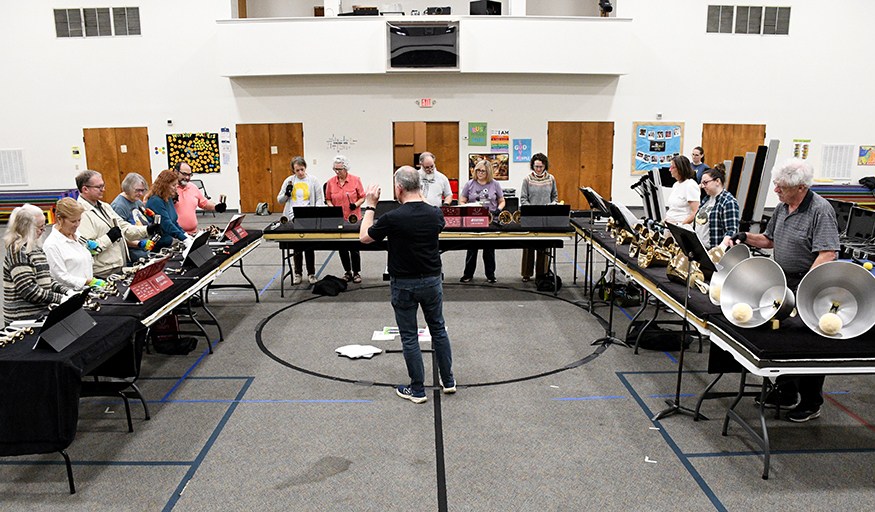
Often, when the Metropolitan Bells come offstage after a concert, director Gary Bynum is approached by an audience member who is amazed at the range of material the handbell ensemble just performed.
“Truly, you can do so much on handbells that people never imagined,” Bynum says. “So they come to a concert, then they’re like, ‘Oh, wow, I had no idea.’ And I’m like, ‘I know.'”
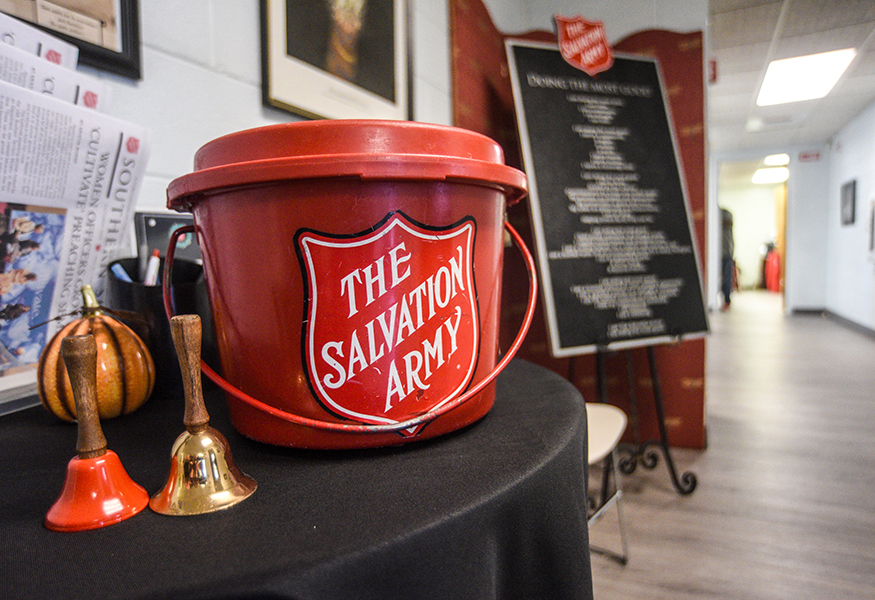
Being a member of a handbell ensemble is not just a case of grabbing a bell and ringing it like a Salvation Army volunteer standing next to a donation kettle during the holidays (more on that later).
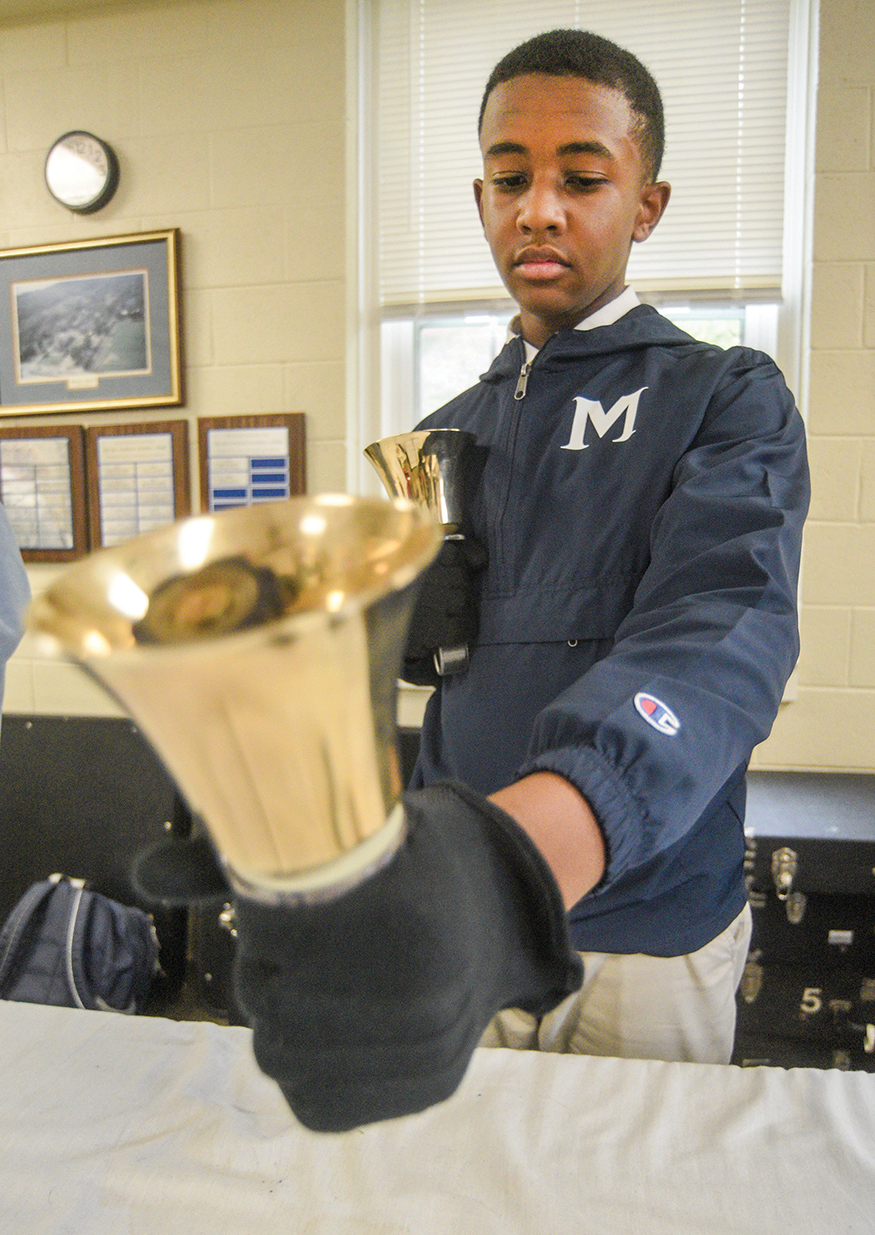
“It’s a very precision-dominant ensemble, and we work on a lot of things with our ensemble to make sure that we’re ringing together and cutting off together, if that’s what the rhythm demands,” says James Harr, director of students in the middle and high school handbell ensembles at McCallie School.
Playing handbells differs significantly from being a member in other musical outfits, Bynum explains.
Whether in a handbell choir or at a Salvation Army donation locale, Christmas bells are ringing in Chattanooga
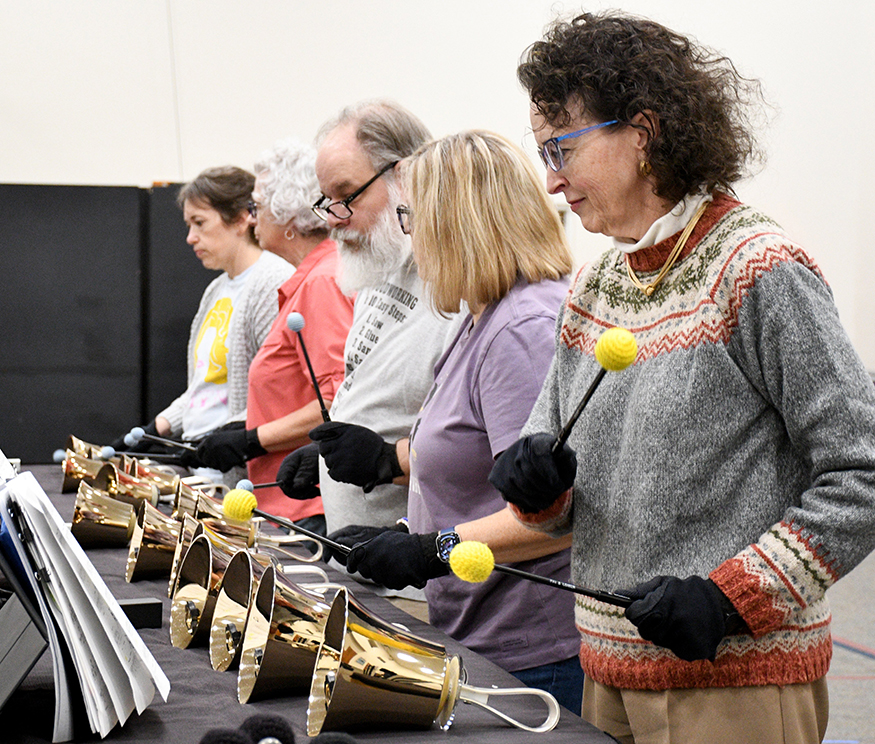
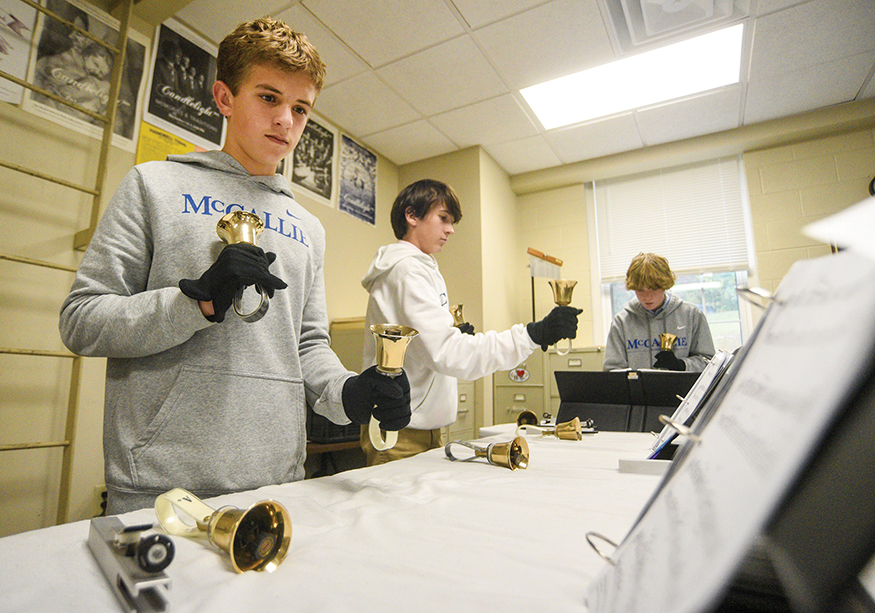
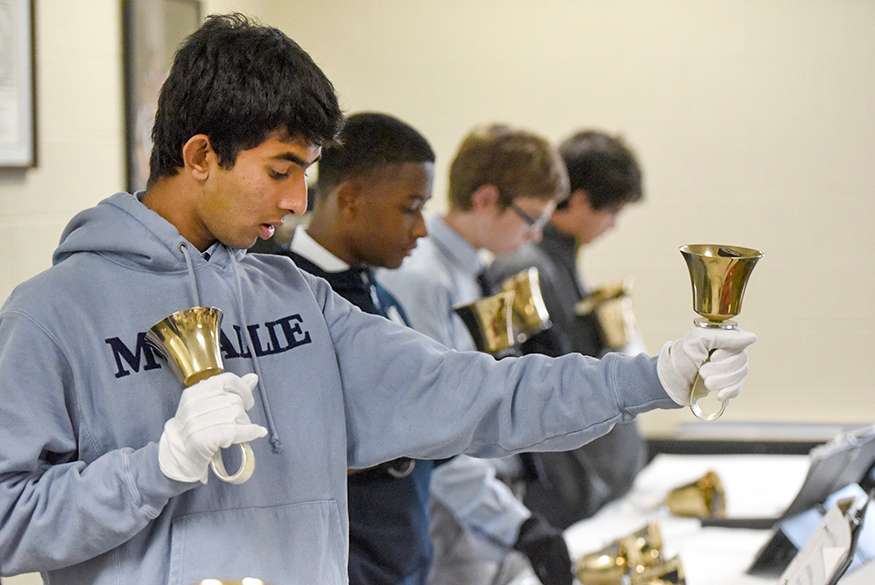
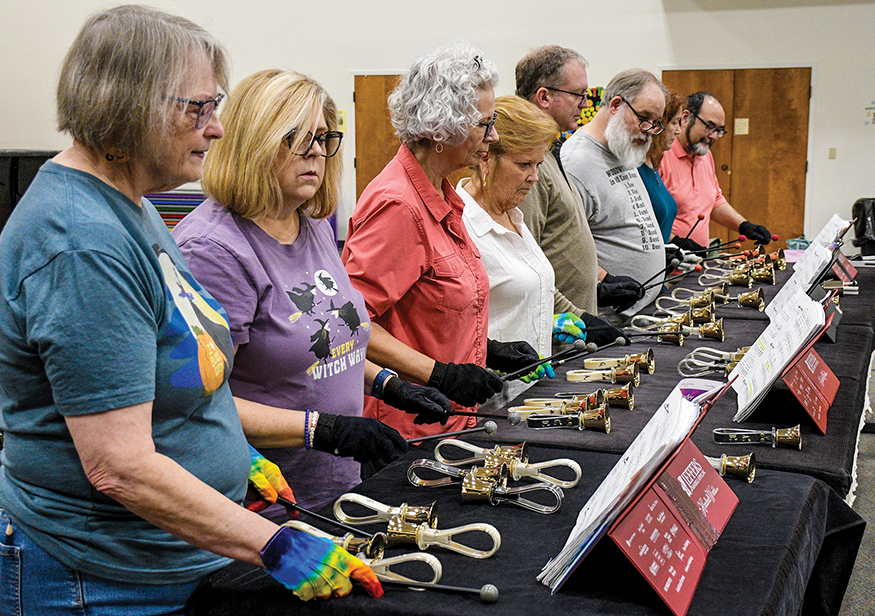
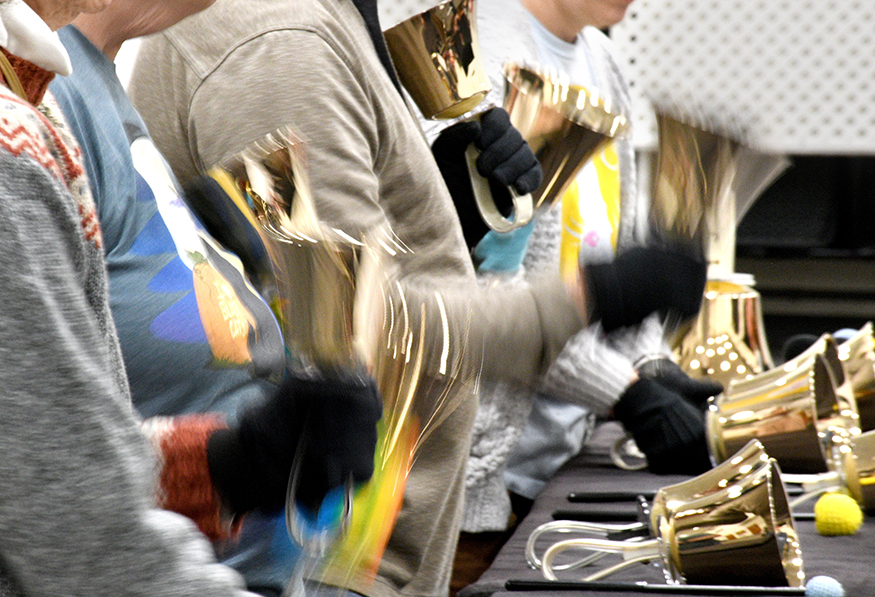
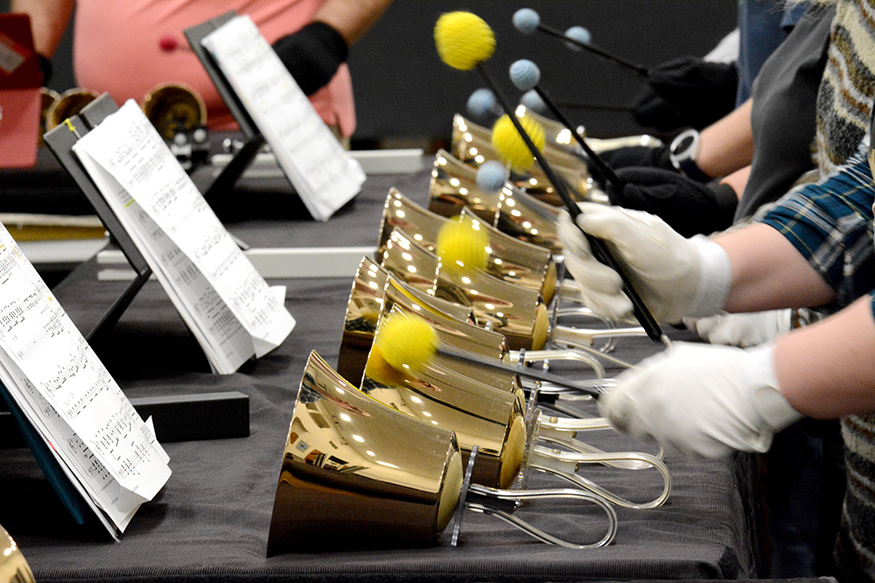
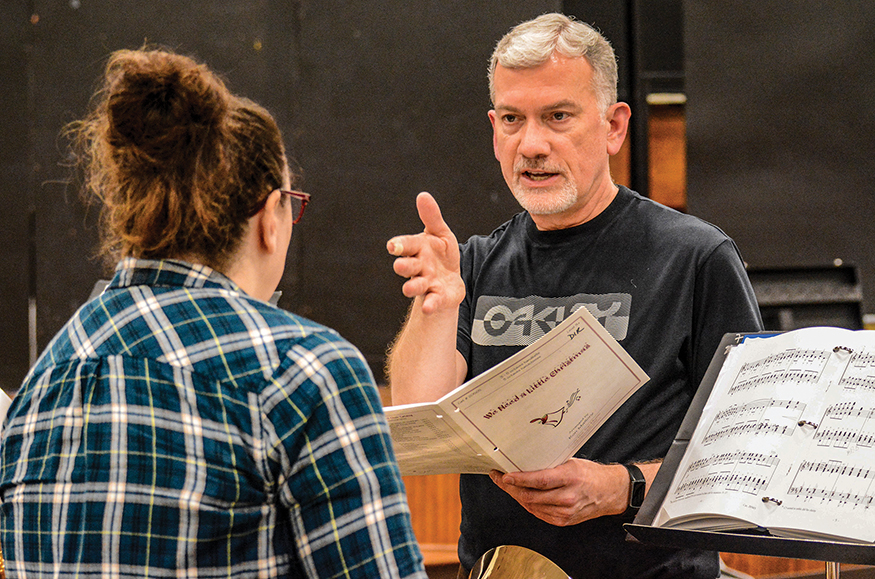
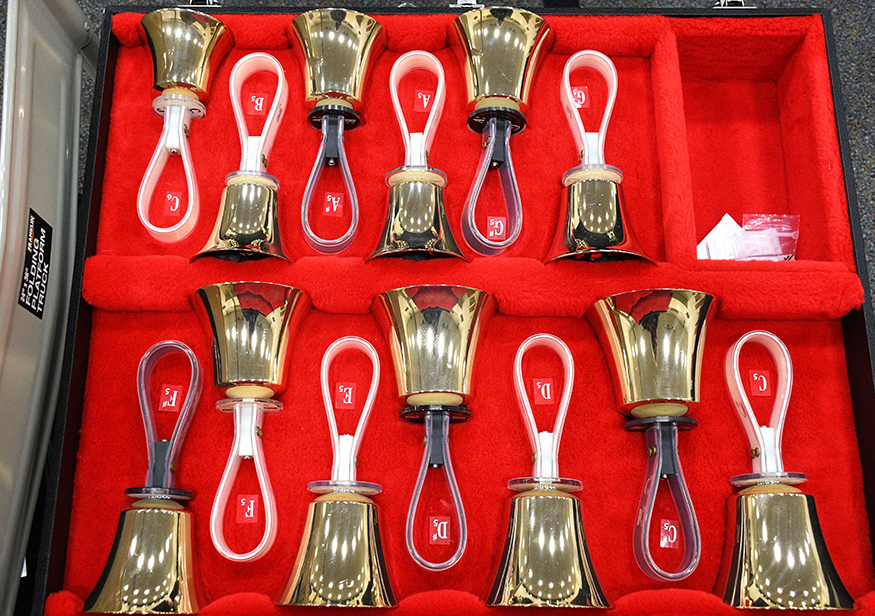
“For instance, let’s talk about a vocal choir,” he says. “In a choir, you’re going to have a bunch of sopranos, a bunch of altos, a bunch of tenors and a bunch of basses. There are many people singing your exact part, so if you miss something, don’t worry. Somebody else has got you covered.
“Well, in handbells, you are the only person playing your notes, and if you miss it, that’s a void.”
Harr compares a handbell ensemble to a “team sport.”
“I like to tell the guys, ‘There are no benchwarmers on this team. You’re going to be all involved, so you’ve got to stay engaged at all times. You can’t just go into la-la land or whatever,'” he says.
While handbells are often associated with church or other sacred settings, the ensembles in Chattanooga branch out in more directions. Both the Met Bells (what they like to be called) and the McCallie ensembles perform a wide range of material.
Classical and religious songs are natural elements in both groups’ repertoires, but they also explore other genres. Beatles songs are an easy fit on their playlists, Bynum and Harr say. The McCallie ensemble also performs, among others, Leonard Cohen, Coldplay and Wham!, while the Met Bells venture into Trans-Siberian Orchestra and Broadway musicals.
“You name it, and we’ve probably played it,” Bynum says.
During the Christmas holidays, when both have concerts (it’s the Met Bells’ busiest time of year, Bynum says), they perform sacred songs and also Christmas carols and secular material. Bynum notes that Mariah Carey’s “All I Want for Christmas Is You” is a must-play during Met Bells’ holiday shows.
At McCallie, handbells are an elective course, and a musical background isn’t necessary to take it, but it certainly doesn’t hurt, Harr says.
“They don’t have to display any proficiency in music or handbells or anything like that. It definitely helps if they’ve had some music experience, but it’s not a requirement,” says Harr, who is also a professor and director of Choral Programs at the school.
The middle school ensemble averages 19 to 20 members at a time, while the high school one fluctuates between nine and 11 students, he says.
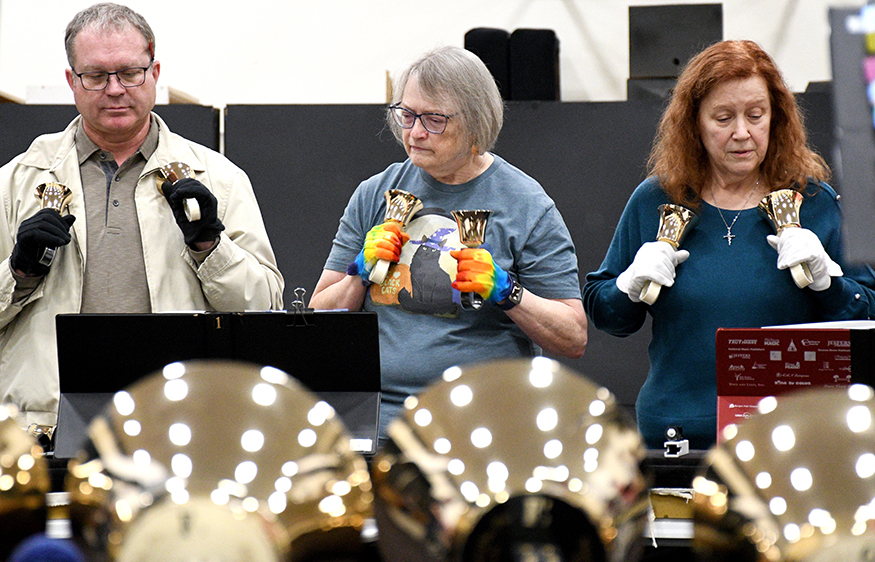
Not all of the current 14 members of Met Bells are full-time musicians. In fact, few are.
“We’ve had a couple of folks whose livelihood is based on music, but by and large, we are everything else. We’re teachers, attorneys, nurses, you name it,” says Bynum, who works part-time as associate music director at Christ United Methodist Church in East Brainerd as well.
When it comes to holiday bells, however, the ones most familiar to the general public are heard beginning November 15 and lasting until Christmas Eve. We’re talking about the folks who stand outside for hours, ringing a bell next to those red donation kettles of the Salvation Army.
Each holiday season, the organization deploys a virtual army of bell ringers at local Food City, Walmart and Hobby Lobby locations around the Chattanooga area, according to Kendall Hudson, community relations and development manager for the organization.
It doesn’t have an official handbell ensemble, she says, but sometimes more music than bell ringing can be heard.
“We have had some people who are musicians who will go out and ring bells and sometimes will take their instruments with them, whatever instruments they play,” she says.
About 20 of the holiday bell ringers are hired at $12 an hour, while the rest are unpaid volunteers, Hudson says. Paid ringers — who sometimes are homeless — work from 10:30 a.m. until 6 p.m. (with breaks, of course), while volunteers man three-hour shifts.
Training for the job is not musical in nature, but more along the lines of how to be nice when greeting people and not be pushy or demand donations. Instructions on handling the bell are pretty much “just ring it.”
“That’s the only instruction,” she says. “We warn people that it gets a little tedious, but to just keep ringing it.”
Find the Metropolitan Bells at metropolitanbells.org, the McCallie bell ringers at mccallie.org/arts/music and the Salvation Army at southernusa.salvationarmy.org/Chattanooga.