
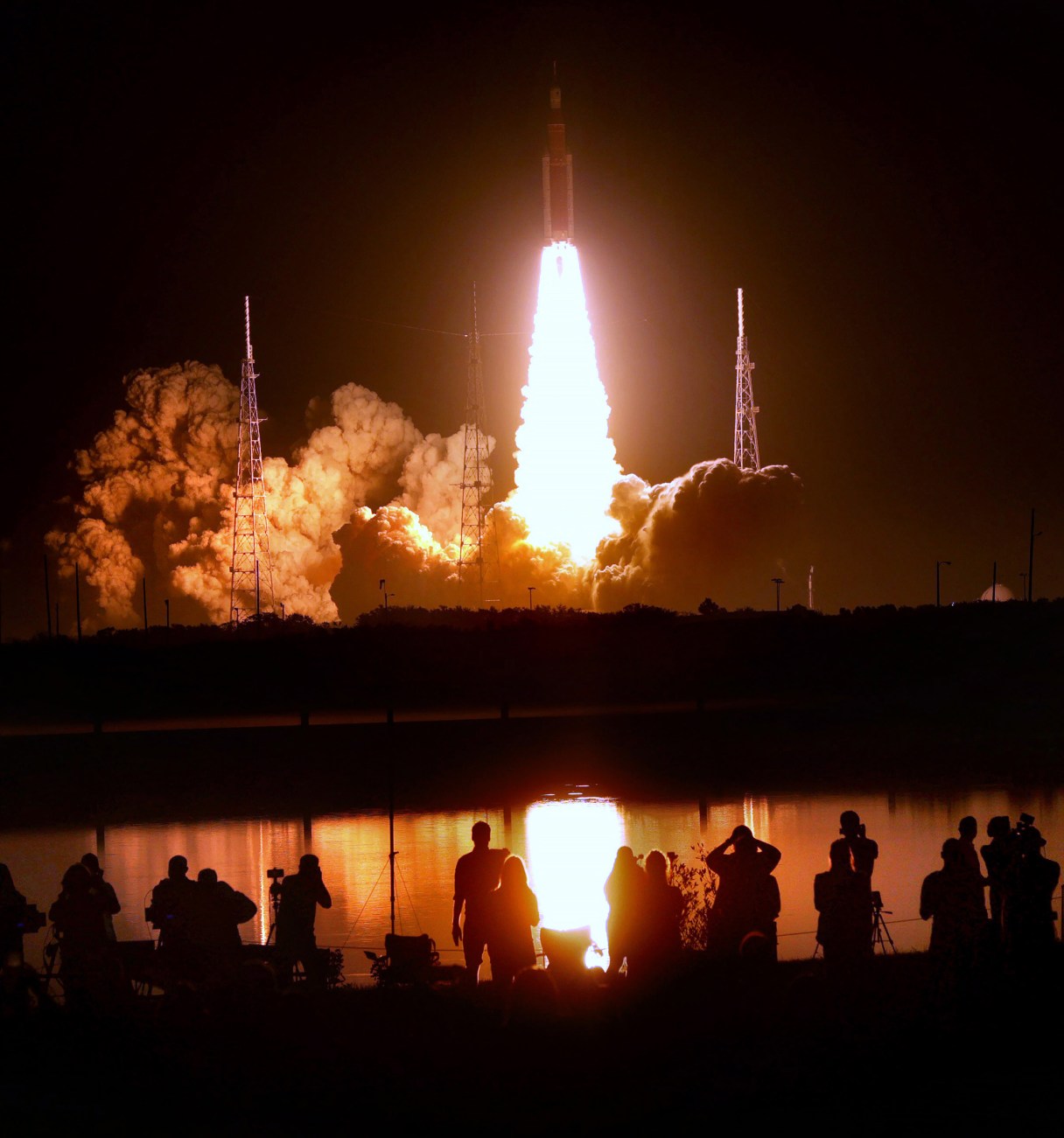
Next month, four astronauts are expected to board a space capsule called Orion, blast off on a rocket known as the Space Launch System, and exit low-Earth orbit for the first time since 1972, en route to a 10-day flyby of the moon. Unfortunately, their mission will be riskier than it should be.
The planned flight is a crucial component of the National Aeronautics and Space Administration’s Artemis mission, which aims to return humans to the lunar surface. Thus far, the mission has been plagued by soaring costs, repeated delays, technical shortcomings, contracting woes and burgeoning operational complexities. One former NASA chief recently called it “a path that cannot work.”
Orion is an especially concerning element. Across two decades of development, the capsule’s costs have exceeded $20 billion. By many accounts, it’s antiquated, overweight and ill-suited to the mission. Experts have been warning about its deficiencies since at least 2009. Key parts of its life-support system have yet to be fully tested.
In an uncrewed test flight in 2022, Orion’s separation bolts suffered unexpected melting and erosion, while its power-distribution system reported some two dozen disruptions in flight. An inspector general report after the test also noted problems with hardware, software, imagery, circuitry, batteries, launch debris and more.
Most worrying was the performance of the capsule’s heat shield, needed to protect the astronauts as they reenter the atmosphere at 25,000 miles per hour. During the test, trapped gases from the shield’s outer coating led to unexpected cracking and an ominous debris trail.