
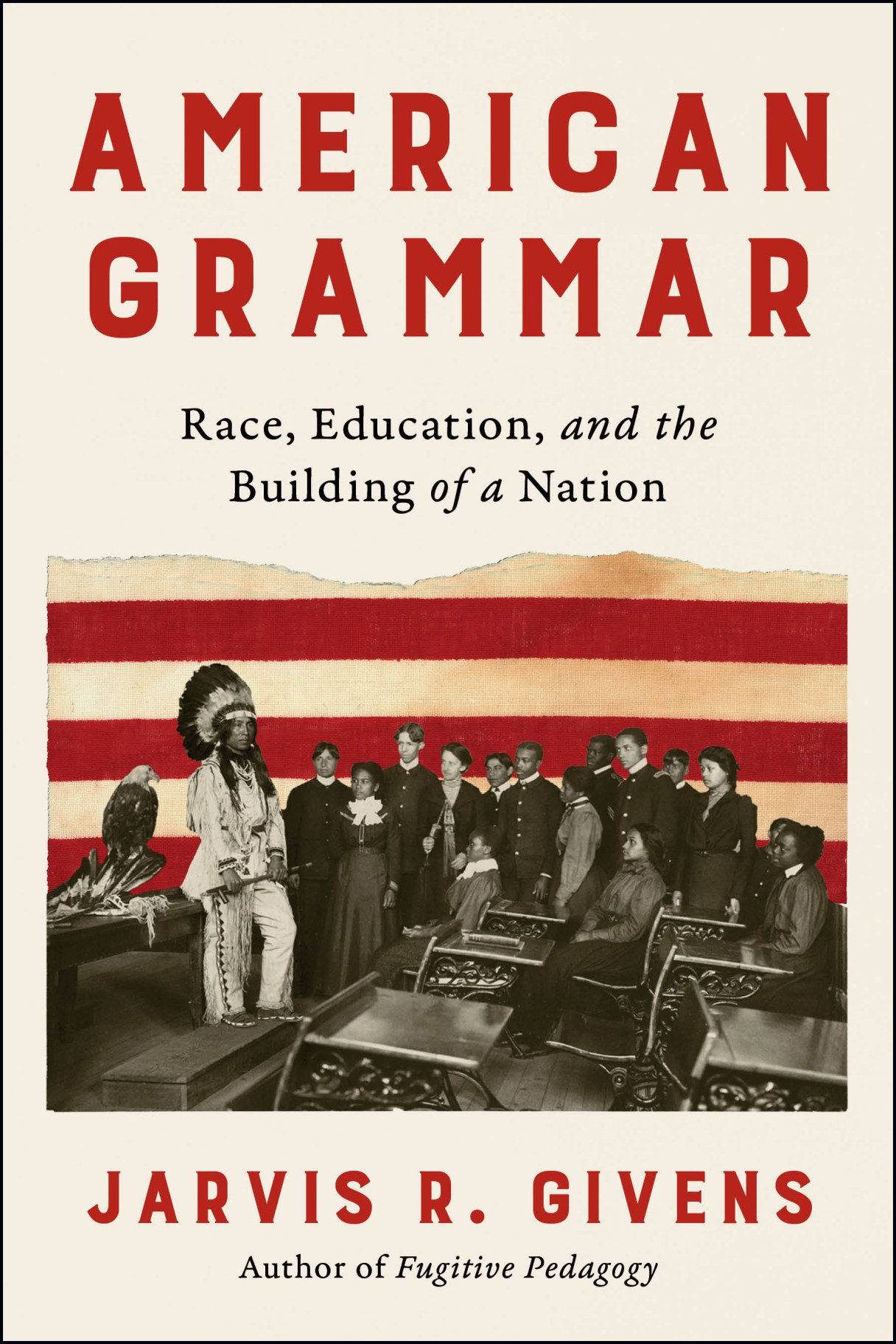
“American Grammar: Race, Education, and the Building of a Nation” By Jarvis R. Givens (Harper, 464 pages, $32)
Jarvis R. Givens’ “American Grammar: Race, Education, and the Building of a Nation” begins with a story.
On a late spring day in 1899, a woman named Susan McCoy traveled to “Old Goodland,” a school in the Choctaw nation of present-day Oklahoma, to claim her rights before the Dawes Commission — a group established by the federal government to dissolve tribal lands and allot them to individual members of the Five “Civilized” Tribes — Cherokee, Chickasaw, Choctaw, Creek and Seminole — who had been forced out of their native lands in the Southeast in the 1830s.
Although Susan, born to an enslaved Black woman, was considered “colored,” she knew her father had been Choctaw, as was her late husband, with whom she had five children. She saw herself as both.
At Goodland, there were two lines. One was for Black people who, in the complex race relations of Indian Territory, were Choctaw citizens; the other was for Choctaws. Although her Choctaw ancestry had been recorded on the tribal census, her appearance made her afraid to choose the Native line. Ultimately, her claim was denied.