
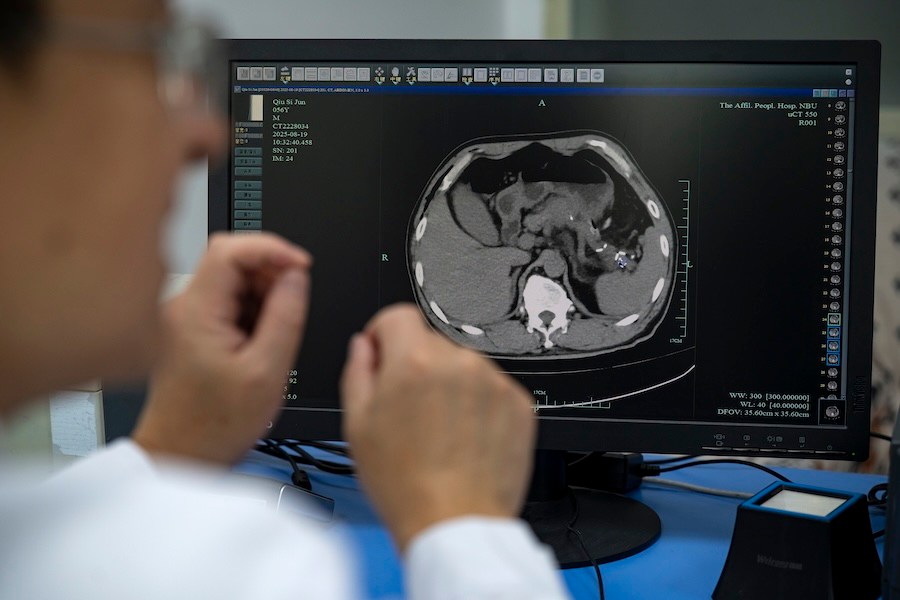
NINGBO, China — Three days after Qiu Sijun, a retired bricklayer in eastern China, went for a routine diabetes checkup, he received a call from a doctor he hadn’t met before. The doctor, the head of the hospital’s pancreatic department, wanted him to come in for a follow-up.
“I knew it couldn’t be anything good,” Qiu, 57, recalled.
He was partly right. The bad news was that Qiu had pancreatic cancer. But there was good news, too: The tumor had been detected early. The doctor, Zhu Kelei, was able to remove it.
This was possible only because of a new artificial-intelligence-powered tool that the hospital was testing, which had flagged Qiu’s routine CT scan before he had any symptoms. The tool is one example of how Chinese tech companies and hospitals are racing to apply AI to some of medicine’s most stubborn problems.
Pancreatic cancer is one of the deadliest forms of cancer, with a five-year survival rate of around 10%, largely because early detection is so hard. Symptoms often do not appear until the cancer has advanced.