
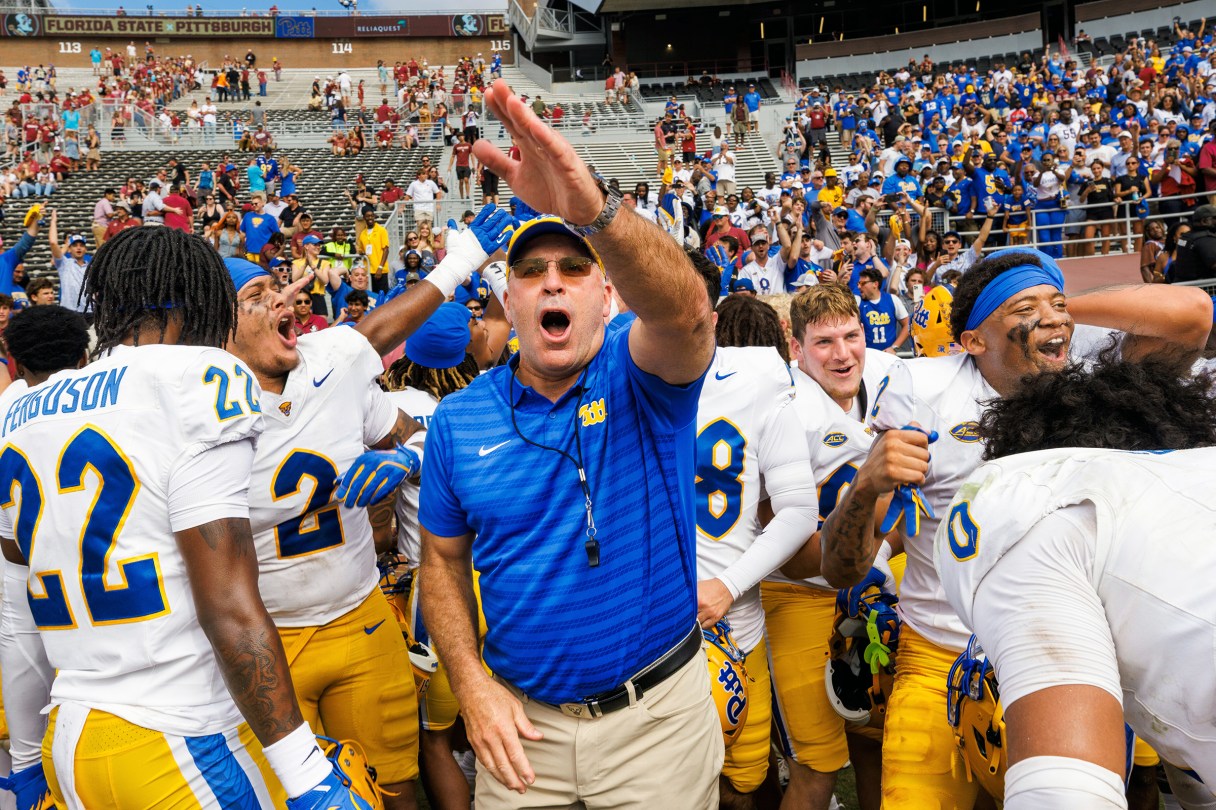
PITTSBURGH — Just the thought of it makes Pat Narduzzi cringe.
Picture this: There the University of Pittsburgh football coach is, standing in front of his players after a largely successful regular season, explaining to the Panthers why they aren’t going to the Atlantic Coast Conference championship game. It might not have anything to do with what they did or didn’t do on the field, but because of a spreadsheet that explains the league’s byzantine tiebreaker policy says.
“I think there’s nothing worse than walking in a team room saying, ‘Sorry guys, we’re not going because we didn’t play that team or they didn’t play that team,'” Narduzzi said. “But it’s not my job, it’s what (the ACC) did.”
The recent expansion to supersized versions of the ACC, Big Ten, Big 12 and Southeastern Conference — all of which have at least 16 football teams apiece, all of which have done away with the idea of separate divisions — means the days of having the league’s top two teams largely sorted out between the lines are long gone in the chase to reach the 12-team College Football Playoff.
Welcome to the superconference era of, as Duke coach Manny Diaz put it, “unintended consequences.” And it’s especially messy in the ACC, where Diaz’s Blue Devils compete.