
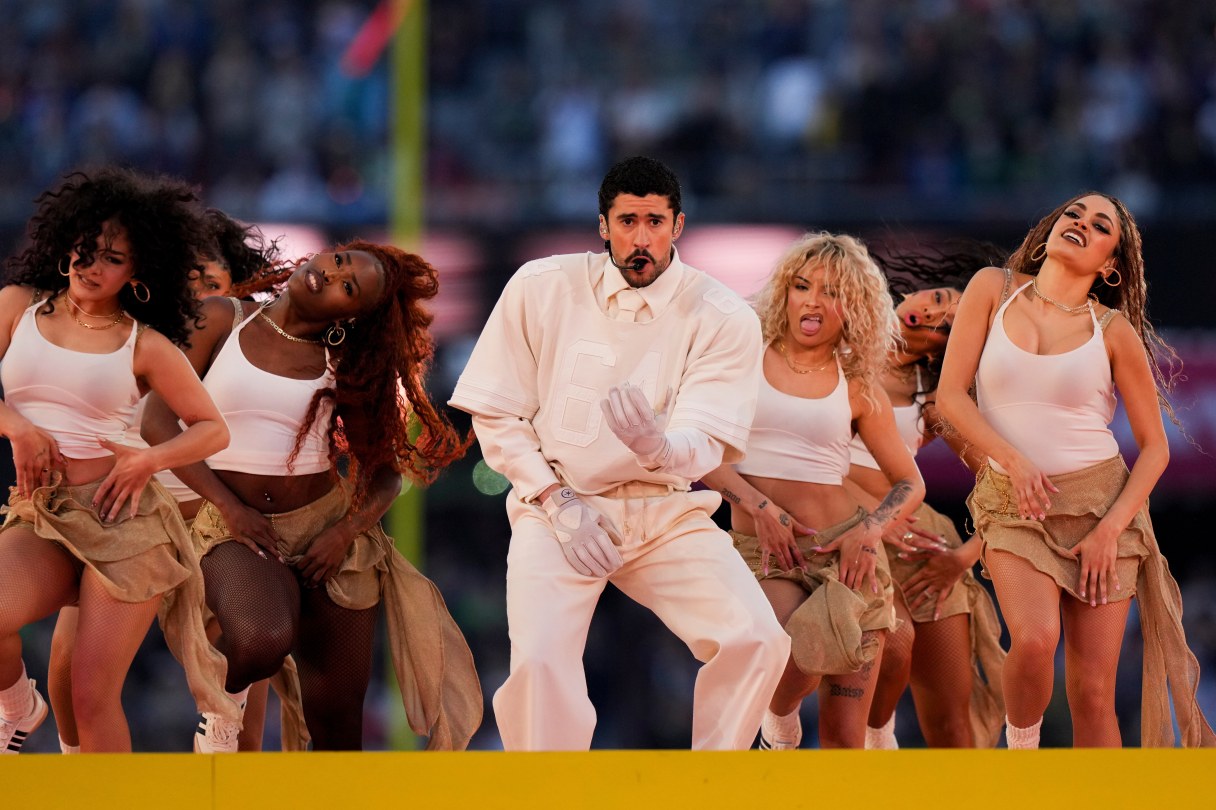
The sun hung low when Bad Bunny emerged in Puerto Rico’s sugar cane fields during his halftime show, surrounded by jíbaros in pavas (rural farmers in traditional straw hats), viejitos playing dominos (an affectionate term for older men) and a piragua stand (shaved ice) — undeniable symbols of Puerto Rico.
From a small Caribbean island with a complicated colonial history, to the world: The artist born Benito Antonio Martínez Ocasio brought Puerto Rican culture to the Levi’s Stadium in Santa Clara, California, for his 2026 Super Bowl halftime show in what was always going to be a landmark moment for Latinos.
He started with his huge reggaeton-and-then-some hits, “Tití Me Preguntó” moving into “Yo Perreo Sola,” as he remerged on top of the casita (“little house”) from his Puerto Rican residency — Cardi B was a guest at his pari de marquesina (“house party.”)
Then he crashed through the roof — Daddy Yankee’s “Gasolina” played for a moment, clearly an acknowledgement and celebration of the Puerto Rican artists who laid the path for his career to go global.