
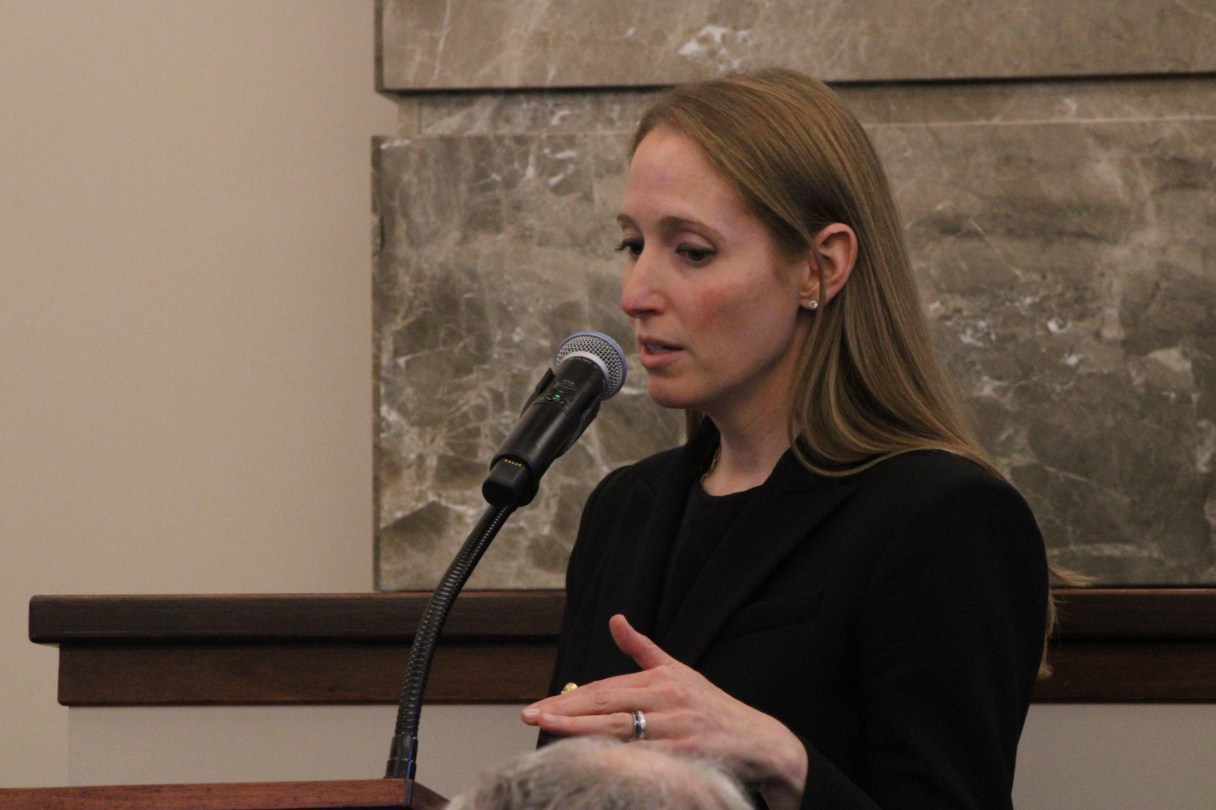
A physician specializing in obesity urged state health insurers to cover comprehensive treatment of the condition, including medication like GLP-1s and lifestyle management.
Speaking to the Chronic Weight Management and Type 2 Diabetes Task Force, Dr. Katherine Saunders said insurers must view obesity as a condition and not a lifestyle choice.
“Obesity is a chronic disease, meaning that we don’t have a cure right now, and that in order to manage obesity effectively, it needs to be treated long term,” Saunders said Thursday. “So having patients taking GLP-1 medications and then stopping them, what a lot of people aren’t talking about is when somebody stops a GLP-1, they regain a significant amount of that weight.”
According to the National Library of Medicine, after 68 weeks on semaglutide, a GLP-1 medication, patients who lost 17.3% of their original weight gained 11.6% of it back after withdrawal.
It was not clear if legislation would result. Rep. Ed Oliver, R-Dadeville, the chair of the task force, said it will meet again in three months during the 2026 legislative session.
“We will take up some of these topics. As the world changes in front of us, I’m sure that in three months things will be a little different than they are today,” he said.
Saunders and her mentor, Louis Aronne, one of the first obesity specialists, created FlyteHealth, a comprehensive care model. Saunders told the task force that comprehensive care is the only way to treat obesity.
“It’s not just about getting every single patient with obesity a prescription for GLP-1 receptor agonist,” Saunders said.
She is one of nearly 10,000 physicians in the United States that specialize in treating obesity, a chronic health condition, she said. There are 77 obesity physicians in Alabama, according to the American Board of Obesity Medicine.
According to the U.S. Centers of Disease Control and Prevention, 39.2% of Alabama’s population was obese in 2023, the fifth-highest percentage in the nation. About 1 in 5 Americans are obese, according to the CDC.
The CDC defines obese as a person with a body mass index of greater than 30. BMI was created in the 1830s by a Belgian statistician, mathematician and astronomer who wanted to establish what an “average man” was, according to the National Library of Medicine. It did not include age in the calculation and was not intended to be used as a medical tool.
Saunders said that obesity cannot be treated with only GLP-1 medications like Ozempic, Wegovy and semaglutide injections, which have become increasingly popular.
“There’s not a single person I can think of who hasn’t had a bump in the road,” Saunders said. “If there isn’t a plan for long term care, and somebody hits a bump in the road, and they’re not still following their medical team, they’re going to regain all their weight. Then they’re going to be in a really bad situation.”
According to ClinCalc DrugStats, a data resource that is managed by pharmacist Sean Kane, almost 5.4 million Americans were prescribed semaglutide, one of four major GLP-1 medications, in 2023. It was the 19th most prescribed medication at almost 26 million prescriptions. It was also one of the most expensive. The average drug cost was $1,322 per prescription with an average out-of-pocket cost of $53 per prescription, according to ClinCalc.
According to a recent KFF poll, a nonprofit health policy research organization, 18% of adults have taken a GLP-1 for weight loss, diabetes or another condition, with 12% currently taking one. That’s an increase of six points since May 2024, according to the poll.
FlytHealth’s program includes constant contact with physicians, lifestyle management and medication when necessary. Saunders said that not all patients need a GLP-1 to achieve their health and weight goals.
“We start with less expensive, generic alternatives. The medication Metformin can be incredibly effective for a subset of people,” she said. “We use GLP-1s if and when we need to.”
She said there are a lot of factors that lead to obesity, and some are not preventable. Conditions like polycystic ovarian syndrome, insulin resistance and sleep apnea contribute to obesity and the inability to lose weight and not gain it back.
Dr. Jonathan Parker, an obesity physician in Muscle Shoals, Alabama, said that there are a lot of hoops providers have to jump through to get patients the medication they need. He said it is hard to get GLP-1s covered for a patient that needs it, he said, like somebody with a BMI of 27 and polycystic ovarian syndrome.
“We have guidelines from all these national organizations that are telling us ‘This is what you should do.’ At times, that also includes the recommendation to use GLP-1s,” he said.
Despite the popularity of GLP-1 medications, half of the adults polled said it is hard to afford the medication. Rising health costs have impacted public and private insurance, with expensive prescriptions contributing. The Trump administration announced this month that the out-of-pocket prices of Ozempic, Wegovy, Zepbound and Orforglipron, will fall when purchased through TrumpRX.com, a new website the White House has created to spotlight Trump’s work to reduce drug prices.
Oliver said he has been taking a GLP-1 for the last few years and pays $500 per month out of pocket.
“The thought of not doing that anymore is really exciting,” Oliver said.
According to the administration, Ozempic and Wegovy will fall from $1,000 and $1,350 per month, respectively, to $350 per month, and Zepbound and Orforglipron, if approved, will fall from $1,086 per month to an average of $346 per month.
“We’re hopeful that the reduction in the cost of real brand name medications will help take care of some of this. But it’s a very vulnerable population that will pay a lot or do anything to finally treat their disease,” Saunders said.
Read more at AlabamaReflector.com.