
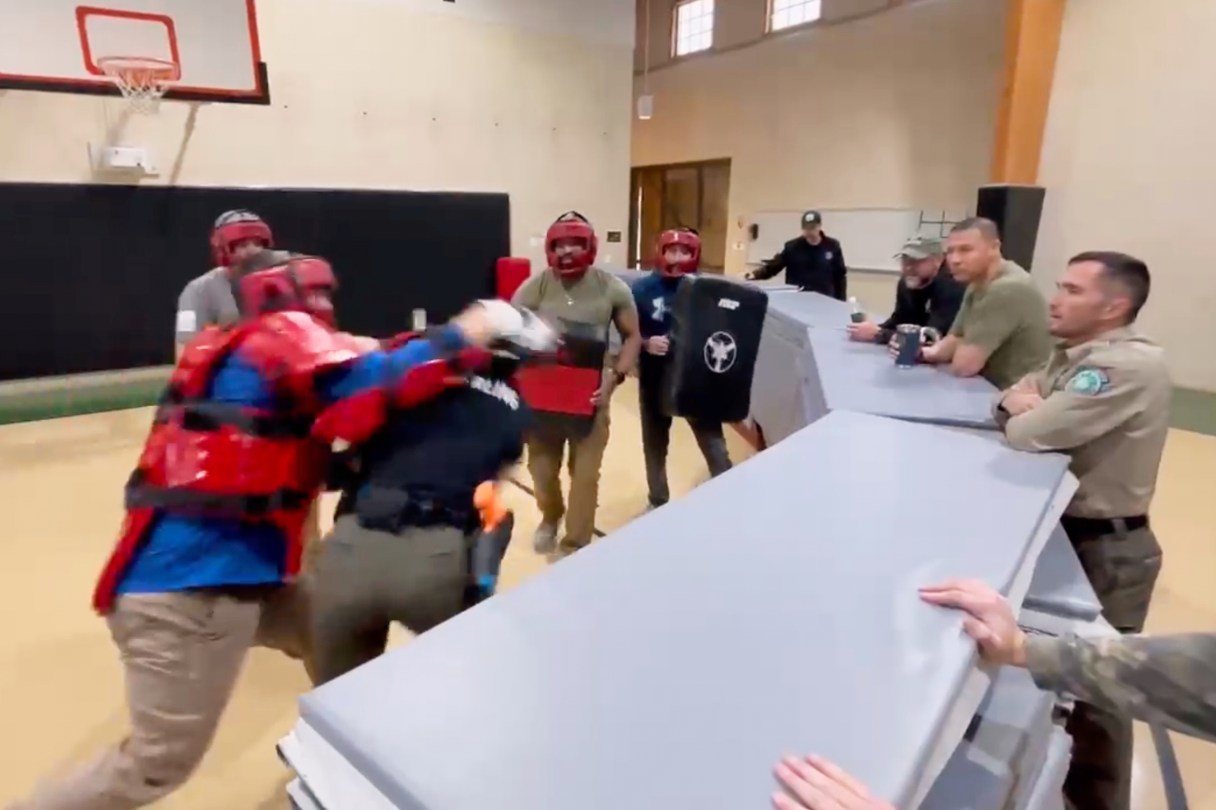
When recruits were repeatedly punched and tackled during a role-playing exercise at the Texas game wardens academy last year, they were taking part in a longstanding police training tradition that critics say should be retired.
By the end of the day, at least 13 of the cadets reported injuries. At least two concussions. A torn knee. A bloody nose. A broken wrist. Two would need surgery. One would resign in protest. Another quit even before the drill.
A state investigation later found nothing wrong with the drill, which its supporters say is intended to teach recruits to make good decisions under intense physical and mental stress. The experience on Dec. 13, 2024, may have been traumatizing for some at the Texas Game Warden Training Center in Hamilton, Texas, but it was not unique.
Since 2005, drills intended to teach defensive tactics at law enforcement academies have been linked to at least a dozen deaths and hundreds of injuries, some resulting in disability, according to a review by The Associated Press.
The drills — frequently referred to as RedMan training for the brand and color of protective gear worn by participants – are intended to teach law enforcement recruits how to defend themselves against combative suspects. They’re among the most challenging tests at police academies. Law enforcement experts say that when properly designed and supervised, they teach new officers critical skills.