
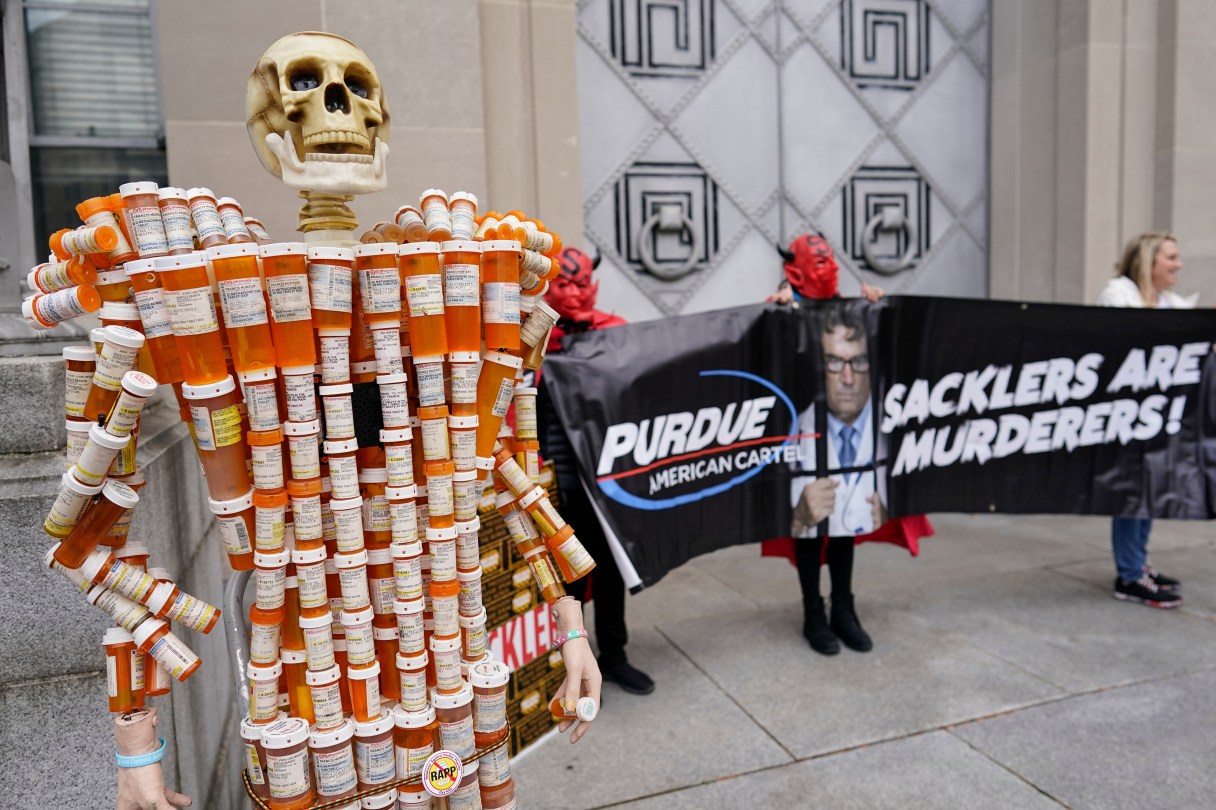
Members of the Sackler family who own OxyContin maker Purdue Pharma must pay billions of dollars to settle a flood of lawsuits over the harms of opioids, in a new deal formally approved by a federal bankruptcy judge on Tuesday.
The Sacklers must contribute up to $7 billion over 15 years. Most of the money will go to government entities to fight the opioid crisis, which has been linked to 900,000 deaths in the U.S. since 1999. Thousands of victims could be paid thousands of dollars each, with some distributions beginning next year for people who had OxyContin prescriptions and their survivors.
“This plan is not perfect,” U.S. Bankruptcy Judge Sean Lane said as he laid out his reasoning for approving the settlement, which he indicated he would do last week. “The court wishes it could do more to ease the suffering of the opioid crisis.” Still, he said the settlement is equitable, in the parties’ best interests, and overwhelmingly supported by groups with claims against Purdue.
The agreement replaces one the U.S. Supreme Court rejected last year, saying the earlier proposal would have improperly shielded Sackler family members from future lawsuits. The new agreement allows entities that do not opt into the payments to still sue members of the family.
The deal is among the largest in a series of opioid settlements brought by state and local governments against drugmakers, wholesalers and pharmacies that totaled about $50 billion.