
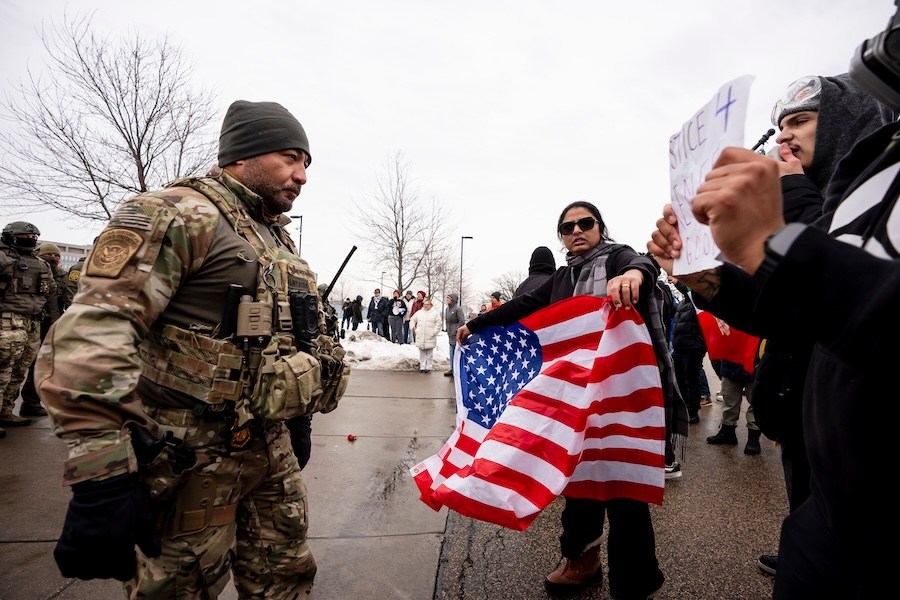
A day after a federal immigration officer fatally shot a woman in Minneapolis, the case escalated sharply Thursday when federal authorities blocked state investigators from accessing evidence and declared that Minnesota has no jurisdiction to investigate the killing.
Legal experts said the dispute highlights a central question raised repeatedly as federal agents are deployed into cities for immigration enforcement: whether a federal officer carrying out a federally authorized operation can be criminally investigated or charged under state law.
The FBI told Minnesota law enforcement officials they would not be allowed to participate in the investigation or review key evidence in the shooting, which killed 37-year-old Renee Good on Wednesday. Local prosecutors said they were evaluating their legal options as federal authorities asserted control over the case.
Minnesota Gov. Tim Walz urged federal officials to reconsider, saying early public statements by Homeland Security Secretary Kristi Noem and other federal leaders defending the agent risked undermining confidence in the investigation’s fairness.
Experts say there’s narrow precedent for state charges. And sometimes attempts at those charges have been cut short by claims of immunity under the Constitution’s Supremacy Clause, which protects federal workers performing federally sanctioned, job-related duties. But that immunity isn’t a blanket protection for all conduct, legal experts said.