
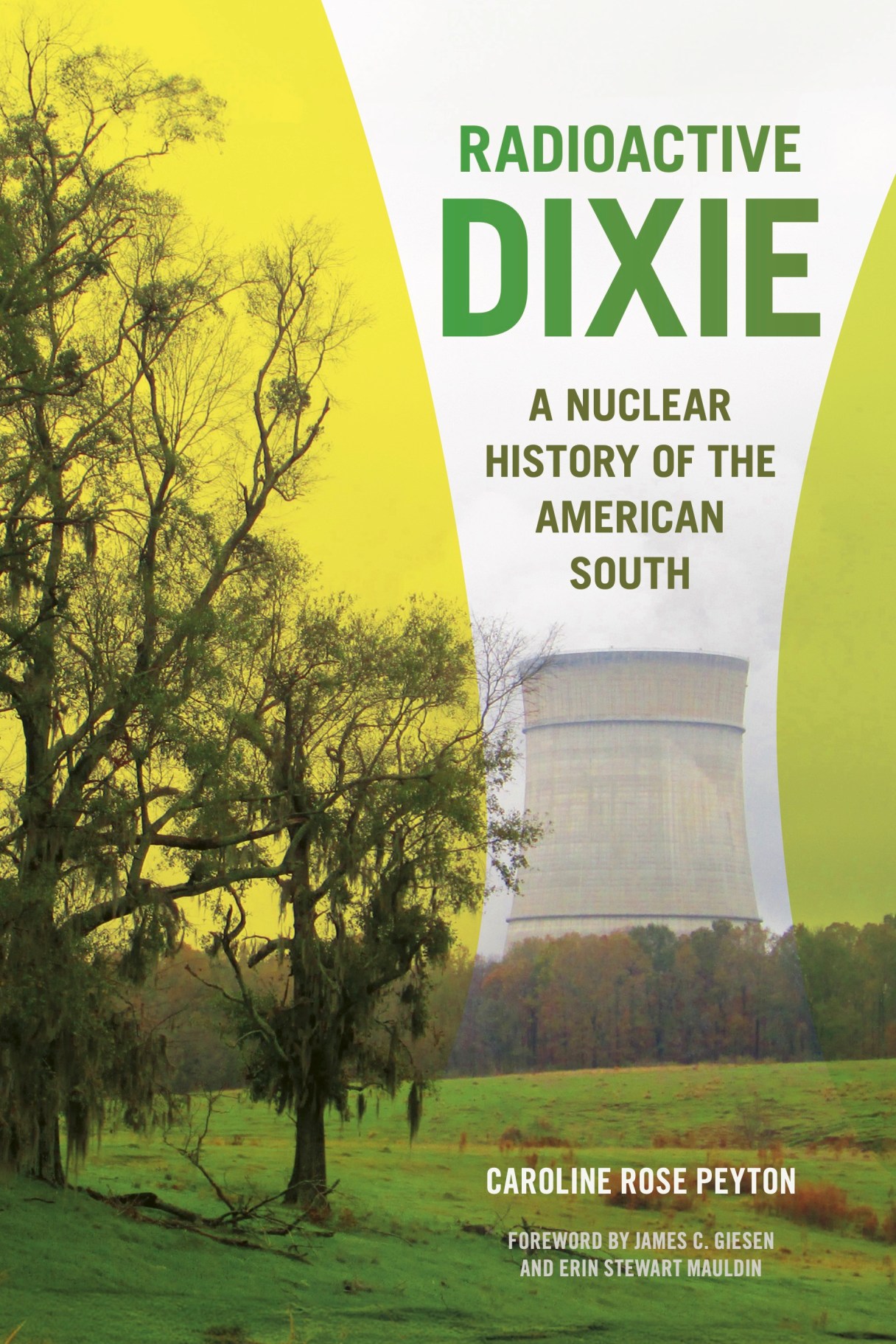
“Radioactive Dixie: A Nuclear History of the American South” by Caroline Rose Peyton (University of Georgia Press, 284 pages, $29.95)
The rural town of Hartsville, Tennessee, was in the news this past September when the Tennessee Valley Authority demolished a 500-foot concrete tube that locals derided as a “used beer can.” In 1973, TVA touted the building of the “world’s largest nuclear plant,” and this large structure was one of its cooling towers. But the plant was never completed. In “Radioactive Dixie,” Caroline Rose Peyton weaves the Hartsville story into a wider exploration of the promise and perils of nuclear power in the South, the U.S. region with the most nuclear reactors — and the most radioactive waste.
Peyton is an associate professor of teaching at the University of Memphis. Her scholarship has won the Alice Hamilton Prize from the American Society for Environmental History and the Jack Temple Kirby Prize from the Southern Historical Association. She answered questions via email from Chapter 16:
Q: How did Southern politicians cast the building of nuclear power sites in their region? Did it fit into the vision of a “New South”?
A: From the 1940s to the 1960s, politicians in the South cast nuclear projects, whether commercial, military or research related, as a positive good. There were real, tangible benefits to many of these sites: jobs, federal dollars and institution building.