
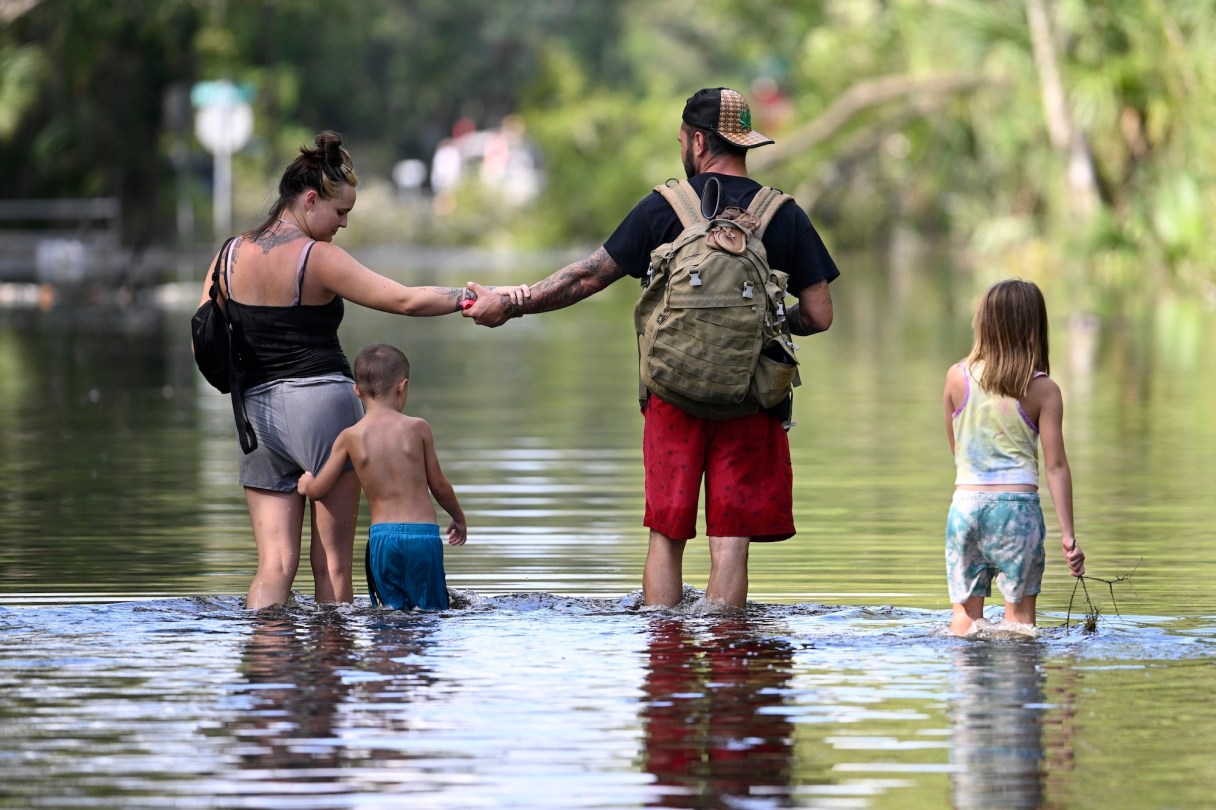
This story was originally reported by Jessica Kutz of The 19th. Meet Jessica and read more of their reporting on gender, politics and policy.
When Hurricane Helene swept through Kelsey Crabtree’s small hometown of Black Mountain, North Carolina, two years ago, its fierce winds uprooted a large tree that landed on the roof of her house, jolting her and her husband awake. She went into the living room and noticed a huge crack where water had started to pour in. The couple grabbed their two sons, dragged a spare mattress to their laundry room and sheltered there overnight.
Eventually, Crabtree and her family made their way to her mother-in-law’s home in Chattanooga. They later moved into an Airbnb, where they stayed for nearly a year. The months after the storm were a blur, she said — lots of phone calls with insurance and hands-on work to fix their home, and all of that while scrambling to care for the boys, who were 2 and 5 at the time.
“We needed time to be child-free so we could work. We needed to be bringing money in so we could have our house back in order,” Crabtree, who works as a therapist, said. “The limited child care was really making it challenging. It was limiting my ability to see clients.”
So she got in contact with Silke Knebel.