
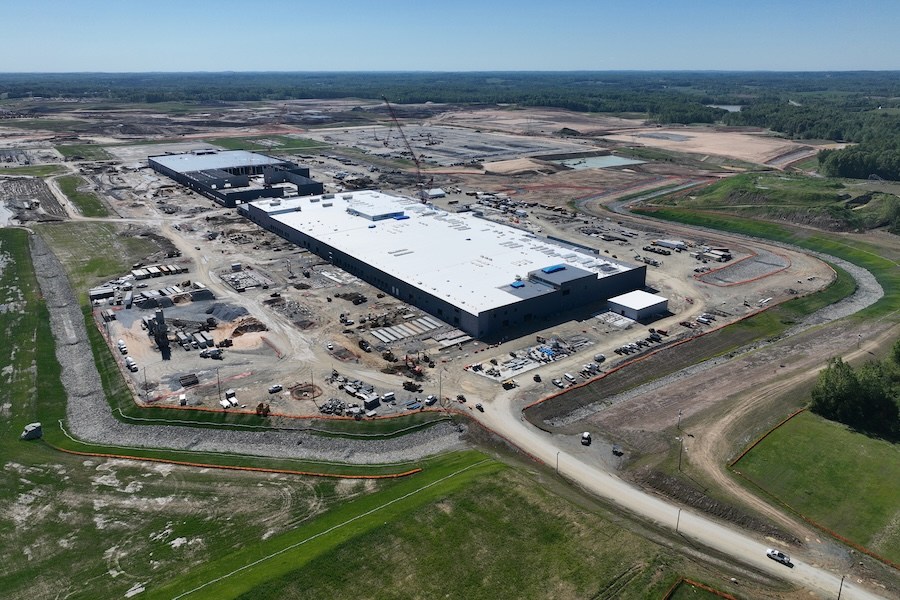
Between 2021 and 2024, North Carolina welcomed a parade of lithium-ion battery factory projects promising to hire hundreds, if not thousands.
They were from companies you know, like Toyota, and ones you might not, like Forge Nano, Green New Energy Materials, Dai Nippon Printing and Epsilon Advanced Materials. Each was to be their manufacturer’s first U.S. battery facility, and North Carolina supported them with tax incentives, to be realized once these battery and battery component makers reached their respective hiring goals.
Then in August 2024, North Carolina officials celebrated another massive battery headline when the California startup Natron Energy committed to create 1,000 jobs at a future $1.4 billion sodium-ion battery “gigafactory” on a long-dormant site in rural Edgecombe County.
“I know that we’re walking through a door that will transform this amazing place that I call home in a positive way,” then-Gov. Roy Cooper said during Natron’s introductory event. “North Carolina is becoming the heart of the booming ‘battery belt.'”
The concept of a regional “battery belt” spanning the Southeastern United States came into greater focus when the election of President Joe Biden inspired rosy forecasts on how many Americans would swap their gas-powered cars for more energy-efficient electric vehicles. The Biden-backed Inflation Reduction Act of 2022 encouraged EV sales (through a $7,500 federal tax credit) and stipulated that the lithium-ion batteries powering these vehicles be U.S.-built.