
If the lifeblood of major college sports is recruiting, the lifeblood of major professional sports is television partnerships.
The TV spending spigot has become paramount to the growth of leagues, the explosion of salaries and the mushroom-shaped profitability for everyone.
For the TV partners, the numbers are staggering when it comes to pro sports, especially in the eyes of advertisers, because no other genre — be it via traditional broadcast, cable or streaming — is relatively close in terms of live eyeballs. And those live viewers — who can’t fast-forward and are scared to spend too much time changing channels — are gold to advertisers.
That’s the backstory.
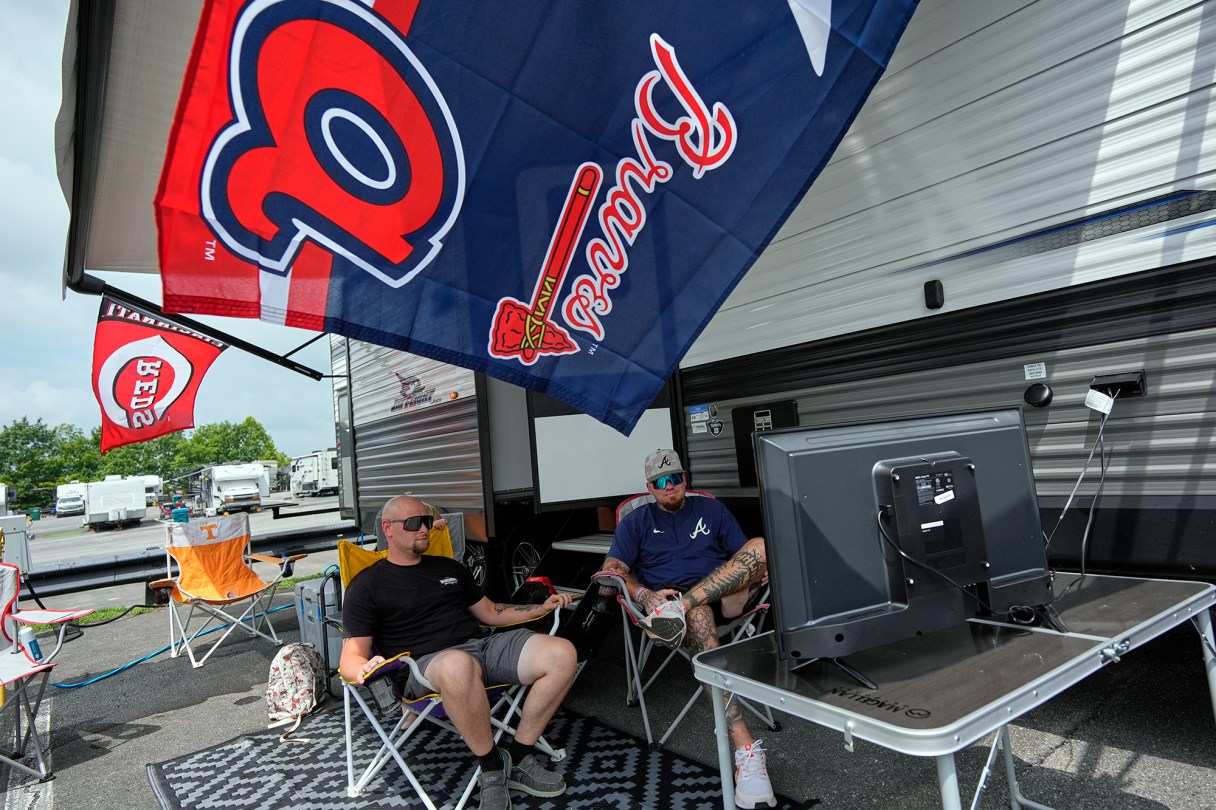
It’s the industry importance behind Tuesday’s announcement that the Atlanta Braves will unveil BravesVision as the new TV home of the South’s Sons of Summer.
Fittingly, this experiment is linked to the Braves, who for the past several seasons have been on Bally Sports/FanDuel Sports Network, which is under the umbrella of Main Street Sports Group, now in its final months of operation.
It’s fitting because the Braves, now entering their 61st season in Atlanta, went from joke to juggernaut on the tidal wave of a TV partnership.
In the mid-1970s, then-owner Ted Turner — a McCallie School grad — realized his players also were programming, and afternoon reruns of “Gilligan’s Island” and “The Brady Bunch” led folks across the South to become familiar with Roland Office and Dale Murphy and Phil Niekro and Bob Horner and Braves baseball.
Then, after building a connection with a truly regional fan base that embraced being Braves Nation, the team flourished on the field in the 1990s. They have been as consistently good for the past 35 years as any franchise in any of the major North American sports league.
That’s what makes this Braves’ new world in broadcasting such a critical moment.
As of now, BravesVision as the name is the lone certainty, and whether it will be the summer backdrop on TVs from Dalton to Dunlap or from Oxford to Ooltweah is largely an unknown.
“We have talked to them to learn more about what’s in store, and we are waiting for them to provide more information. And we know it’s really important to Braves Country,” EPB spokesperson Sophie Moore said in a phone interview this past week. “When we hear back from the Braves, we’ll make sure our customers know.
“Whether that’s a traditional watching experience or the app or streaming, we want to help customers find the best way for them to watch.”
When announcing BravesVision, the organization issued a statement that read, in part: “BravesVision will produce more than 140 games, as well as extensive pre-game and post-game programming, throughout the 2026 regular season and give fans across the organization’s six state territory multiple options to watch Braves games without blackouts.”
Those options include streaming options and planned direct-to-consumer options.
The streaming services would be through Braves TV — hey, can we get some creativity in these naming procedures folks? — which has a subscription fee.
The direct-to-consumer approach will be partnering with cable providers, satellite outlets or other streaming options. In their announcement, the Braves said more details are to come (Atlanta’s regular season opens March 27, when the Kansas City Royals visit Truist Park), but it’s very difficult to see any path in which there is not an increased cost for the chance to broadcast the vastly popular to a ravenous fan base.
“We know our customers have questions” Moore said. “We have questions, too.”
As for me, the biggest question — beyond whether I can find the Braves with a CoCola on a random June evening on my clicker without getting my teenager to come find the right streaming service and what it will cost — centers on how the Braves use this media opportunity.
This could be a golden goose. The Braves fan base may not be as large in terms of numbers of the traditional power names of Lakers, Celtics, Cowboys, Dodgers or Yankees, but few pro sports teams have the geographical reach the Braves do.
That footprint could generate nine-figure numbers or more if BravesVision embraces the coverage area of this opportunity.
Will they? I believe they will. Braves corporate has proven exceptional at making money on almost every opportunity.
Will that translate to pulling up a chair with the Dodgers and the Mets and the other big spenders when adding players? I am less confident about that.
Moreover, could opportunistic become counterproductive? Will the Braves and BravesVision be more focused on dollars rather than sense, considering the Braves became the Braves on the strength of its accessible TV connection with a fan base that became a nation?
I guess we will see this summer in Year 1 of BravesVision.
Provided a vast majority of our cable providers are able to offer it, that is.
Contact Jay Greeson at jgreeson@timesfreepress.com.