
We Americans have always felt anxious about our democracy. As Benjamin Franklin famously said, ours is only “a republic, if you can keep it,” and we’ve been plagued by a nagging feeling ever since that we can’t. The latest bout of handwringing is brought on by declining literacy and the threat it poses to liberal democracy, and — aware of our penchant for anxiety though we may be — it is hard not to feel concerned.
We have large and growing numbers of kids who can’t read well. National Assessment of Education Progress scores reveal that the number of students scoring below NAEP basic has grown steadily since 2019. While the percentage of students considered proficient has held steady, decreased literacy is reported even in elite colleges and universities. Adult reading is way down as well.
A host of figures on the left and right alike have come forward to call attention to this decline and its connection to self-government: Niall Ferguson warns that “we are rapidly moving to a future where information will be shared via spoken words and images, not text,” thereby undermining our ability “to make sense of the world.” James Marriott contends that “democracy draws immeasurable strength from print with its tendency to foster deep knowledge, logical argument, critical thought, objectivity, and dispassionate engagement,” all of which are threatened by declining literacy.
Both echo the arguments of Adam Garfinkle that “deep literacy” — dialectical engagement with an extended text — “is what ultimately allowed Americans to become ‘We the People,’ capable of self-government.” Even Hillary Clinton has joined the chorus arguing against digital media such as TikTok that will lead us to “scroll our way to oblivion.”
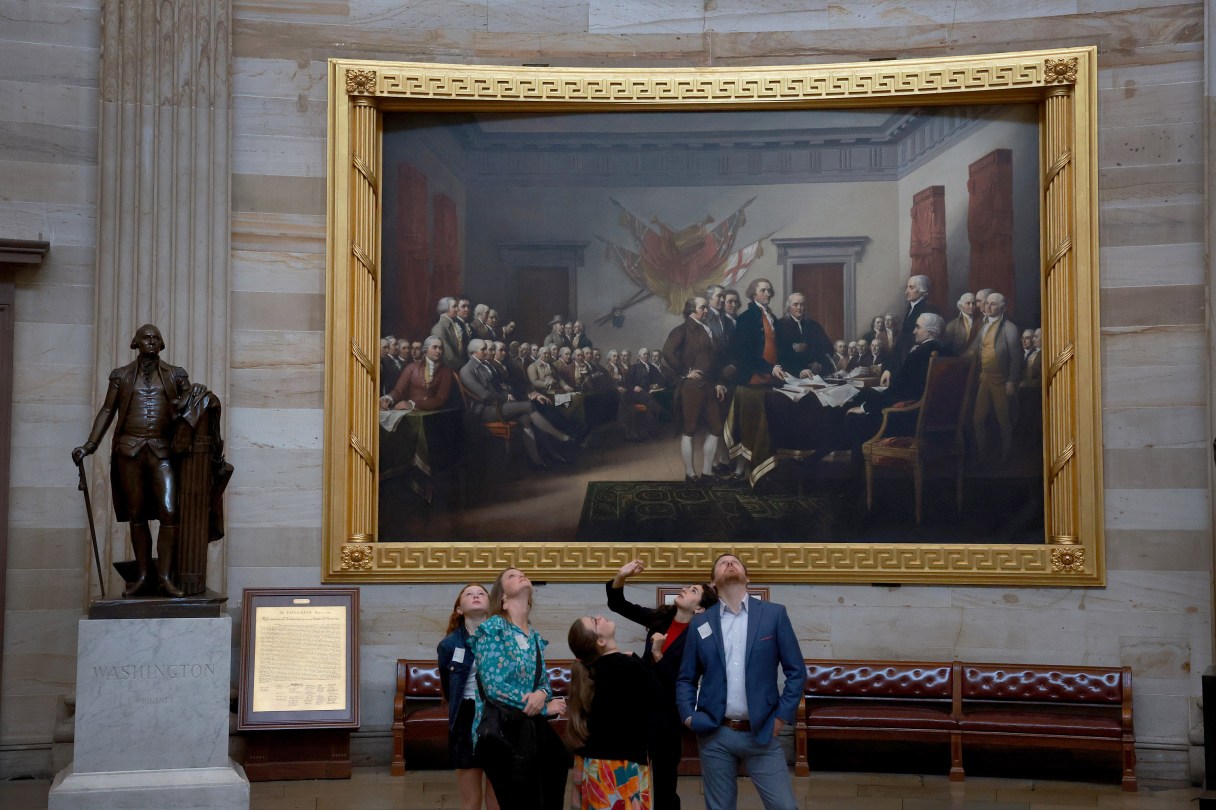
As we enter our 250th year as a nation, the centrality of the Declaration of Independence to American identity seems beyond dispute. One poll found that 92% believe its principles have been a net force for good in the world. But whether, amidst declining literacy, Americans will continue to treat the document and its truths as sacred is in great doubt.