
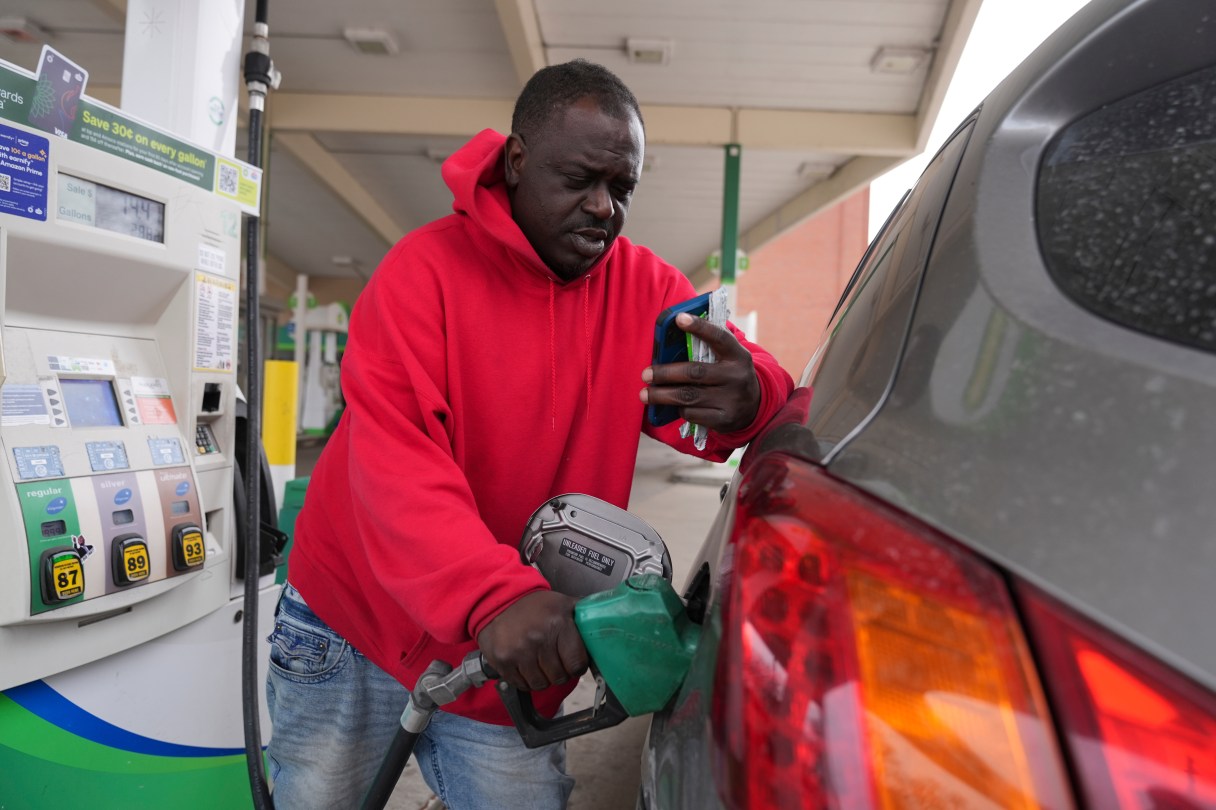
WASHINGTON (AP) — The jump in gas prices stemming from the war in Iran has had another impact that may also affect many Americans’ finances: Higher interest rates.
Longer-term interest rates have risen quickly since the war began Feb. 28, pushing up the cost of mortgage loans, auto loans, and business borrowing. And with inflation measures likely to rise in the coming months, the prospect of interest rate cuts this year by the Federal Reserve is fading. Wall Street investors instead see the odds rising of an actual rate hike instead.
The fact that a rate hike has become a plausible scenario — even as most economists still see it as unlikely — represents a sharp turnaround from early this year, when the debate was more focused on how many times the Fed would reduce its key rate, rather than whether it would do so at all.
“We think cuts are delayed, not derailed,” Krishna Guha, head of economics at Evercore ISI, an investment bank, wrote Tuesday. “The question is, delayed to September, delayed to December, or delayed more indefinitely” into 2027?
Austan Goolsbee, president of the Federal Reserve Bank of Chicago, said in an interview with The Associated Press Monday that if inflation were to rise while the unemployment rate remained stable, and Americans showed signs of anticipating higher inflation in the future, “then there is an obvious playbook, which is rate increases have to be on the table.” Goolsbee participates in meetings of the Fed’s rate-setting committee, but is not one of the 12 voters this year.