
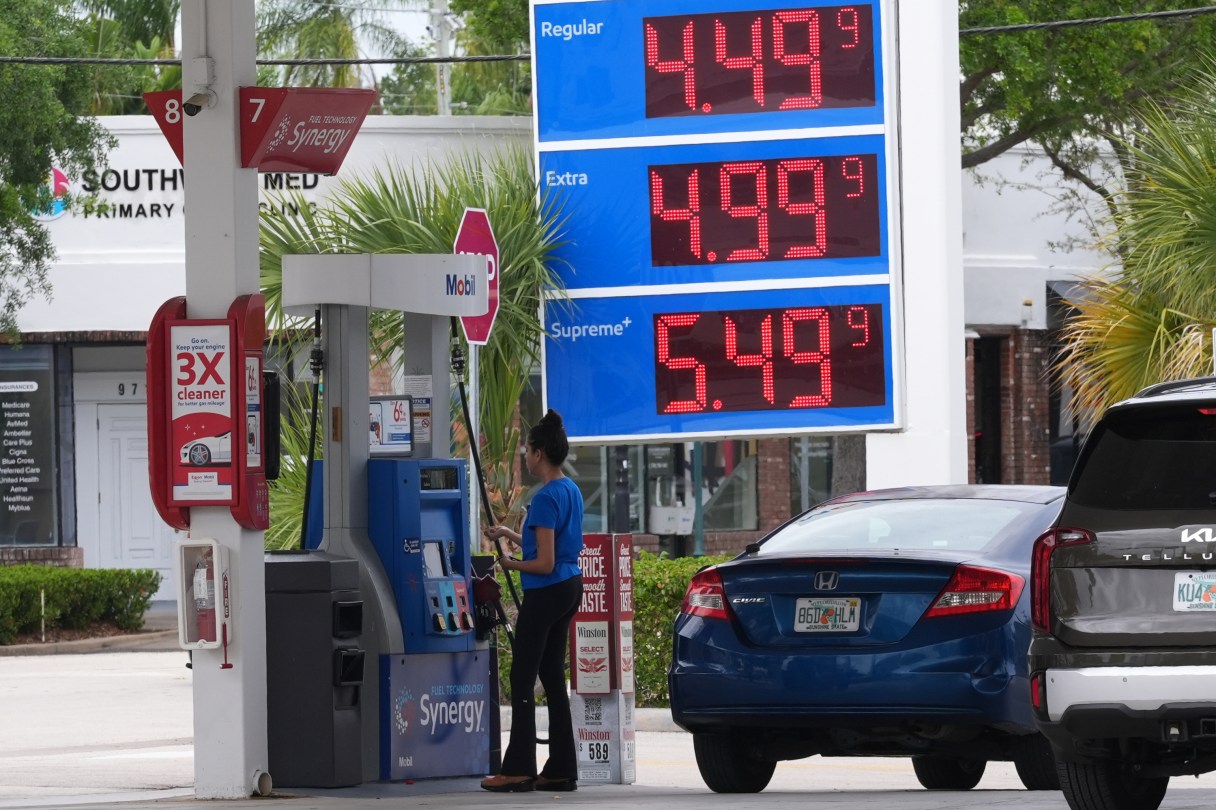
WASHINGTON (AP) — The largest monthly jump in gas prices in six decades caused a sharp spike in inflation last month, creating major challenges for the inflation-fighters at the Federal Reserve and heightening already substantial political hurdles for the White House.
Consumer prices rose 3.3% in March from a year earlier, the Labor Department said Friday, up sharply from just 2.4% in February and the biggest yearly increase since May 2024. On a monthly basis, prices rose 0.9% in March from February, the largest such increase in nearly four years.
It’s the first read on inflation to capture the effects of the Iran war. The surge in gas prices will stretch the budgets of lower- and middle-income households as it erodes their incomes, making it harder to afford other necessities such as food and rent.
Excluding volatile food and energy, core prices rose 2.6% in March from a year earlier, up from 2.5% in February. And last month core prices rose a modest 0.2%, suggesting that rising gas prices haven’t yet spread to many other categories.
A big question for now is how long the oil and gas price shock lasts and whether it will lead to a broader, long-lasting inflation boost, similar to what occurred in the spring of 2022 after Russia invaded Ukraine. For now, economists say that it is unlikely the U.S. will see a widespread increase similar to a few years ago, when inflation topped 9%.