
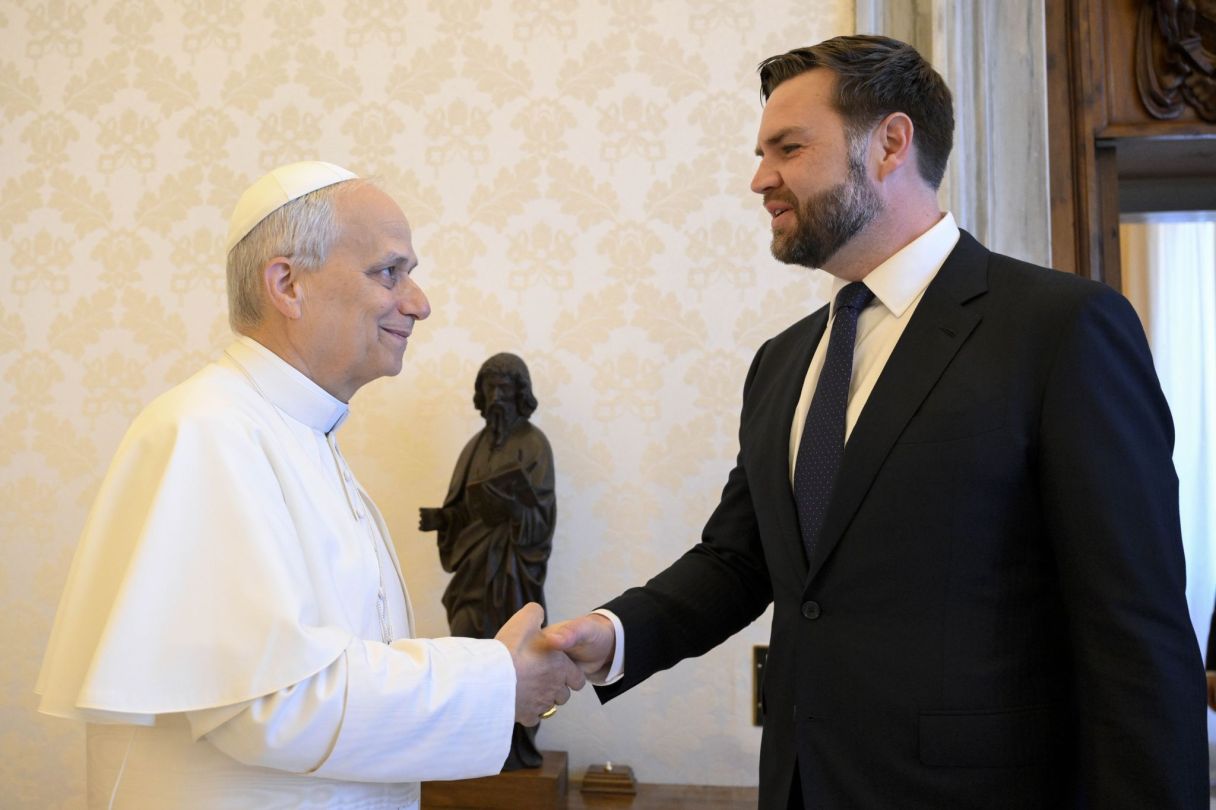
The vice president has stepped into the fray between the president and Pope Leo. For those of you who have not been following this, Pope Leo has been critical of various things that Trump has said regarding his war with Iran, including his statement that he was ready to wipe out Iranian civilization.
Trump called Pope Leo too liberal and easy on crime. He also said that the pope was only elected because he was an American, in response to Trump having been elected president. In response, the pope said that he had no fear of the Trump administration and that his job was to preach the gospel. He said, in response to Secretary of War Pete Hegseth’s invoking the name of Jesus for support in battle, that Jesus “does not listen to the prayers of those who wage war, but rejects them.”
Into this exchange steps the vice president, who says he thinks the pope should stick to “matters of morality” and let the president of the United States dictate American public policy. The vice president obviously doesn’t understand the meaning of morality and its scope.
“Morality” is defined by the Merriam-Webster dictionary as a system of moral conduct, conformity to ideals of right human conduct, or virtue. “Moral” is defined as the principles of right and wrong in human behavior. “Virtue” is defined as morally good behavior or character.
How do we as a society define what is right and wrong? For most of man’s history, that standard has been defined by religion, whether Judaism, Christianity, Islam, Buddhism or other religions. Whether the voice is that of God, Jesus, Mohammed or the Buddha, each has set the standard for right and wrong behavior towards one’s fellow man. And those standards have, in most respects, been virtually identical.