
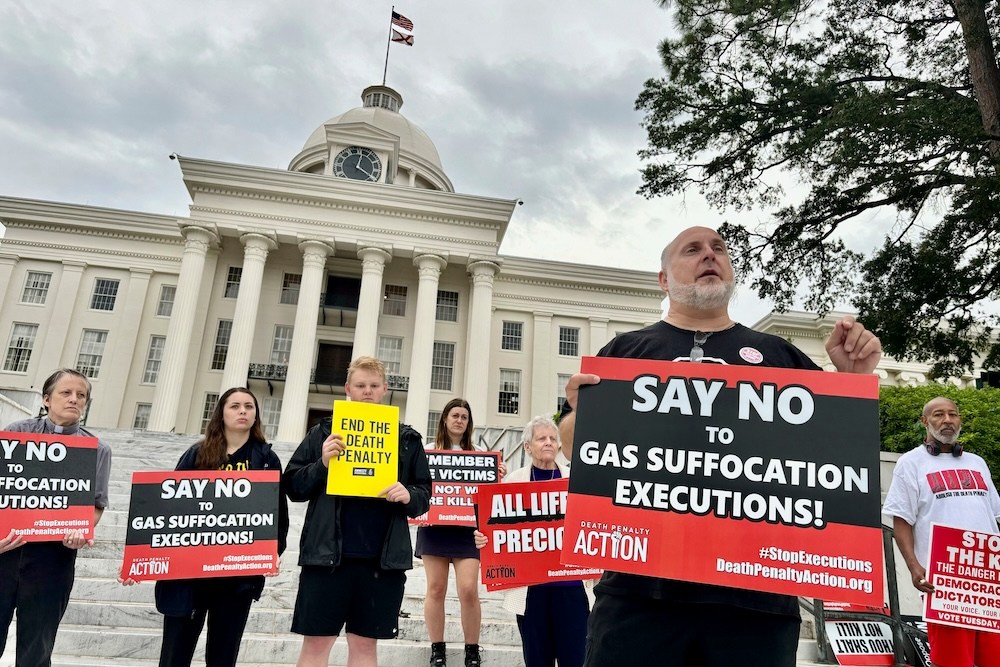
MONTGOMERY, Ala. (AP) — A federal judge on Thursday ruled that execution by nitrogen gas does not violate the constitutional ban on cruel and unusual punishment, rejecting an Alabama inmate’s claim that it causes excessive suffering.
The ruling came after the first bench trial in the country to examine the constitutionality of the execution method that has now been used to put eight people to death, seven in Alabama and one in Louisiana. The ruling clears the way for Alabama and other states to continue with the method and is a setback for critics who hoped a fuller examination of Alabama’s protocol would halt its use.
The execution method, first used in 2024, involves strapping a respirator to the person’s face and replacing breathable air with pure nitrogen gas, causing death from lack of oxygen. The lawsuit challenging the method was filed last year by death row inmate Jeffery Lee. Lee, 58, is scheduled to be executed with nitrogen gas on June 11 at a south Alabama prison.
“While Lee establishes that death by nitrogen hypoxia involves some suffering, he fails to show that the protocol is cruel and unusual in violation of the Eighth Amendment,” U.S. District Judge Emily C. Marks wrote.
Attorneys for the state and Lee disputed how long inmates are awake during a nitrogen gas execution. Marks wrote the evidence shows Alabama’s protocol “likely causes severe air hunger —the most severe form of breathing discomfort — for one to three minutes” but did not arise to a constitutional violation.