
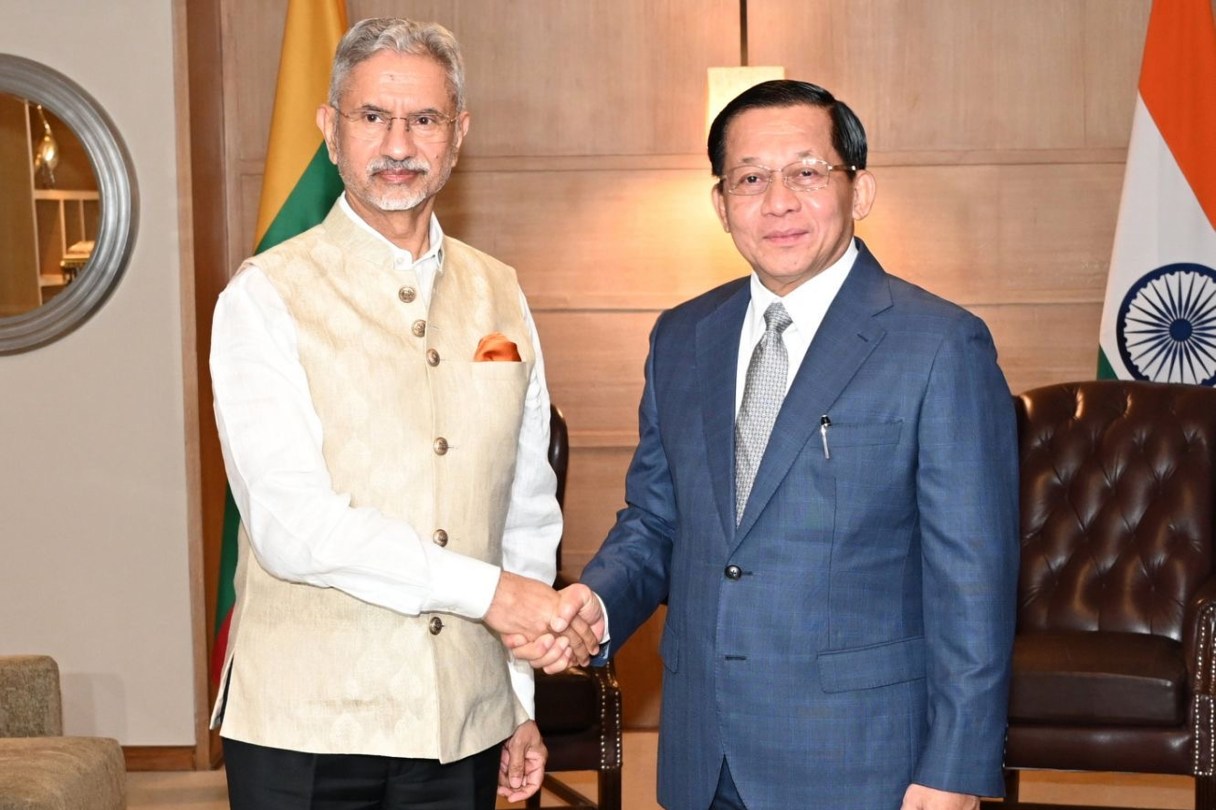
BANGKOK (AP) — The leader of Myanmar’s military-backed government embarked Saturday on an official visit to India, one of the country’s key regional partners, for high-level meetings aimed at strengthening bilateral ties.
It is the first time Min Aung Hlaing has traveled to the neighboring country since he was sworn into office as president in April following an election that critics say was orchestrated to maintain the military’s tight grip on power. His last visit to India was in 2019 as military chief.
India has maintained ties with Myanmar’s military-backed administrations despite Western sanctions imposed after the military seized power from the elected government of Aung San Suu Kyi in 2021 and launched a crackdown on opponents that evolved into a nationwide armed conflict and humanitarian crisis.
State-run MRTV television said Min Aung Hlaing departed on a flight from the capital, Naypyitaw, Saturday morning and landed at Gaya International Airport in India’s eastern state of Bihar, near Bodh Gaya, a major Buddhist pilgrimage site.
The report said he will have meetings with India’s President Droupadi Murmu and Prime Minister Narendra Modi, as well as government officials and representatives from business organizations, to discuss ways to strengthen ties and foster cooperation in the economic, religious, cultural and social sectors.