
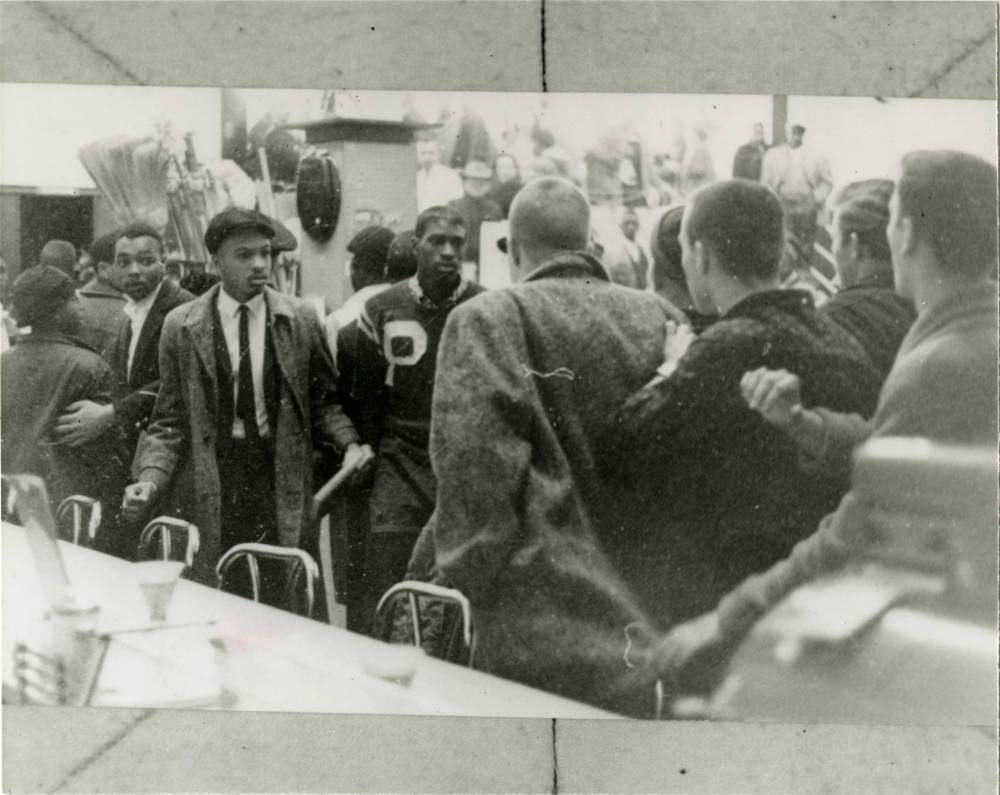
The Howard High School students who pushed to end Jim Crow segregation in Chattanooga set the rules for their history-making lunch counter sit-in during trigonometry class.
No profanity. No weapons. Leave a seat open between demonstrators.
“The parents told you back then, don’t you get involved in things like that,” Robert Parks, a student in the Howard class of 1960 that took part in the sit-in, told the Times Free Press in 2020. “But we wanted to see a change. And I had thought it might be bad, but you got to make a change somewhere.”
The kidnapping and murder of 14-year-old Emmett Till in Mississippi five years before, in 1955, had shaken the generation of Black youth that chose to protest segregated lunch counters in the South and revived old fears, former state Rep. Joanne Favors, D-Chattanooga, said in an interview.
Jet and Ebony magazines had published images of the boy’s mutilated body, she said.