
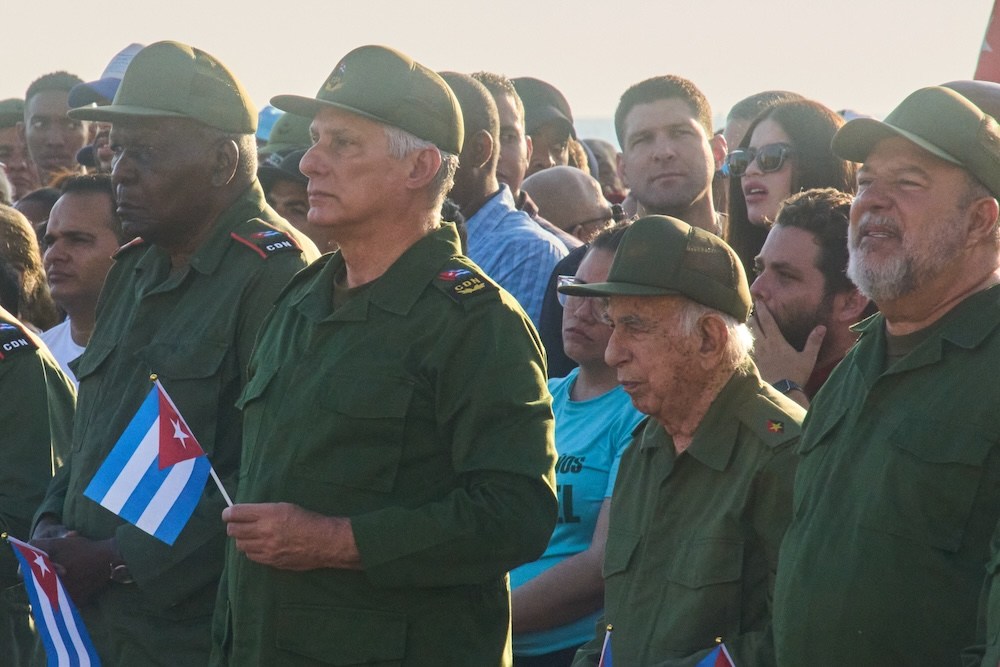
WASHINGTON (AP) — The United States imposed sanctions Thursday on Cuban President Miguel Díaz-Canel, his wife and three other individuals, in the latest move by the Trump administration to pressure the island’s leadership that drew immediate condemnation from Havana.
Included in the sanctions are Alejandro Castro Espín, the sole son of former Cuban President Raúl Castro and Vilma Espín. He served as an adviser to Cuba’s Defense and National Security Commission and was present when Raúl Castro greeted then-U.S. President Barack Obama in Havana during a historic March 2016 meeting. Castro Espín’s son, Raúl Alejandro Castro Calis, also was listed.
The new penalties come as U.S. President Donald Trump has been threatening military action in Cuba since ousting Venezuelan leader Nicolás Maduro in January and then ordering an energy blockade that choked off fuel shipments to Cuba. That has led to severe blackouts, food shortages and an economic collapse across the island.
The threats took on additional weight after the U.S. announced criminal charges against Raúl Castro last month. Thursday’s penalties, which follow Trump signing an executive order expanding sanctions against the island, freeze individuals’ property and bank accounts in the U.S. But it’s unclear how intertwined their finances are with the U.S. financial system.
It’s “pretty unlikely” Cuba’s president and others have assets in the U.S., said Richard Feinberg, former U.S. national security adviser on Latin America and professor emeritus of international political economy at the University of California, San Diego.