
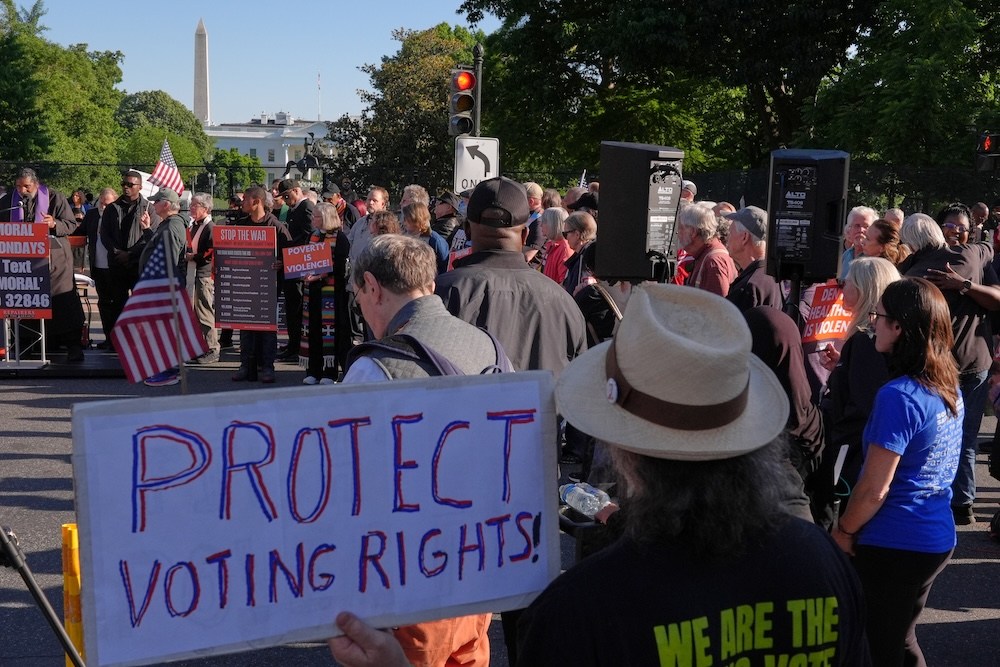
ATLANTA (AP) — President Donald Trump has tried many ways to tighten his grip on U.S. elections, from signing executive orders to pushing restrictive legislation in Congress. Monday’s Supreme Court ruling siding with states that accept late-arriving mail ballots was the latest example showing the limits of his reach.
It followed back-to-back rulings last week that barred his two sweeping executive orders seeking to change national election rules, more court rulings preventing his Department of Justice from obtaining detailed state voter data and his stalled attempts to get the Senate to pass the SAVE Act. That measure would eliminate nearly all absentee voting, require citizenship documents to register to vote and impose photo identification requirements nationwide right before the midterm elections.
“It’s been a mixed bag for Republicans,” said University of Notre Dame law professor Derek Muller. But the president, he added, “has come up mostly empty-handed.”
Trump’s efforts have not been entirely fruitless. Republican-run states have satisfied his demands to redraw congressional district lines, efforts buoyed by the Supreme Court striking down a key section of the Voting Rights Act, and he has been directing his Department of Justice to investigate voting and election operations, which Democrats see as a possible prelude to their involvement in November.
All the activity around how the nation votes and runs its elections is a reflection of the Republican president’s long fixation on his false claim that his 2020 election defeat was rigged. He has been so frustrated by the inability of the Senate to pass the SAVE Act that he has refused to sign a bipartisan housing bill.