
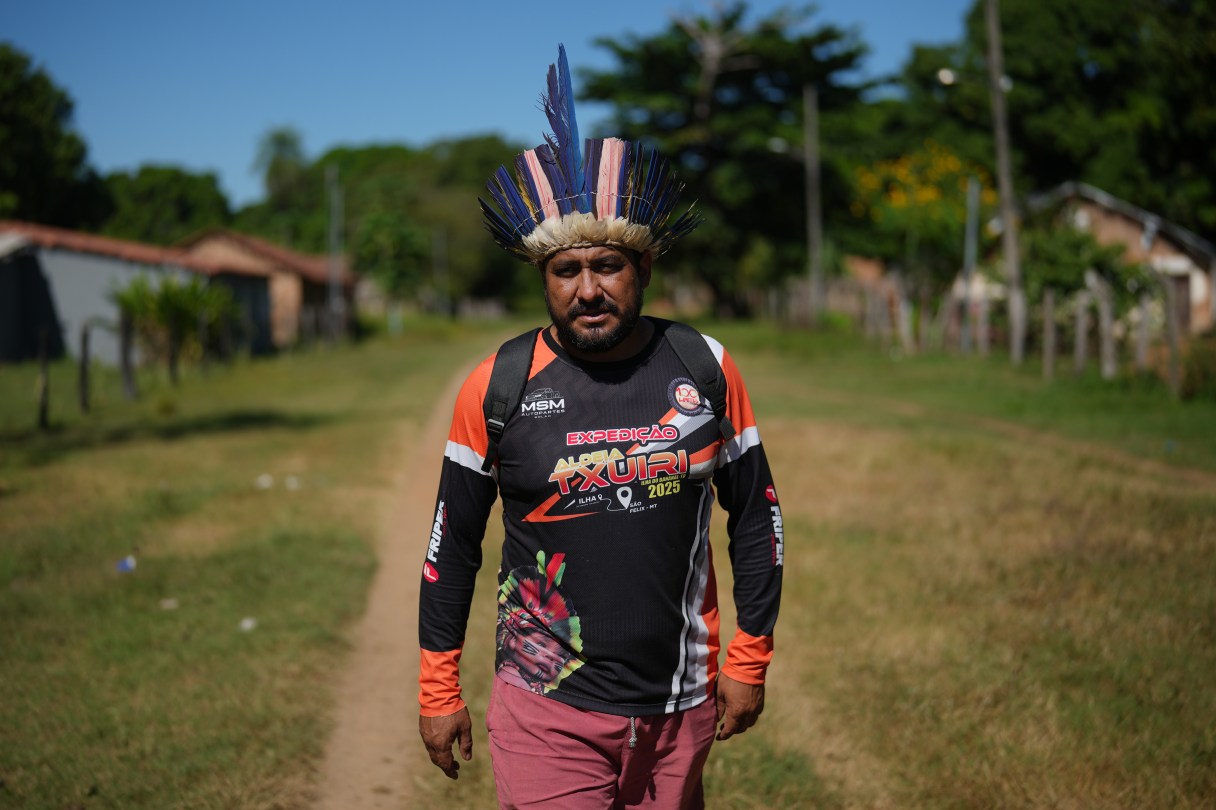
FORMOSO DO ARAGUAIA, Brazil (AP) — On a vast island in northern Brazil, an unusual debate about cattle and conservation is taking place.
Federal authorities last year ordered the removal of herds from protected Indigenous territory on the world’s largest river island, Bananal Island. They argued the land was reserved for Indigenous peoples and conservation, and that the herds kept there by outside ranchers were illegal and contributed to habitat degradation.
To comply with the order, wranglers drove more than 100,000 cattle from the island when the rivers were low enough. But the removal has created new problems for Indigenous residents who had come to rely on money they earned leasing the land to ranchers.
The events underscore the challenge of balancing conservation, Indigenous interests and pressure from agribusiness, one of Brazil’s most powerful sectors. Brazil is the world’s largest beef producer, accounting for about 20% of global output and 6% of the country’s gross domestic product.
Protecting Indigenous territories is widely seen as one of the most effective ways to curb deforestation in the Amazon, the world’s largest rainforest and a key regulator of the global climate.