
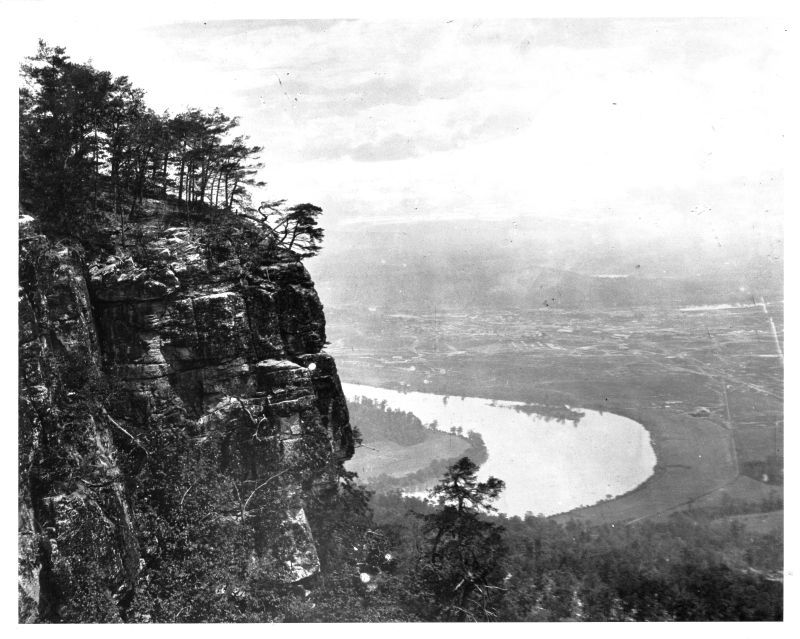

As the Declaration of Independence was being forged in Philadelphia in 1776, the rugged frontier region destined to become Chattanooga was not yet fully populated by the Cherokee but was increasingly desired by European settlers.
The land that would become Tennessee was on the edge of European colonization, west of the Appalachian Mountains. That line represented the British Crown’s declared limit for western expansion into Native American lands, but most settlers saw Native American tribes as a barrier to be removed.
The Cherokee were being pressured from their original homelands, consisting of about 40,000 square miles now in the states of Virginia, Tennessee, North Carolina, South Carolina, Georgia and Alabama. As European settlers established towns and ports, the 13 colonies became states along the East Coast between the 1660s and late 1700s, and tensions mounted.
In 1776, the Muscogee, also known as the Creek and once the most powerful tribe in much of the land that would become Tennessee, had retreated from the southeast part of the region, leaving the area that would become Chattanooga sparsely populated. The Cherokee were resisting European expansion into the northeast corner of the region, but they had not yet moved across the Southern Appalachians.
“At the time that the founding fathers are adopting the Declaration of Independence in Philadelphia, the Cherokee are attacking the backcountry of Georgia, South Carolina, North Carolina,” National Park Service historian Jim Ogden said during an interview, tracing locations on a map in the library at the Chickamauga-Chattanooga National Military Park headquarters in Fort Oglethorpe. “Within the next two weeks, the Cherokee will attack North Carolinians and Virginians who are living in Upper East Tennessee.”