
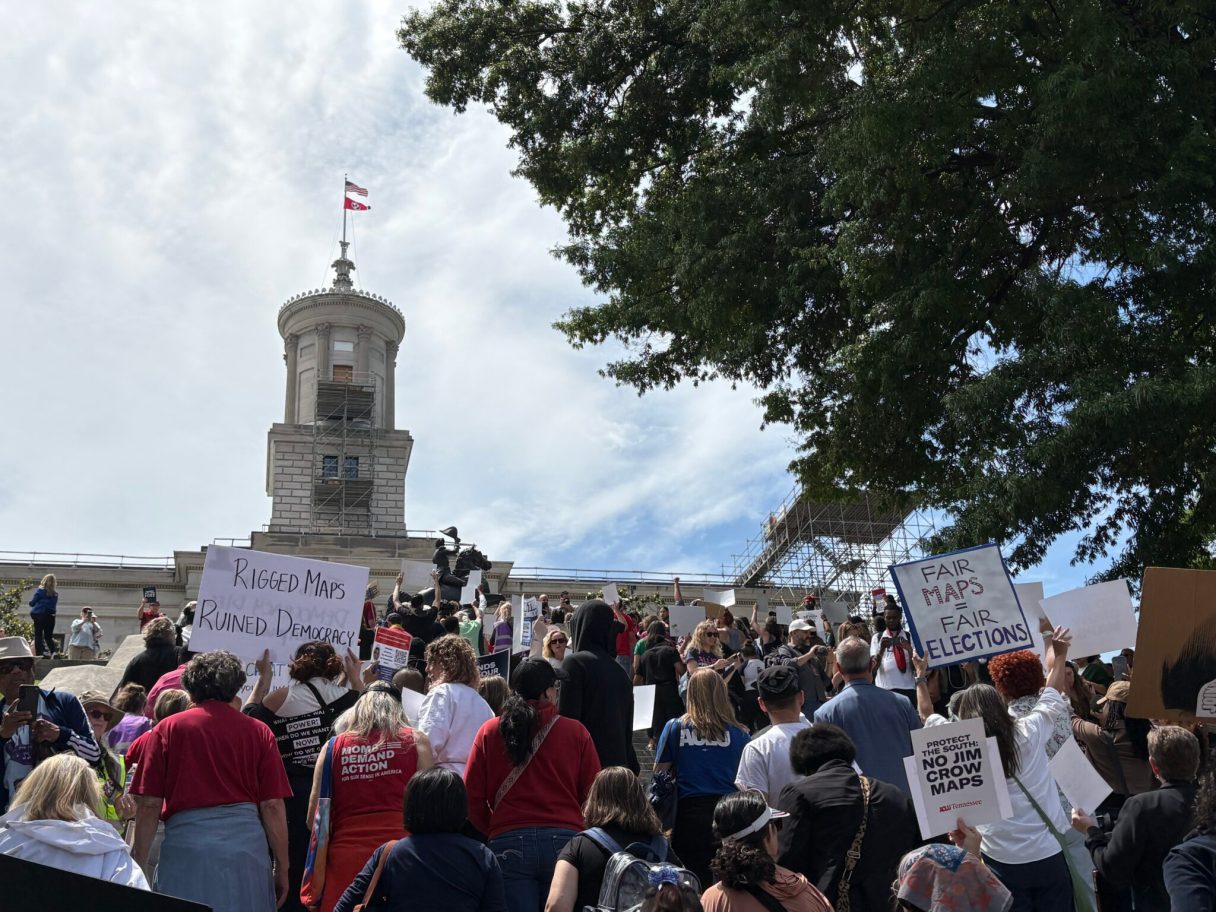
The Volunteer State’s last-minute new U.S. House map first appeared on Tennessee Republican U.S. Sen. Marsha Blackburn’s social media pages in the hours after the U.S. Supreme Court struck down a part of the Voting Rights Act.
The blurry picture was quickly translated into law after Republicans rushed to up their 2026 midterm advantage, and Democrats decried the move as silencing Black voters in Memphis.
But, while the map clearly dilutes Memphis’s Democratic power and therefore the largest block of Black voters in the state, election data shows that the districts were drawn precisely to create nine seats where Trump won 60% of the vote in the presidential election of 2024 and Blackburn won the 2018 Senate election, no matter how narrow.
Blackburn, who is running for governor, won Congressional districts 4, 5 and 9 during her 2018 Senate race against the Democratic nominee, former Gov. Phil Bredesen, by less than 1,000 votes, according to voting data analyzed by the Lookout using Dave’s Redistricting. Blackburn’s winning margin in those three districts was 0.4% or less, and she did not get 50% of the vote in any of them.
Kent Syler, a political science professor at Middle Tennessee State University, said in previous redistricting cycles, Democratic and Republican state lawmakers were always careful about how they drew maps, such as trying to split as few counties as possible. But the new map splits more counties than ever before, likely signaling lawmakers were following a criteria.