
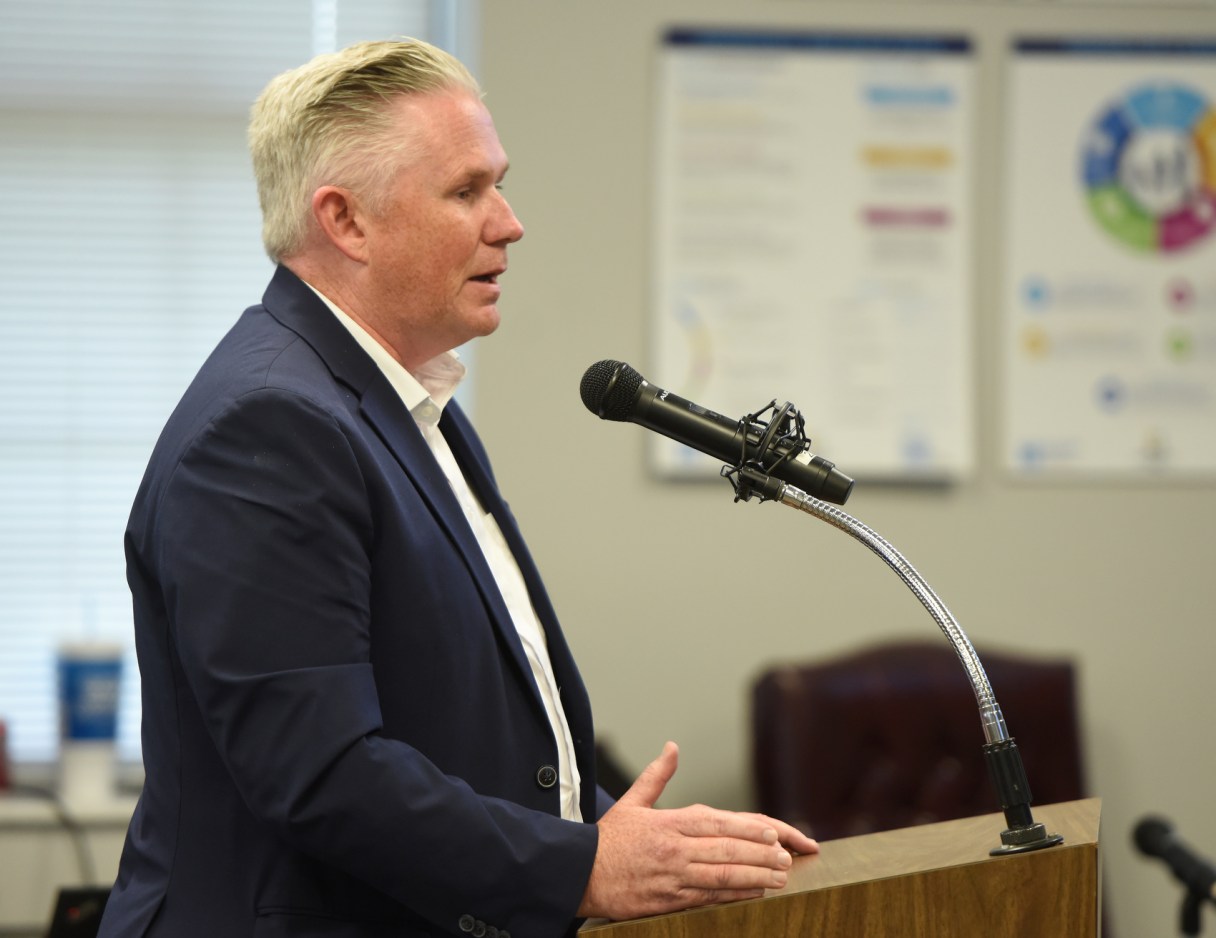
Hamilton County school board members will vote on whether the district administers one or two benchmark tests during the 2026-27 academic year.
The decision is based on a policy the school board adopted in August that requires members to approve any district-wide assessments – beyond those mandated by the state and one benchmark test – before being implemented.
This is the first time the policy is being used.
For 2026-27, the district recommends administering two benchmark tests for state-assessed subjects, Superintendent Justin Robertson said at Thursday’s school board meeting. That means there would continue to be no benchmarks in kindergarten through second grades.
Board members have consistently advocated for reducing the amount of testing required of students, and in May 2025, while approving the 2025-26 budget, the board voted to reduce the number of benchmark tests from three to one.
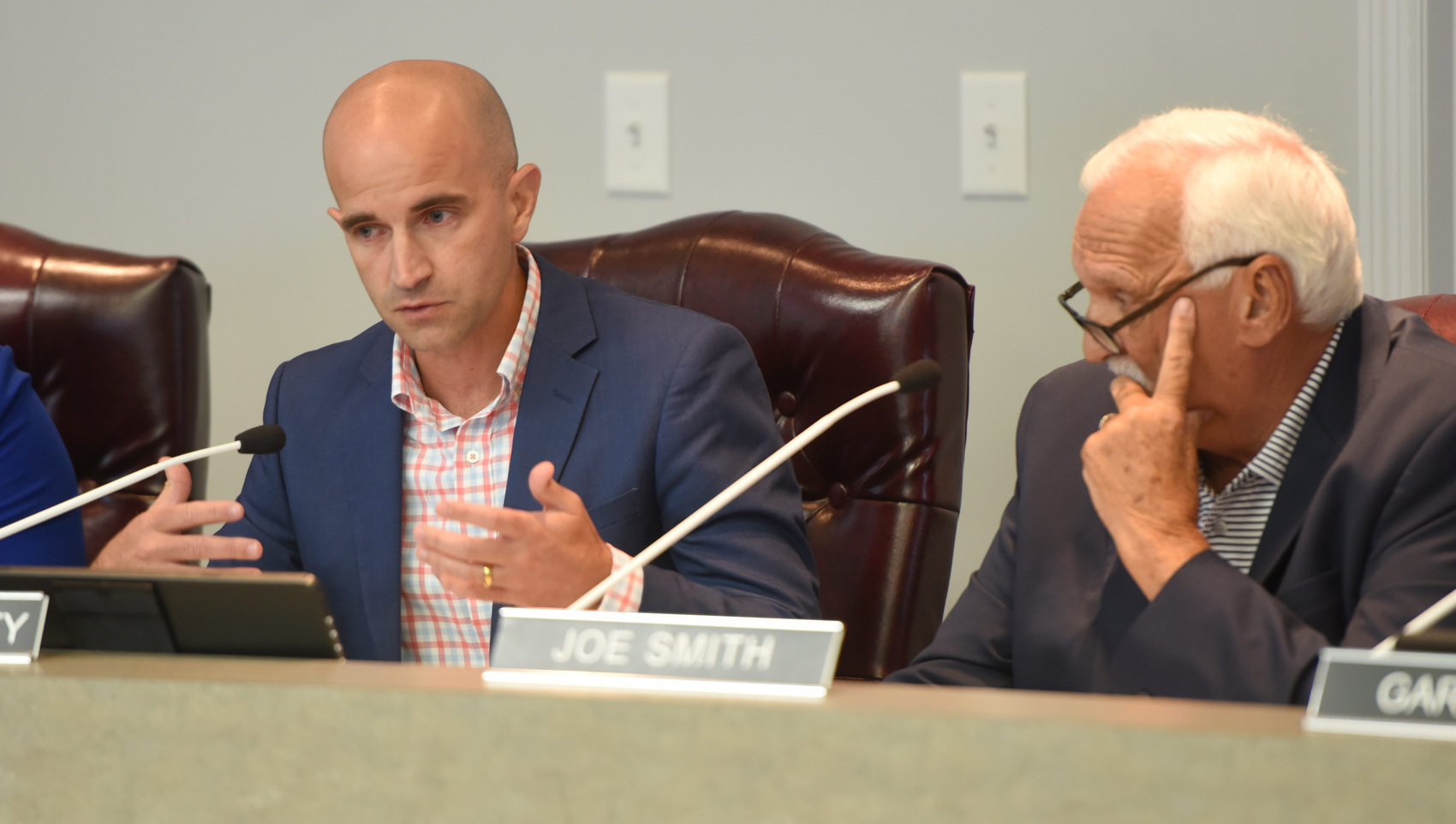
“My concern is that we didn’t do that,” Vice Chair Gary Kuehn, R-Ooltewah, said. “We set up a plan last year, and you went with your own plan. I have issues with that because from the administrative perspective, I hated testing. From the teacher perspective, I hated the testing.”
This past school year, the district offered snapshots, an optional end-of-quarter test.
The goal was to provide schools a resource that was directly aligned to the standardized assessment students have to take, Chief Academic Officer Blake Freeman said, and it was not an attempt to circumvent the board’s desires.
“Did it land the way that we intended for it to? No,” Freeman said. “We know that. You heard it. We heard it around like, ‘Hey, we said one. Now it feels like three.’ That was unintentional.”
The majority of schools opted to use the snapshots during the first quarter, and fewer decided to use them in the third quarter, he said.
Other board members echoed Kuehn’s concern.
The intent of having one benchmark was to set a baseline, so that the district could see how students and teachers respond, school board member Ben Daugherty, R-Signal Mountain, said.
“Unfortunately, that baseline was never established because we had this introduction of these snapshots,” he said. “So, for me, we need to go back to what we originally agreed upon. We need to try one to give a fair shot at this.”
(SIGN UP: Get our weekly education newsletter by going to timesfreepress.com/education)
District officials agree that there’s too much testing. The question, Robertson said, is what is the right assessment, which is why he testified earlier this year in support of a bill creating a pilot program meant to evaluate whether administering fewer tests causes students to achieve greater academic success.
“I think it’s really important for us as an administration to present to this board what we think the best recommendation is,” he said. “I don’t think the board should be offended by that. This is our recommendation. If the board wants to push back on it, that’s what we’re having a conversation about.”
The district, which got local lawmakers to sponsor the legislation creating the pilot, intends to apply to participate.
If Hamilton County Schools gets selected, it will have to administer two benchmark tests during the 2027-28 school year, school board member Jodi Schaffer, R-East Brainerd, said.
As the legislative chair, Schaffer said she was also weighing another law passed by the Tennessee legislature this year that allows the state to “takeover” school districts that meet four of six criteria related to academic proficiency, school letter grades, chronic absenteeism, priority school status, financial mismanagement and leadership instability.
The district’s test scores have to remain at a certain level to remain in the pilot and avoid being subject to a state takeover, Schaffer said.
“I feel it as a parent. My kids feel it,” Schaffer said. “I voted for one benchmark, and I understand we need a baseline to see is one benchmark good enough, but we also know next year we’re going to have two, so just remember that.”
While the takeover law was aimed at Memphis-Shelby County Schools, it could also affect other Tennessee school districts.
Hamilton County Schools currently meets two of the criteria – academic proficiency and priority schools – and there’s some disagreement over whether it qualifies for a third based on the percentage of schools assigned a D or F letter grade by the state. The school system meets that criteria if the county’s charter schools – which are run by independent governing boards, with some oversight from the district – are included but does not if only district-run schools are counted.
During past efforts by the state to take over underperforming schools, board members worked hard to keep schools under local control, said Karitsa Jones, D-Chattanooga. The potential for Hamilton County to be taken over by the state is very real, she said.
“If you look at the state of education and public education in the state of Tennessee, we not making the news as a state for being one of the worst states for public education for nothing,” she said. “They’re looking for any other excuse to scapegoat it, and they will make this county one if they need to.”
Jones said she’d heard from previous state education commissioners that their problem was that Hamilton County wasn’t being proactive.
“I think what’s being presented here to pilot before the pilot is very smart because when the pilot comes, you’re already ahead of the game,” she said.
The school board is expected to vote on the district’s assessment plan at its next meeting July 9.
Contact education reporter Shannon Coan at scoan@timesfreepress.com or 423-757-6396.