
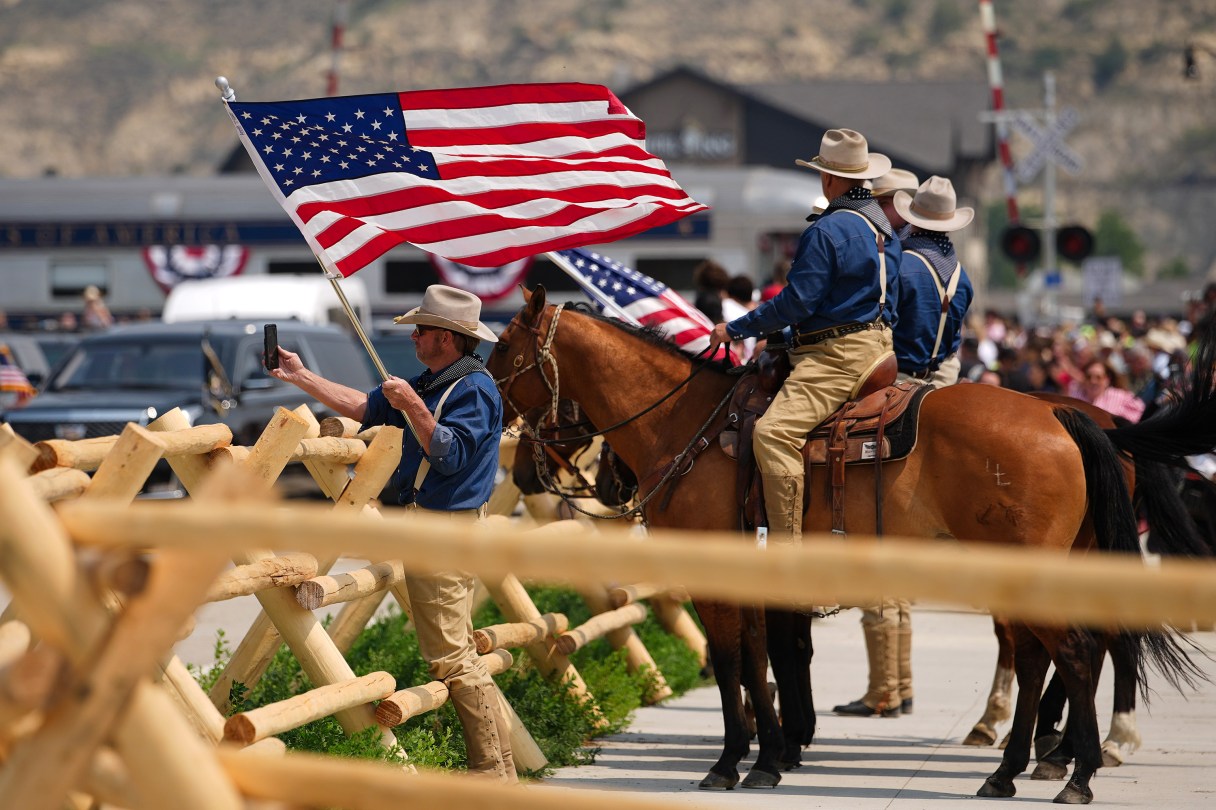
Perhaps the most evocative tune in America’s patriotic repertoire, and certainly the most popular, is also among the least understood. Written by Katharine Lee Bates in 1893, “America the Beautiful” will be sung out at countless parades and picnics and parties on the country’s 250th anniversary this July 4. Amid divisive times, it offers a hopeful and fitting rejoinder.
Bates composed the song after a trip up Pikes Peak, in Colorado, moved by the natural splendor she saw unfolding below. Across four stanzas, it celebrates first the country’s natural abundance “from sea to shining sea”; then the pilgrims who beat a “thoroughfare for freedom”; then the soldiers “who more than self their country loved”; and, climactically, the gleaming “alabaster cities” that were then just beginning to dot the fruited plain.
For all their soaring themes, these lyrics bear little hint of jingoism. Although they enumerate the country’s many gifts, they beg repeatedly for divine help in not screwing it all up. Each verse exhorts the listener to self-sacrifice, diligence, courage and confident sanguinity. Bates attributed the song’s success to “the fact that Americans are at heart idealists, with a fundamental faith in human brotherhood.”
That faith has been tested many times. Previous Independence Days have often been occasions for statesmen to reflect on what was going wrong — on fears that the country might no longer be worthy of its glorious founding. On July 4, 1826, the day both John Adams and Thomas Jefferson died, Josiah Quincy took note of deepening divisions and warned that “those will be false to the genius and character of our revolution, who shall associate themselves with political leaders without reference to principles.”
On the nation’s centennial, the former senator and House Speaker Robert C. Winthrop marveled at the “glorious fabric of self-government” that had been sustained over the previous century, at such high cost. But he warned that securing it would require future generations “to regard principle and character, rather than mere party allegiance, in the choice of men to rule over them.”