
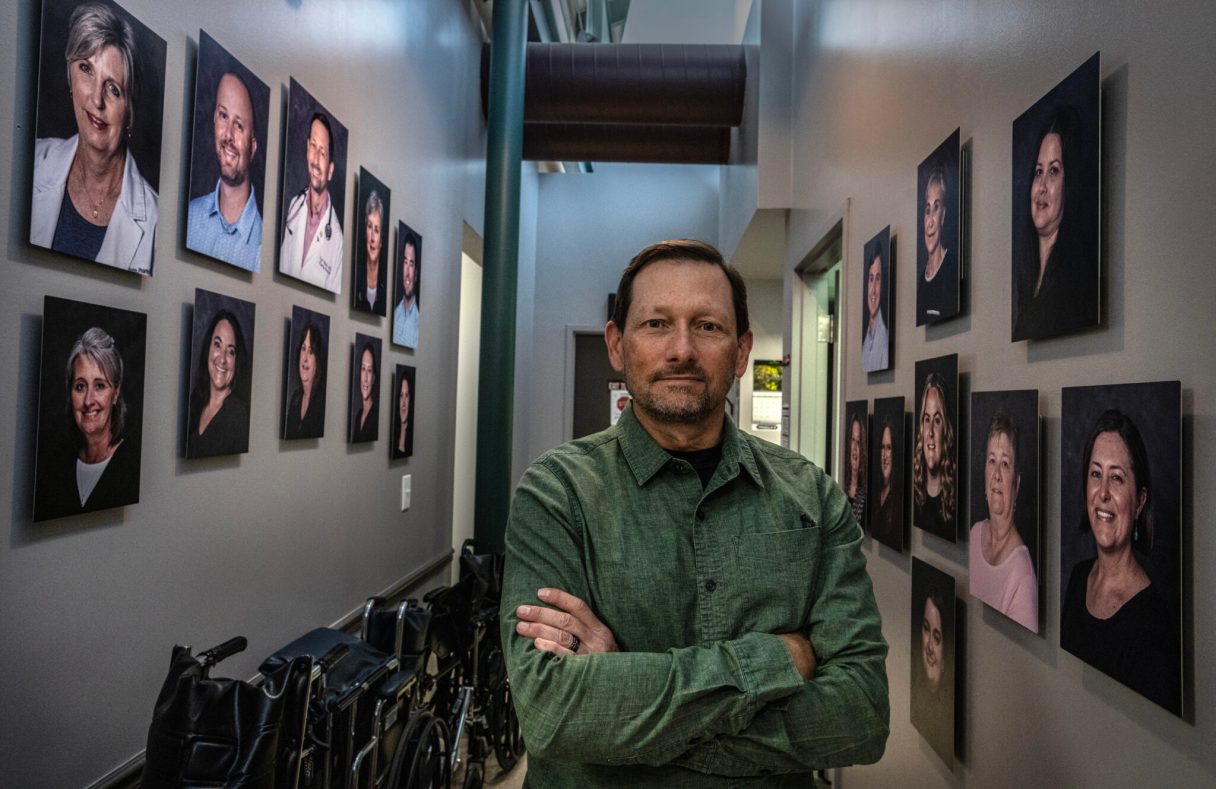
In a small clinic room in Sparta, Tennessee, Dr. Ty Webb moved his chair near his 70-year-old patient and encouraged her progress with weight loss and smoking. His wife, Janet Webb, a pharmacist and scribe, helped consolidate more than a dozen medication bottles and discard those no longer needed. When his patient shared fears about her new heart condition, he offered tissues and assured her that she would be able to navigate the necessary care.
“Stress is going to make you feel like you can’t keep anything straight,” Webb said. Turning to the many pill containers, he added, “We’ll try to simplify.”
Webb explained next steps and upcoming blood tests, before moving on to his next patient down the hall, counseling once again on cigarettes and commending improved blood sugar levels.
It’s a familiar routine, one he has fulfilled for nearly three decades as a family physician, often serving the same families he met when he first moved to the town of 5,000. But as his retirement and those of other family physicians draw nearer, he carries with him concerns and questions about what that will mean for the rural communities they serve.
“Finding physicians to do what I do and take my place — I’ve been looking for 15 years and can’t find somebody,” Webb, 59, said. “There is no one coming in to replace the doctors like me out there and we are five to seven years from retirement. There is about to be a really big problem.”