
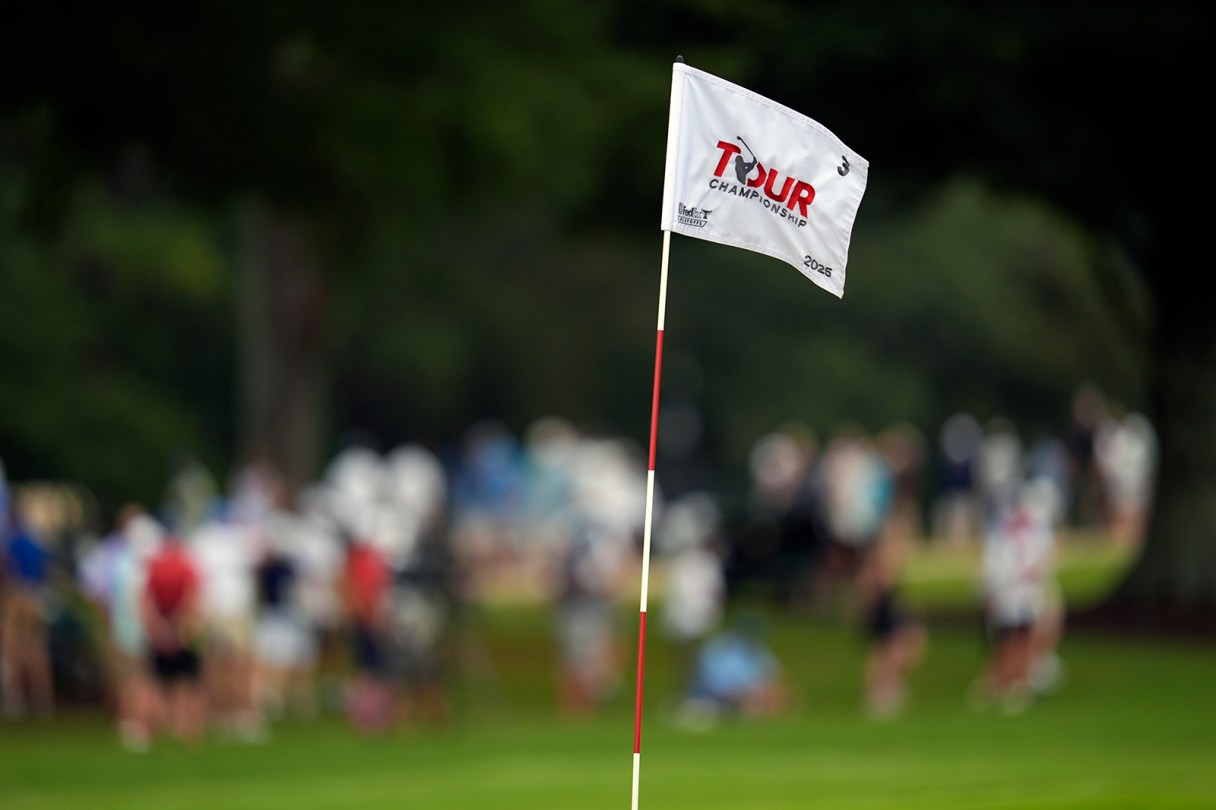
CROMWELL, Conn. — Tiger Woods said the objective was to create the best version of the PGA Tour.
The answer presented Tuesday was a major shakeup to its model that effectively creates two tours by expanding the field for the elite tier and cutting in half the prize money for the secondary tier.
The new system will start in 2028, and the PGA Tour’s Future Competition Committee that Woods leads still has work remaining when it comes to some key details.
Chief among them is which of the roughly 15 tournaments will be part of the “Championship Series” and the 20 events on the lesser “Challenger Series.” Other items on the to-do list involve bringing a form of match play to the postseason and creating a rotation of prestigious courses for the season-ending Tour Championship instead of going to Atlanta’s East Lake Golf Club every year.
“This work was never about any one player or person,” Woods, the 16-time major champion with a record-tying 82 PGA Tour victories, said in his first public appearance since his arrest on a DUI charges on March 27. “It was about bringing together different perspectives, having honest, hard conversations, and thinking boldly about what is best for the game that we all love.”
The PGA Tour Enterprise Board and PGA Tour Policy Board approved the recommendations a day earlier.
The 50-year-old Woods — who has not played an official event since the 2024 British Open — jumped back into his role as PGA Tour Future Competition Committee chairman the past several weeks upon his return from seeking treatment out of the country since his arrest in Jupiter Island, Florida, where he has a home.
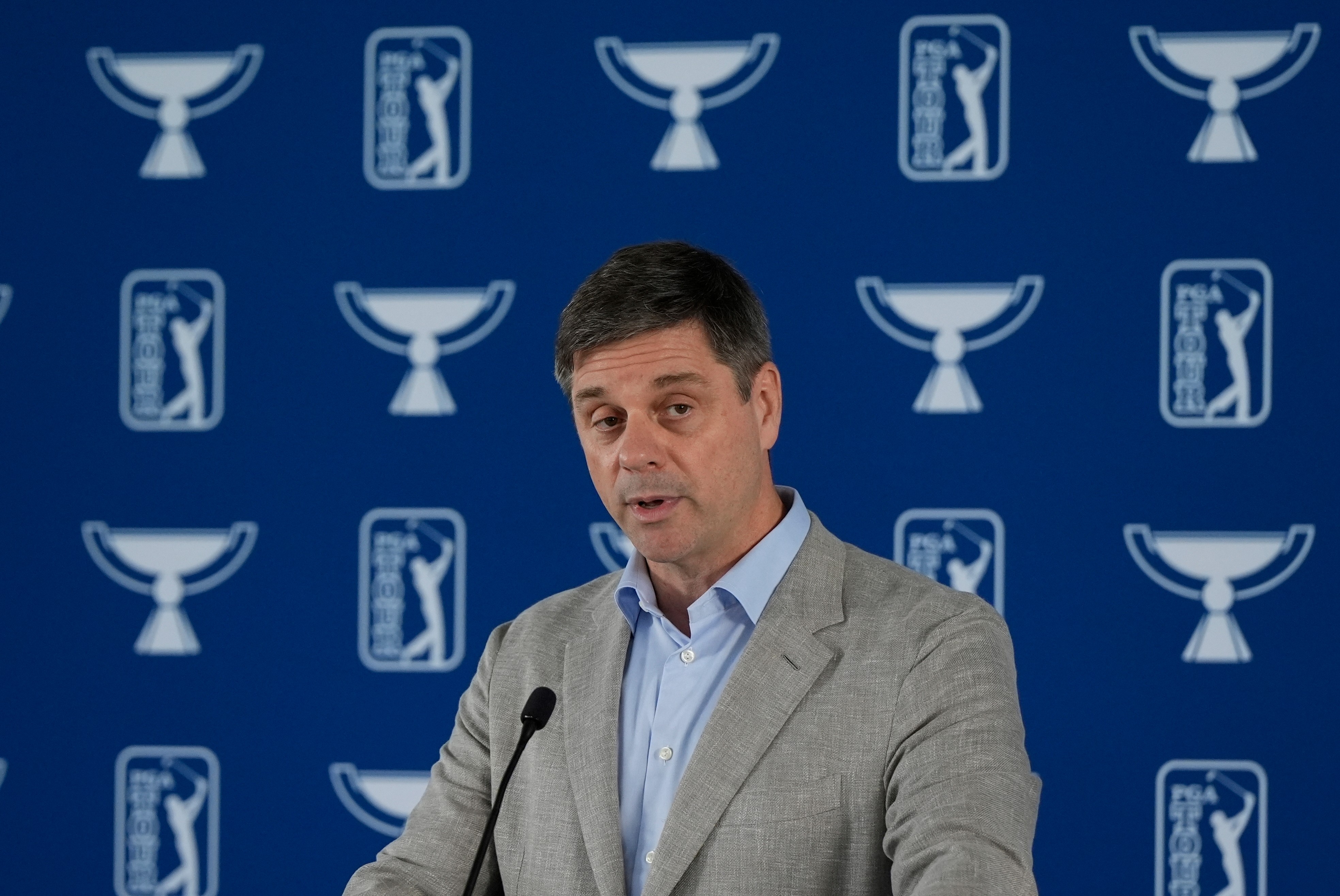
“It’s great to see him back,” PGA Tour CEO Brian Rolapp said. “Tiger has been involved throughout the process. He’s contributed meaningfully. It’s awesome to see him back and in great form.”
Rolapp preached “scarcity, simplicity and parity” when he took over last summer, and those pillars have become more clear. The season will be shorter — approximately February through August with some scheduled weeks off — without taking away playing opportunities.
The $20 million signature events for 72 players now will be part of the Championship Series and expanded to 120 players on average. Players are not required to enter them all, and those tournaments will not have sponsor exemptions or an alternate list. There will be a 36-hole cut.
“When fans tune into the PGA Tour Championship Series, they know they will see the best players in the world competing head to head,” Rolapp said, adding that it was important to credibility not to have sponsor exemptions because sponsors don’t determine who plays in most other sports.
The Challenger Series will be a path for players to earn their way to the top level. Those tournament fields will be 144 players, and Rolapp said purses would be at least $4 million. This year, all but three regular tournaments — meaning those outside of the four major championship events, other signature events (including the flagship Players Championship) and the Tour Championship — had prize funds of at least $9 million.
Except for seven times during the season, the Championship Series and the Challenger Series will hold tournaments the same weeks. Rolapp said on the occasion of a week off for the elite circuit, the Challenger Series event would be elevated.
Last week, six-time major champion Rory McIlroy called the secondary tier a “glorified Korn Ferry event,” referring to the developmental circuit for aspiring PGA Tour players.
“I just think there’s going to be certain events that might lose their status if a sponsor doesn’t pony up $30 million,” said McIlroy, who sits behind only longtime No. 1 Scottie Scheffler in the Official World Golf Ranking.
Rolapp said he spoke to McIlroy on Tuesday — the two-time reigning Masters champion is skipping this week’s Travelers Championship at TPC at River Highlands, the third signature event the 37-year-old from Northern Ireland has missed this year — and said the new model will serve the same player and offer a similar number of tournaments. Korn Ferry tournament purses are $1 million.
“We’ve just organized the same tour into a much more interesting and competitive system,” Rolapp said. “If you look at the Challenger Series events, they’ll be at venues you recognize. They’ll be for healthy purses. They’ll include a subset of the same 200-and-change players that we have today. That is much different than what the Korn Ferry Tour is today.”
Each level of the PGA Tour will have separate points standings, and there is no plan for players to move up to the Championship Series during the season unless they were to win twice.
Eligibility for the Championship Series would be determined by the top 90 players from the previous year, the top 20 players from the Challenger Series and other exemption categories for tournament winners, injuries or career milestones.
Missing from the announcement was any mention of the FedEx Corp., the financial muscle behind the PGA Tour’s postseason since it began in 2007. The most recent deal with Memphis-based FedEx ends in 2027.
“Our hope is to create more value for FedEx and everybody else. We’re in an existing contract, and we’re going to honor that,” Rolapp said.
As for the fall, the PGA Tour is moving toward a separate series of four to six tournaments in which top performers can earn their way back to the Championship Series. The tour said it still has plans for the Korn Ferry Tour, the PGA Tour Americas and the PGA Tour University ranking system that creates places for top college players.
Finishing in August would give the elite players time to consider playing in foreign events, such as premier tournaments on the Europe-based DP World Tour or the Australian Open. The PGA Tour recently became partners with Golf Australia without co-sanctioning the century-old event.
Rolapp’s second title
Jay Monahan’s plan was to end his run as commissioner of the PGA Tour at the end of 2026, and now it’s official. Along with approving the new competition model, the PGA Tour boards elected Rolapp as the next commissioner.
Rolapp was the first CEO in PGA Tour history when he was hired a year ago, and next year he will be the first to hold both titles.
Monahan’s future was always murky after he lost the trust of players for the surprise deal with the Saudi backers of the LIV Golf League in June 2023. An agreement for the Public Investment Fund of Saudi Arabia to become a minority investor never happen, though the agreement ended all antitrust litigation.
He was on the search committee that hired Rolapp as CEO, and Monahan has been somewhat of a golf whisperer to bring the longtime NFL executive up to speed.
“This transition from Jay to Brian has been a textbook transition,” said Joe Gorder, who is chairman of both PGA Tour boards. “Jay has done an incredible job supporting Brian, providing his wisdom and counsel to Brian, and being there every step of the way. The fact that these two have worked so well and collaborated so well really gives the board total confidence in this decision that we’ve made for Brian to take the role as commissioner also.”
Monahan has not said what he plans to do when he steps down at the end of the year.
He expressed confidence in the direction the PGA Tour is going.
“Over the past year, I’ve had the opportunity to work very closely with Brian,” Monahan said. “What has impressed me most is not only his strategic vision … but also the way he listens, the way he builds trust, and the way he brings people together. He also has a remarkable ability to balance innovation with respect for our traditions in this game while keeping our players, fans and partners at the center of every decision.”