
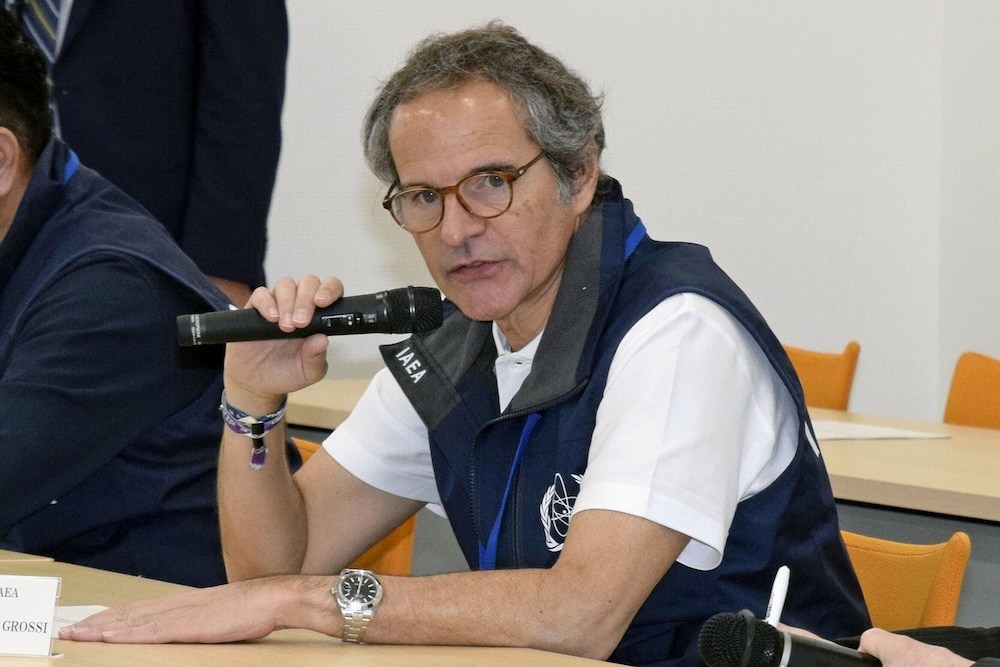
TOKYO (AP) — The head of the U.N.’s nuclear agency said Wednesday that Iranian nuclear enrichment sites would be visited by his inspectors as part of the interim U.S.-Iran deal to reach an end to the war. An Iranian diplomat instead insisted any such visit would only come after a final deal.
The comments echoed contradictory remarks about nuclear inspections a day earlier from the U.S. and Iran. During the week since the two countries signed the deal, their leaders have repeatedly disagreed in public about what that document actually means.
International Atomic Energy Agency head Rafael Mariano Grossi on Wednesday acknowledged the “war of words” over Iran’s nuclear program. But the dueling narratives are playing out on several fronts, including Israel’s war with Iranian-backed Hezbollah militants in Lebanon and how Tehran will spend billions of dollars once unfrozen.
Through the signing of the memorandum of understanding, the U.S. and Iran agreed to a 60-day period to iron out these and other details. Until that happens — during private talks — leaders from both countries will also continue to negotiate in public, raising the risks of derailing the shaky ceasefire in the region.
The fighting between Israel and Hezbollah, a threat to the U.S.-Iran diplomacy, flared on Wednesday. Israel launched an airstrike that killed two people in southern Lebanon, the country’s state-run news agency said. It was Israel’s first airstrike on Lebanon since the latest ceasefire took effect on Saturday. There was no immediate comment from the Israeli military on the strike.