
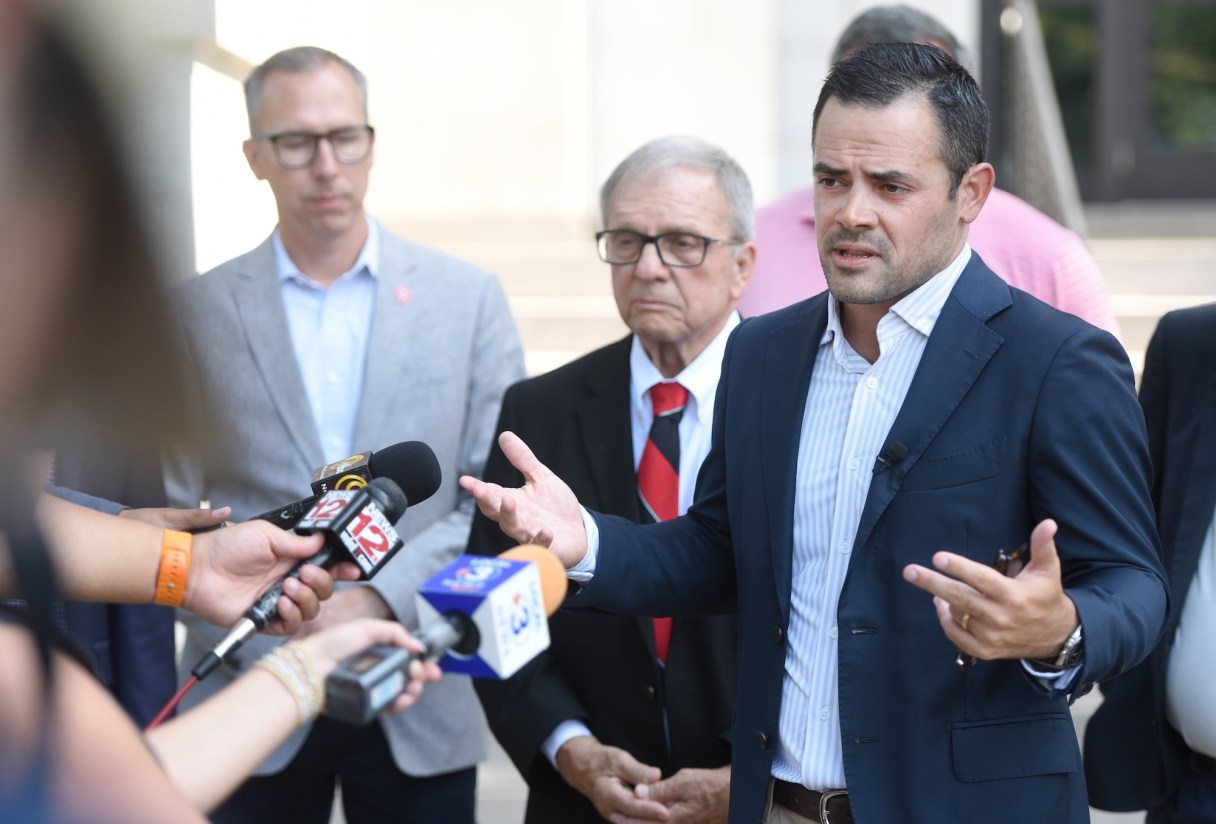
On June 30, Hamilton County Mayor Weston Wamp announced a proposal to pause new data center construction across unincorporated Hamilton County for one year, giving county planning staff time to study the industry’s impact on the power grid, water supply and rural infrastructure before any new facilities move forward. Commissioners will vote on that proposal on Wednesday.
Asked why the Jailhouse Studios data center downtown gets to move forward while the rest of the county waits a year, Wamp had an answer ready: It’s small, a “very, very small data center,” in his words, nothing like the larger facilities the moratorium is meant to slow down.
Hamilton County already has four data centers. The jail conversion, already underway a few blocks from where commissioners meet, isn’t paused at all, because the moratorium only applies outside city limits.
But “small” was never the metric the moratorium is built on, and it isn’t a description anyone can verify. By Urban Story Ventures’ own account, the jail site is the first of three planned Oracle data center sites in Chattanooga, with the other two slated for the Bend. STEM, the company deploying this technology, has a stated goal of 1,000 such facilities nationwide, built as fast as it can build them. No one has published what the three Chattanooga sites will draw in combined power and water.
For context, some large AI data centers use up to five million gallons of water a day. What we do know is where that demand is headed regardless. TVA’s CEO says data center demand made up 18% of the utility’s industrial load in 2025 alone, and expects that to double by 2030. TVA’s current data centers, plus the ones already requested, would together draw enough power for 6 million homes. That growth is why TVA voted to keep two coal plants running past their scheduled retirement dates.