

The Spanish national team’s month-long stay in Chattanooga during the group stage of the FIFA World Cup was not the first time Spanish culture visited the Scenic City.
La Roja called the downtown Embassy Suites home and used the soccer facilities at Baylor School for training during the team’s stay. The team moved out on June 30 after defeating Uruguay to win the group stage. Spain heads to the final July 19 after defeating France 2-0 Tuesday.
The world’s favorite sport was in the spotlight in Chattanooga, with fans lining the streets each time Spain departed from and returned to the Embassy Suites. Over 100 international press members were credentialed to cover Spain while the team stayed in Chattanooga.
(READ MORE: Lamine Yamal makes young fans’ dreams come true at Baylor)
Leo Carbajal, 7, of Indianapolis, went viral after Spain’s Lamine Yamal signed his flag outside of the Embassy Suites. Yamal posted a photo of the boy on Instagram, and Carbajal became known by fans around the world as “Mini Lamine Yamal.”
The intersection of Spain and Chattanooga during the World Cup was just one more instance in the relationship between the two locations — a relationship spanning centuries.
HERNANDO DE SOTO IN MOCCASIN BEND
Archaeological evidence suggests that Spanish explorer Hernando de Soto passed through the area around 1540, on the expedition that ultimately led to his death near what is now Arkansas or Louisiana, according to an article by Middle Tennessee State University about a university professor who was invited to study artifacts found on private property in Chattanooga.
The explorer connected with the Coosa Indians, a chiefdom spanning Southeast Tennessee and Northwest Georgia, and he and his men lived among the tribe for several weeks, according to the National Park Service.
(READ MORE: Billy Strings to play first shows at reopened Tivoli in Chattanooga)
Artifacts long associated with Spanish trading and contact have been found in the Moccasin Bend area, as well as shells that are native to the Gulf of Mexico but not the Chattanooga area, according to MTSU. The expedition that brought de Soto through the area began in Florida, and he made his way up the coast of Georgia and South and North Carolina before heading inland toward the Ridge and Valley Province of Tennessee, according to the park service.
About an hour southwest of Chattanooga, Alabama’s DeSoto Falls in DeSoto State Park was also named for the Spanish explorer.
Spain and Chattanooga connected long before FIFA World Cup 2026

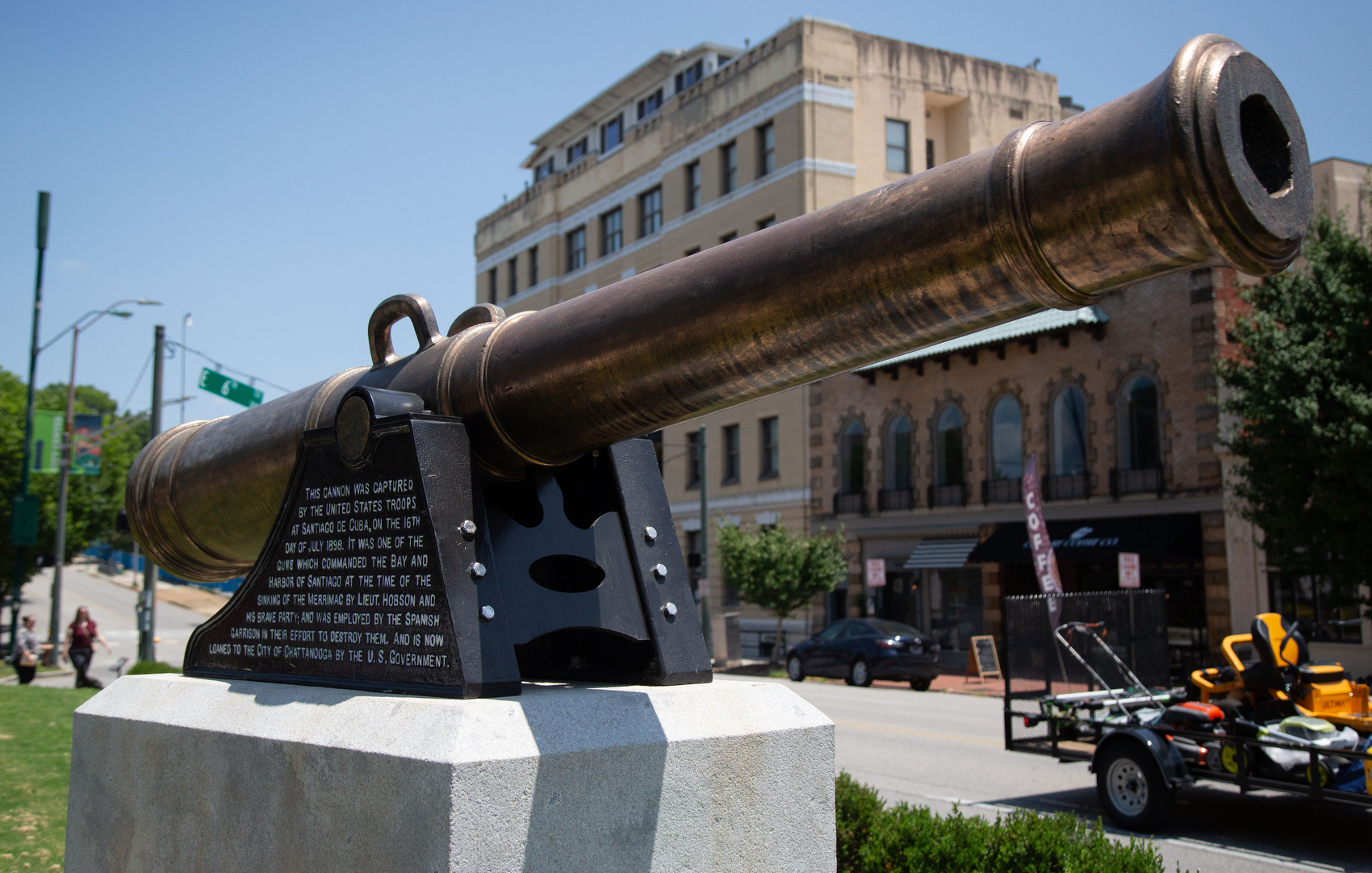
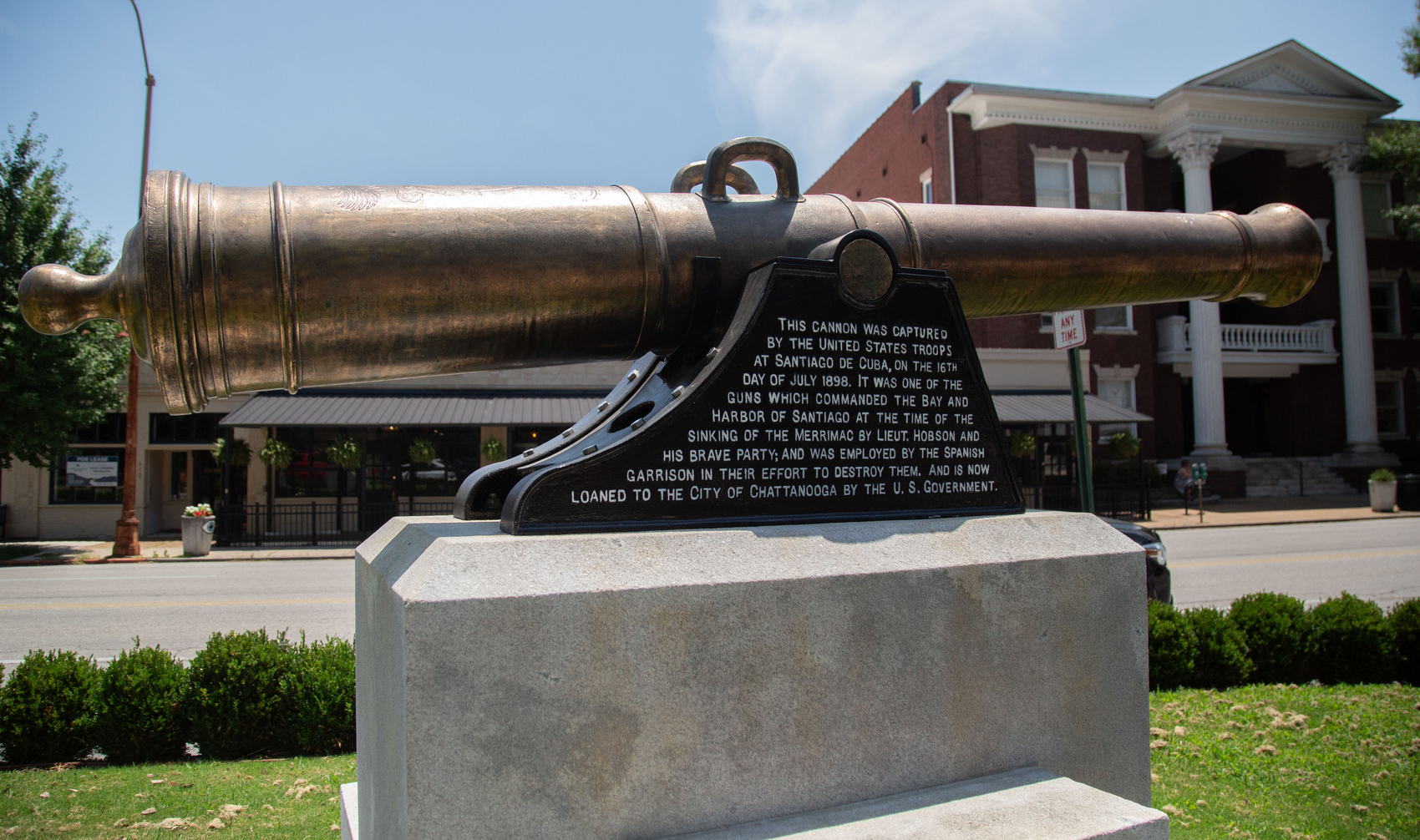
SPANISH-AMERICAN WAR CANNON
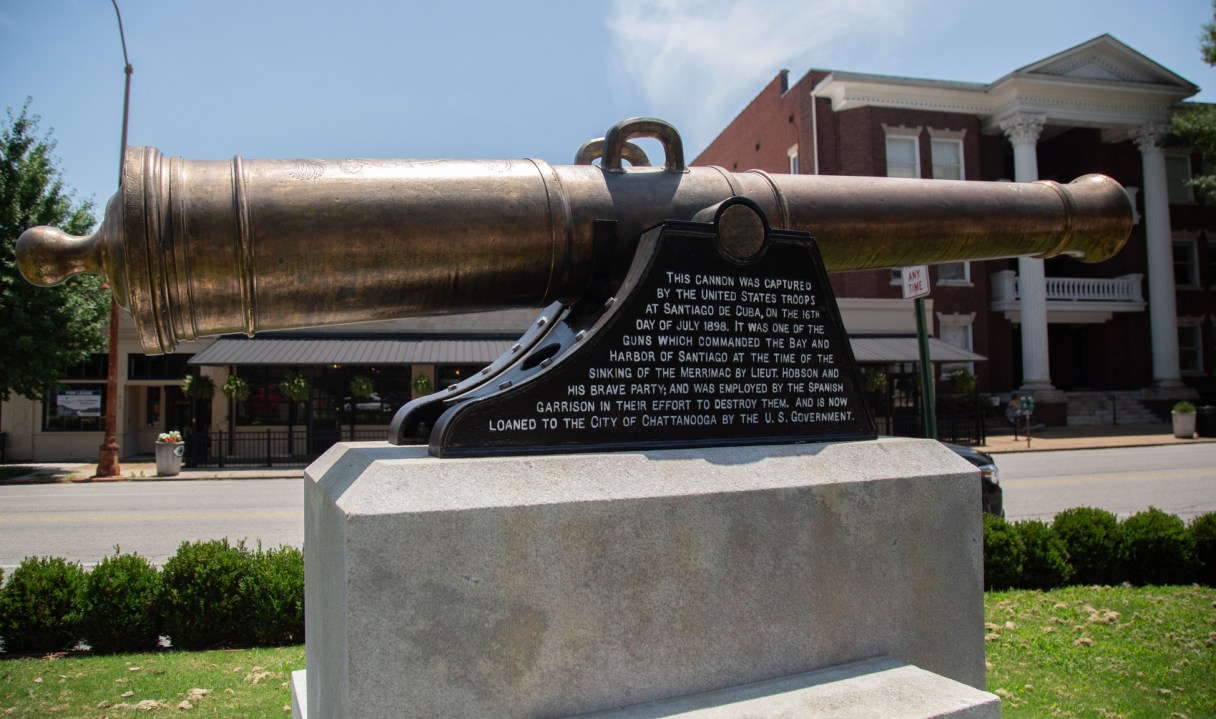
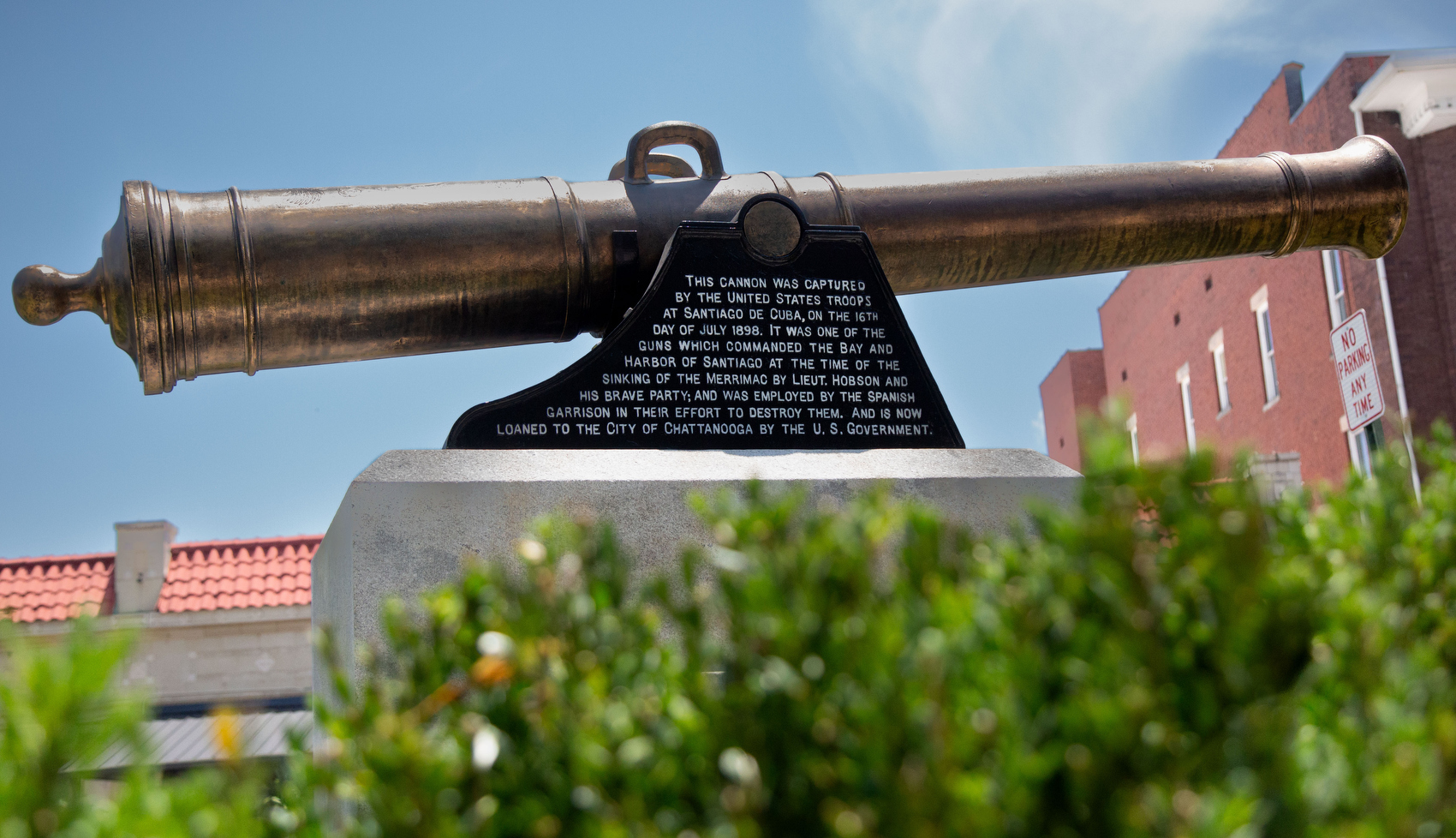
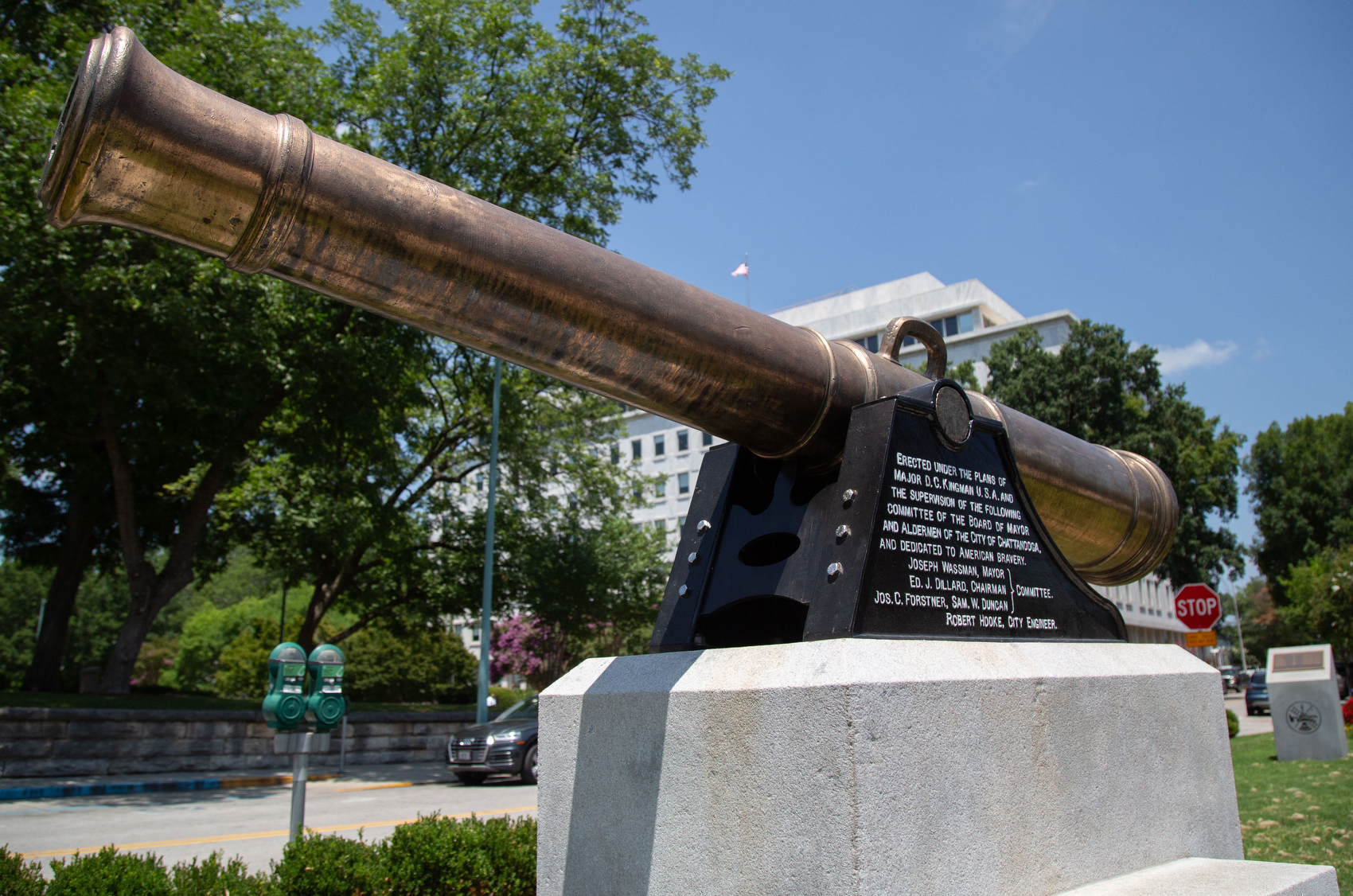
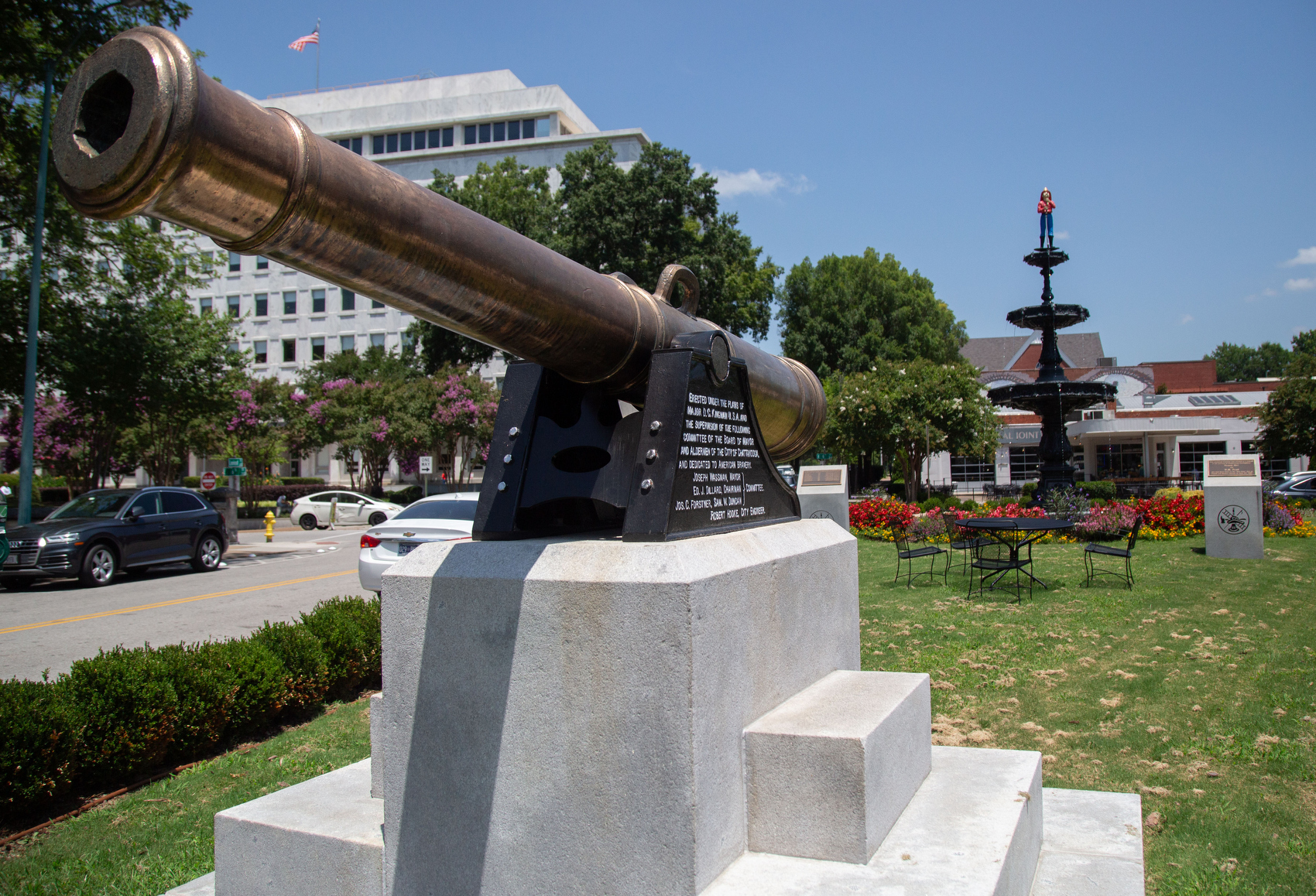
The cannon stationed at the corner of Lookout Street and Georgia Avenue in Fountain Square was captured in the harbor of Santiago de Cuba during the Spanish-American War.
U.S. troops took command of the Spanish cannon on July 16, 1898. The cannon was used by Spanish troops in an effort to stop Lt. Richmond Pearson Hobson from sinking the USS Merrimac in an attempt to trap the Spanish fleet inside Santiago Harbor. Spanish guns, including the one in Chattanooga’s Fountain Square, sank the ship before Hobson and his crew could fully position the ship for the blockade. Hobson and crew were taken prisoner by Spanish Admiral Pascual Cervera and eventually released back to the United States.
SPANISH CLUB AT CHATTANOOGA CENTRAL
A Spanish class was the sixth course to be introduced at Chattanooga Central High School, the county’s oldest public school. The class began in January of 1909, according to an article from The Daily Times.
Charles D. McGuffey, a teacher at Chattanooga Central in the early 1900s, became interested in the Spanish language during the Spanish-American War, according to a website that archived the history of the school. According to the archive, the class offered at Central was the first Spanish class at any high school in Tennessee. The Spanish Club grew to be the largest club at the school, at one point having as many as 271 members.
The club corresponded with the Spanish admiral, and Cervera sent the club gifts.
FORT OGLETHORPE
At the start of the Spanish-American War, the U.S. Army began training soldiers at the Chickamauga Battlefield that had just years earlier, in 1890, been designated as a National Military Park. The park was formally dedicated in 1895.
Camp Thomas was created specifically to train soldiers for the Spanish-American War, according to the Catoosa County Chamber of Commerce.
From April 14 to May 14 of that year, over 7,000 Army infantry, cavalry and artillery units were stationed at the camp before shipping out to Cuba to serve in the war. Then, over 58,000 men and over 10,000 horses descended on the camp, which was uniquely suited to train for the war, since the terrain and climate were similar to that of the terrain and climate in Cuba.
After the conclusion of the war, the U.S. Army decided that permanent training posts were needed, according to Gerry Depken, who compiled the history of Fort Oglethorpe for the chamber, which directly led to the creation of Fort Oglethorpe, used to train soldiers for World War I and II.
Contact breaking news reporter Kailee Shores at kshores@timesfreepress.com or 423-757-6659.